
MCFR follow-up report tracks staffing, wellness measures
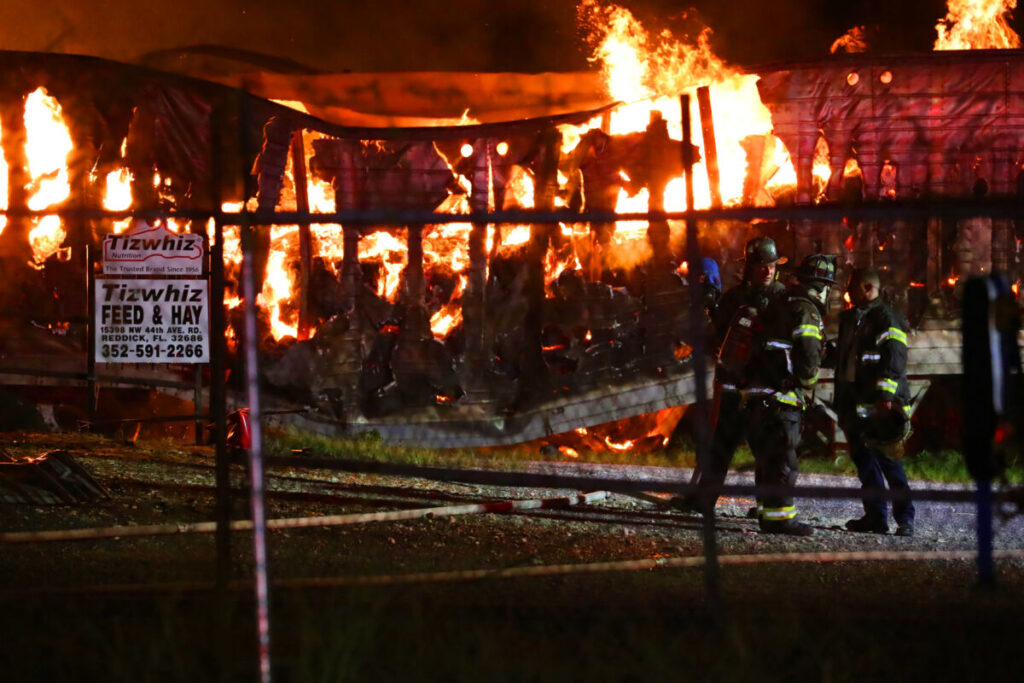
File photo: A raging inferno consumes the Tizwhiz Feed and Hay as firefighters with Marion County Fire Rescue try to contain the fire from spreading on Northwest 44th Avenue Road in Reddick, Fla. on Tuesday, August 12, 2025. [Bruce Ackerman/Ocala Gazette] 2025.
Almost two years after Marion County Fire Rescue (MCFR) leaders and community partners gathered with researchers from the Institute for Human and Machine Cognition (IHMC) for a workshop on firefighter wellness, the department says the resulting strategy is already producing tangible results.
The 2024 “Blue Sky Strategic Action Plan” set a goal of cultivating “a resilient and cohesive firefighting community” focused on reducing burnout, streamlining operations and fostering pride. A follow-up report to the Marion County Hospital District released this month shows MCFR has since launched a slate of initiatives, from expanded health screenings to new internship and mentorship programs that department officials are implementing to improve morale and reduce pressure on frontline crews.
These moves follow “Gazette” reporting that found firefighter turnover, mental health struggles and staffing gaps had strained the department’s ability to meet growing call volumes.
Marion County Professional Firefighter Union, whose president, Rolin Boyd, also attended the 2023 Blue Sky workshop, wrote by email, “We are currently the 19th largest county in Florida by population, yet we remain five stations behind where we need to be to fully meet community demand and reduce the workload for our members.”
Managing the increasing workload
Despite continued demands on the department as the population swells, Fire Chief James Banta pointed out ways the department shifted some of the burden.
“We have transitioned nearly all hospital transfers to HCA, AdventHealth, and American Ambulance,” Banta wrote in an email. “Special events are being transferred to the hospitals, and our Community Paramedicine program is seeing significant results in addressing high system utilizers.”
The Community Paramedicine program is designed to check in on residents who frequently rely on 911 for nonemergency care so as to reduce unnecessary transports and ease system demands.
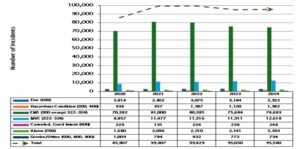
Deputy Chief Robert Graff directly tied what appeared to be a reduction in calls in 2023 and 2024 to those measures. “We shifted the non-emergency transfers so that our units could focus on the increasing number of emergency calls.”
Source: Marion County Fire Department
One of the top stressors identified by the “Gazette” in 2023 was excessive mandatory overtime, which firefighters said left them exhausted and strained recruitment.
MCFR’s overtime spending (more than their normal 56-hour workweek) has declined slightly. According to MCFR, overtime spending last budget year and year to date has been:
| Overtime Only | FY 23/24 | FY 24/25 |
| Fire | $6,455,171.07 | $5,479,016.13 |
| EMS | $5,008,333.16 | $4,399,959.43 |
To ensure they have enough personnel in the pipeline to meet increasing staffing needs, MCFR launched the First Responder Academy with the Marion County School Board, enrolling high school juniors to complete EMT and Fire I certifications before graduation. Separately, a mentorship and noncertified hiring track has already brought 80 new hires into the agency this year.
Tools for Wellness
The follow-up report details a broad wellness push:
- Expanded annual physicals at the new county clinic, now including National Fire Protection Association-recommended mental health screenings.
- Cancer screenings through Concentra and hormone testing to monitor risks common among first responders.
- More than 100 firefighters participating in counseling through Ocala Consulting and Prevention, with half completing the program successfully.
- Pilot programs testing wearable health monitors, ketamine-assisted therapy and trauma retreats.
“Burnout and PTSD can result from prolonged exposure to job-related stress,” a Blue Sky survey concluded last year, recommending programs to promote sleep health and stress-inoculation.
The Blue-Sky recommendation to shift to a 24/72 schedule from the current 24/48 to allow for more rest and recovery between shifts; however, MCFR currently deems it financially out of reach, requiring an estimated $30 million and 200 new hires.
Instead, leaders are considering alternatives like offering firefighters a “Kelly day,” an industry term, which gives firefighters one paid day off every three weeks.
Beyond clinical programs, the department has leaned on small but symbolic acts such as station breakfasts hosted by leadership, “Spouse Day” trainings for firefighter families, and annual “Medal Day” honors to build morale.
Boyd opined on the measures that “morale in any fire department is always an uphill battle, but I believe we are moving in a positive direction.”

Support community journalism
The first goal of the Ocala Gazette is to deliver trustworthy local journalism so corruption, misinformation and abuse are not hidden from the public or unchallenged.