
Jail medical care challenged
Family of deceased inmate Jacob Oakie sues Marion County Sheriff and Heart of Florida.
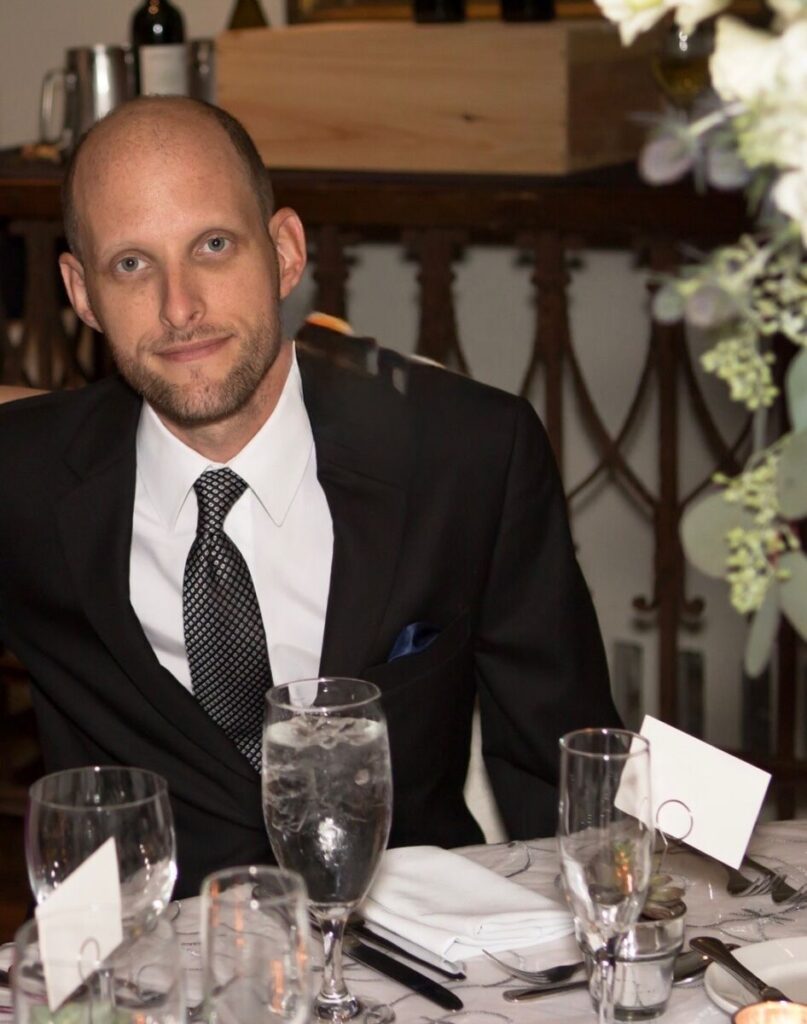
Jacob Oakie at a family wedding. [supplied]
Following the tragic death of 39-year-old Jacob Oakie in the Marion County Jail nearly two years ago, his mother, Marilyn Oakie, has filed a comprehensive federal lawsuit in the Middle District of Florida against Marion County Sheriff Billy Woods and others connected to the facility on behalf of his estate and survivors.
Oakie, who was a pretrial detainee at the jail, died of pneumococcal meningitis on July 28, 2024, after experiencing days of escalating medical symptoms that the lawsuit alleges were ignored and mishandled by jail and medical staff.
Who is being sued?
The lawsuit names a wide array of defendants involved in the operation of the jail and the medical care provided to its inmates. The primary defendants include:
- Woods (in both his official and individual capacities).
- Heart of Florida Health Center, Inc. (the private contractor providing medical services to the jail).
- Jail and medical supervisors, including Major Clint Bowen, Deputy Chief Robert Douglas, Capt. Brian Spivey, Capt. Alesia Chisholm, Director Monica Hopkins, Dr. John Pearson and Dr. Jose Rodriguez.
- Medical staff and deputies, including nurses who directly interacted with Oakie (Colleen Rutland, Sandy Gomez, Dorisvel Ramos, Duane Cunningham, Leslie Tyson, Andrea Younes, and John Little) and the detention deputies involved in a use-of-force incident against Oakie while he was in the infirmary (Officer N. Custodio, Deputy Gordon and Deputy Iovino).
The Federal Civil Rights claims (42 U.S.C. § 1983)
A large portion of the lawsuit is built upon 42 U.S.C. § 1983, a federal statute that allows private citizens to sue for civil rights violations committed by individuals acting “under color of state law.” Because Oakie was a pretrial detainee, his constitutional protections fall under the Due Process Clause of the 14th Amendment.
The federal claims and their required legal elements include:
- Count 1: Deliberate Indifference to a Serious Medical Need. Directed at the nurses and deputies who directly interacted with Oakie, this claim alleges that they ignored his life-threatening symptoms and, in the case of the deputies, pepper-sprayed and restrained him without seeking medical evaluation while he was in an altered mental state.
- Elements to prove: The plaintiff must establish that (1) the detainee had an objectively serious medical need, (2) the officials had actual notice or knowledge of this need, (3) the officials acted with “deliberate indifference” (a subjective reckless disregard for the detainee’s health or safety), and (4) this indifference directly and proximately caused the harm or death.
- Counts 2 & 3: Monell Liability. Directed at Woods (official capacity) and the Heart of Florida Health Center. Under § 1983, a government entity or private contractor performing a state function cannot be held vicariously liable simply because they employ the wrongdoer.
- Elements to prove: The plaintiff must demonstrate that (1) a constitutional deprivation occurred, and (2) the deprivation was the result of an express policy, a widespread custom, or a deliberate act by a final policymaker. The lawsuit alleges that Woods and Heart of Florida maintained a widespread practice of depriving inmates of adequate, timely care and hospital access, which was the “moving force” behind Oakie’s death.
- Count 4: Supervisory Liability. Directed at the jail and medical leadership.
- Elements to prove: Because supervisors cannot be held liable merely for their supervisory roles, the plaintiff must prove that (1) the supervisor had actual or constructive knowledge of a widespread history of abuses or constitutional violations, (2) the supervisor failed to act, showing deliberate indifference or tacit authorization of the offenses, and (3) there is an affirmative causal link between the supervisor’s inaction and the resulting constitutional injury. The complaint alleges these supervisors knew of severe healthcare deficiencies in the jail—partly through reports from a former whistleblower—but failed to correct them.
The State Law Claims (Wrongful Death)
In addition to the federal civil rights claims, the lawsuit brings state-level claims under the Florida Wrongful Death Act against Woods (official capacity) and the Heart of Florida Health Center.
The elements required to successfully prove a wrongful death claim based on negligence in Florida are:
- (1) Duty of Care: The defendant owed a legal duty to the deceased to act with reasonable care. The lawsuit argues both the sheriff and the medical provider had a duty to maintain policies that kept inmates safe and provided them with legally adequate medical treatment.
- (2) Breach of Duty: The defendant failed to conform to the required standard of care. The complaint alleges this duty was breached through deliberate indifference to Oakie’s medical needs.
- (3) Causation: The breach of duty directly and proximately caused the victim’s death. The plaintiff must prove that the death was a foreseeable consequence of the defendants’ failures.
- (4) Damages: The death resulted in measurable losses. The Oakie estate is seeking compensation for lost support and services, medical expenses, and mental pain and suffering.
A steady decline disregarded
Oakie was booked into the Marion County Jail on June 20, 2024, initially weighing 112 pounds. By June 27, he had submitted a medical request complaining of hypoglycemia and weight loss. His weight continued to drop over the following weeks, reaching 103.8 pounds by July 22.
On July 18, Oakie submitted an urgent medical request stating he had a “really bad ear infection” that was “hurting horribly.” When seen the following day, he complained of a swollen, painful left ear and jaw, along with congestion and body aches. Despite these symptoms, on July 22, a Heart of Florida nurse diagnosed Oakie with a “common cold,” prescribed Tylenol and an antihistamine, and sent him back to general population.
Escalating medical emergency
Oakie’s condition deteriorated rapidly. Later in the day on July 22, he was moved to the jail infirmary for observation after reporting dizziness, nausea, vomiting, and “sweating profusely.” Over the next several days, Oakie suffered from high fevers—reaching up to 102.9 degrees—and was documented dry heaving and vomiting “dark colored liquid.”
Although an ARNP ordered blood cultures and a chest X-ray on July 23, medical staff continued treating him with cold and anti-nausea medications, placing him on a diet of only water and ice chips. By July 25, records indicate Oakie was spitting in his toilet, refusing IVs, and exhibiting an altered mental state.
Pepper sprayed while septic
Early on the morning of July 26, while still housed in the infirmary, a confused and agitated Oakie removed his IV port and yelled for hours that he wanted to leave. At approximately 5:10 a.m., Detention Deputy N. Custodio ordered Oakie to stop yelling and submit to hand restraints. When Oakie, who was actively suffering from severe brain swelling and an altered mental state, did not comply, Custodio deployed a burst of pepper gel into his facial area. Deputies L. Gordon and B. Iovino then placed Oakie in restraints and put him in a decontamination shower for 15 minutes before returning him to his infirmary cell.
Tragic conclusion and unanswered questions
At 7:41 a.m. on July 26—more than two hours after the use-of-force incident—jail staff called 911 for medical transport. Minutes later, a nurse referenced Oakie’s July 23 blood work for the first time in the records, noting he was being transported to AdventHealth Ocala “to rule out sepsis.”
Upon arriving at the emergency room, Oakie went into respiratory distress and had to be intubated. Doctors diagnosed him with pneumococcal meningitis, a severe and potentially fatal infection that requires immediate antibiotic intervention. Oakie died two days later, on July 28, after his family made the difficult decision to remove him from life support.
Following his death, the Marion County Sheriff’s Office classified Oakie’s death as being due to “natural causes.”
Despite the use of force shortly before Oakie’s hospitalization, neither the Florida Department of Law Enforcement nor State Attorney William Gladson’s office opened an investigation into his death. Furthermore, the MCSO has repeatedly denied requests from both the “Gazette” and Oakie’s family to release the jail surveillance video from the morning of his death.
Prior reports: Medical records for Jacob Oakie confirm growing concerns for inmate medical care and use of force at Marion County jail | Ocala Gazette
Family seeks answers in the death of 39-year-old inmate | Ocala Gazette
Marion County’s jail remains one of the deadliest in Florida | Ocala Gazette

Support community journalism
The first goal of the Ocala Gazette is to deliver trustworthy local journalism so corruption, misinformation and abuse are not hidden from the public or unchallenged.