
Family seeks answers in the death of 39-year-old inmate
MCSO records reflect possible medical neglect and use of force led to hospitalization.
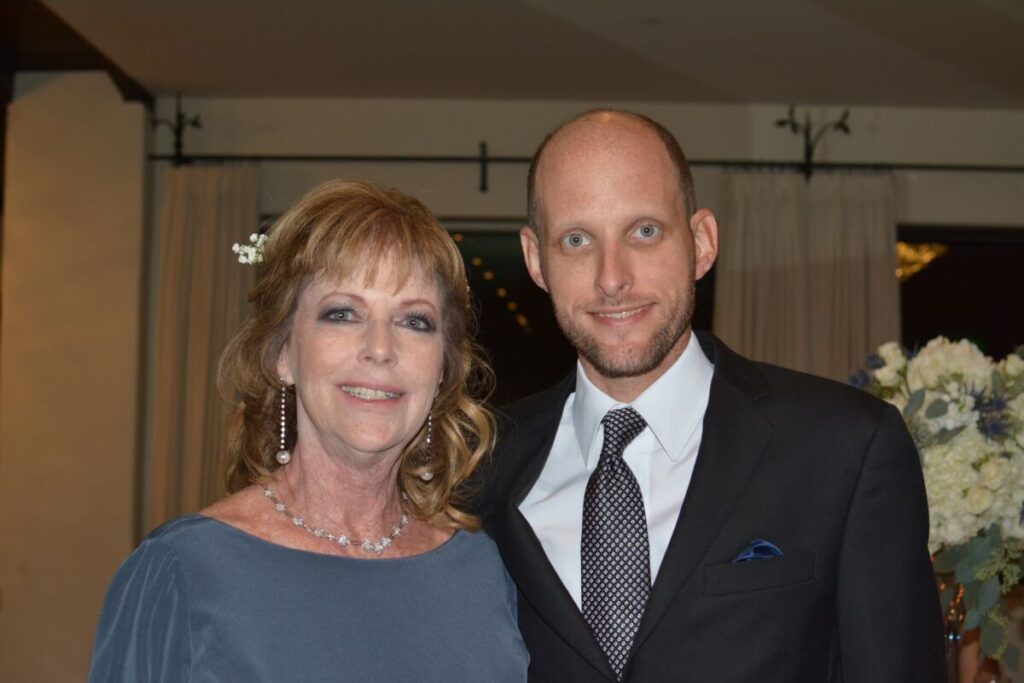
Marilyn Oakie (left) with her late son Jacob Oakie (right). Oakie died from meningitis on July 28, 2024, in the custody of the Marion County Sheriff’s Office [Supplied].
Jacob Oakie, 39, of Ocala, died last year in the custody of the Marion County Sheriff’s Office after developing pneumococcal meningitis. He was delivered by EMS from the jail’s infirmary run by Heart of Florida to Adventhealth ICU by local EMS.
Two hours before his hospital transport, records show MCSO staff had pepper sprayed Oakie in the infirmary, then “decontaminated” him in the shower.
Oakie was treated for respiratory problems and brain swelling at the hospital, according to MCSO records.
Within hours of hearing of Oakie’s condition on a Friday evening, his mother Marilyn Oakie and brother Dennis Oakie flew thousands of miles from Arizona to the Ocala hospital. Within 48 hours, they would have to make the painful decision to remove him from life support.
“He was unconscious and chained to the bed when we got there. Still, depending on which deputy was on duty we were only allowed in the room with him 30 minutes a day. So, we watched Jacob from the glass wall of the ICU. The doctors and nurses really fought for us to be there, and I’m grateful to them for that because the sheriff’s office treated me and my mother like we were criminals,” said Dennis Oakie.
Oakie was jailed on June 20, 2024 on charges that he violated his parole from a November 2022 arrest for possession of methamphetamine. He was incarcerated after a urine test showed signs of amphetamine and methamphetamine use.
Dennis Oakie said the family had tried to help Jacob battle his addiction, sometimes flying him to Arizona for treatment, but Jacob kept falling back into his addiction.
The cause of Oakie’s death was listed as “natural causes” due to pneumococcal meningitis; however, the medical examiner could not do an autopsy because of the contagious nature of the illness.
Oakie spoke to his mother nearly every day in jail, so when five days went by without hearing from him, the family grew concerned.
“He kept complaining of an earache and that he couldn’t get treatment for the pain. All of those calls were recorded, aren’t they? If you can get copies of those calls, you’ll get an idea of how long he was without care,” Dennis Oakie suggested to the Gazette.
Dennis Oakie said the family was not told until the “Gazette” shared MCSO records with them that Jacob had been pepper sprayed and subject to force from prison guards shortly before being delivered to the hospital.
Oakie began showing signs of the deadly disease a month after being incarcerated on June 20, 2024, but was only treated for “a common cold,’’ records show. Those treatments began on July 19, and he died 9 days later after his mother and brother traveled from Arizona and gave consent to remove him from a ventilator.
Oakie’s death is the latest in a series of incidents that raises concerns about the quality of care inmates at the county facility receive. The MCSO, which operates the jail, has reported 29 deaths at the facility from 2021 to 2024.
The “Gazette” reviewed various incident records authored by different MCSO staff to build a timeline of Oakie’s incarceration and ultimate death.
Meningitis is a “potentially fatal” medical emergency that requires immediate care at a hospital, with risk of death within 24 hours, according to the World Health Organization.
“Even with proper diagnosis and treatment, up to 1 in 5 people who develop this condition will die. Long-term health problems occur in around 20% of people who survive pneumococcal meningitis. These problems include brain damage, deafness, learning disabilities, paralysis,” according to Healthline. “Because this disease is so dangerous, it’s very important to go to the doctor right away if you suspect you have it.”
Oakie was in the jail infirmary on July 23 and refused his breakfast tray, according to one report. Another report, from July 26, noted that Oakie was still in the infirmary and was verbally upset. At approximately 5 a.m., detention worker Nicole Custodio ordered Oakie to stop yelling profanities.
“I ordered him to stop, and he refused,” according to her report. “I ordered him to turn around and submit to hand restraints in order to counsel with him or he would be pepper sprayed, and he refused. I opened the cell door and applied a burst of pepper gel to his facial area and ordered him to submit to hand restraints, he refused. I closed the cell door and called for backup and a supervision on the infirmary’s base station radio. Deputy Gordon and Deputy Ivoino responded and placed him in hand restraints.”
Custodio said Oakie was escorted to the shower for “decontamination” and was placed in the shower for approximately 16 minutes, according to the report. Custodio said Oakie was “evaluated by Nurse Younes and no injuries were noted. He was placed back in his cell without incident.”
Less than two hours later, according to another incident report authored by Cpl. Sandra Denardis, Charge Nurse Ramos informed Denardis that Oakie needed to be treated at a hospital.
Marion County Fire Rescue EMS transported Oakie to AdventHealth Ocala where he was treated for respiratory failure and meningitis, which led to brain swelling, according to a report by MCSO Master Cpl. Matthew Bowers, who spoke to hospital nurses and doctors who treated Oakie.
“Ms. Oakie indicated she had been in contact with the medical examiner’s office and was aware of the pneumococcal meningitis being the cause of death. I advised her this case was being concluded but to contact me in the future if she had any further questions or concerns,” Bowers wrote.
Bowers acknowledged he did a web search of symptoms associated with pneumococcal meningitis and they were evidenced in jail records in the days leading up to Oakie’s transport to the hospital.
Bowers noted the medical examiner had “no concerns from the pepper gel use of force” as related to the cause of Oakie’s death.
Bowers wrote that he watched the video of the incident at the jail to understand the use of force on Oakie. He said the video does not have audio and does not include the inside of the cell to show what happened when two detention deputies entered it and came out a few moments later escorting the decedent to the shower after he’d been sprayed with pepper spray.
The use of force the day Oakie was transported to the hospital was not mentioned in the two-page MCSO death-in-custody report sent to the Florida Department of Law Enforcement.
“An investigation into the incident revealed that the inmate had been receiving treatment in the infirmary for an altered mental state,” the report states. “A decision was made by medical staff to transport him to a local hospital by ambulance for further treatment. The inmate ultimately was removed from life support at the request of his family. The cause of death was determined to be natural, caused by Pneumococcal Meningitis.”
Per MCSO policy No. 6570, Sheriff Billy Woods decides whether a death in custody is investigated by FDLE. Deaths involving use of force are required to be investigated further. No further investigation was conducted.
Oakie’s death was not investigated by the State Attorney’s Office, which indicates its office has only investigated three of the 29 deaths at the jail. One of those cases involves inmate Scott Whitley, a 47-year-old diagnosed schizophrenic who died on Nov. 25, 2022, after detention deputies restrained and shocked him with a Taser 27 times in 12 minutes.
The medical examiner ruled Whitley’s death a homicide, and his family pursued legal action against the MCSO. The “Gazette,” which has been reporting on the issues surrounding inmate care, has sued the MCSO to obtain surveillance video from Whitley’s cell on the day he died.
In its lawsuit against MCSO to obtain the footage from Whitley’s cell, the “Gazette” argued that good cause was present to release the video and provide it to the public for viewing.
The “Gazette” has asked MCSO to view the video of the altercation between jail staff and Oakie the day he was delivered to the hospital. The request has been denied. The “Gazette” asked MCSO if it would agree to an order if a complaint was filed seeking permission.
MCSO General Counsel Marissa Duquette refused, saying good cause “is absent in this case.”
MCSO maintains that “good cause” must be shown to overcome facility security exemptions, primarily that it would serve public interest, which the court found to be the case in the Whitley suit.
The “Gazette” responded by email, “Jacob Oakie was subject to a use of force two hours before he was delivered to ICU at AdventHealth, septic, after being neglected for at least a week in the infirmary for something that should have been treated aggressively with antibiotics. He died two days after being delivered to the hospital. He was 39 years old. I think the public would disagree about what they do and do not have interest in.”
Duquette responded curtly—”Hello, I do not mind if you disagree.”
On behalf of his family, Oakie’s brother Dennis wrote a letter to MCSO on March 7 requesting to see the video of the use of force incident.
“I would like to obtain the video of use of force used against my brother, Jacob, on July 26th, 2024, hours before he was taken by ambulance from the Marion County Jail to the Advent Health Hospital in Ocala, Florida,” he wrote. “Additionally, I would like to request that the video be made public and that the Ocala Gazette be allowed to watch the video.”
Oakie’s death was not disclosed to the “Gazette” in October 2024, when it requested all death-in-custody reports from 2019 until the date of request. The “Gazette” learned of Oakie’s death through Death in Custody Reporting Act records filed to FDLE, provided by MCSO.
When the “Gazette” asked why the incident report on Oakie’s death was not given with its original request, an MCSO records clerk said she was “not sure why” that record was not provided.
Heart of Florida maintains they meet medical standards outlined in Florida’s model jail standards, regardless of what Coy’s reports indicate. CEO Matt Clay indicated he was unaware of how high the death count was at Marion County jail compared to state prisons in Marion County until the Gazette provided the numbers.
In a letter dated Nov. 4, 2022, obtained by the “Gazette,” Heart of Florida Chief Healthcare Administrator John Pearson wrote that he believed Coy was interfering with Heart of Florida staff’s medical directives for inmate care. Pearson wrote that Coy “complained” to the medical director, Dr. Jose Rafael Rodriguez, and questioned Rodriguez’s treatment plan for an asthmatic inmate.
Rodriguez has been practicing medicine in Florida since 2014 under an Area of Critical Need Medical Doctor license that must be renewed annually by Florida Department of Health. According to his licensure information with the state of Florida, Rodriguez was formerly licensed in Puerto Rico from 2002 until 2016. He earned his medical degree from the Universidad Autónoma de Guadalajara.
Rodriguez previously worked at the Lowell Correctional Institute from 2015 until 2021. During the time when oversaw medical care at Lowell, the Miami Herald and later the Department of Justice investigated the facility for lack of medical care, unusually high cases of rape, and death due to lack of medical care.
In 2022, Rodriguez took over as the medical director for Marion County and Sumter County jails under a Heart of Florida contract.
The “Gazette” requested data on any deaths in custody of the Sumter County Sheriff’s Office. The FDLE said it didn’t have any reports from that agency within the past five years in part because SCSO hadn’t applied for federal grants through their office, which would have required such a report.
The “Gazette” requested internal records of deaths in custody from SCSO in November 2024, and the agency responded it would not be able to access or provide records indefinitely.
“The Sumter County Sheriff’s Office experienced a Ransomware attack on August 2024. Due to the attack, we have limited access to our network and electronic records. We are diligently working on restoration,” said SCSO.
Upon reiterating this request over a month later, the “Gazette” was told by the agency that its network and electronic records were still down. SCSO said it would complete the request when its server is restored but provided no indication of when this would happen.
Editor’s Note: Investigate This! at The Marshall Project provided guidance to the Ocala Gazette team on how to navigate obtaining information under the federal Death In Custody Act.
For previous reporting on the Marion County Jail, visit the links below.
Whistleblower sues Marion County Sheriff Billy Woods
Six more recent deaths in law enforcement custody come to light
Florida has no law requiring deaths in custody to be reported by local law enforcement
People in the Marion County Jail are suffering. This is why it matters.
Jail footage shows inmate complied with orders before fatal use of force
“Ocala Gazette” lawsuit against MCSO to be reassigned to another judge following hearing
‘Ocala Gazette’ sues MCSO over video of jail inmate’s death at hands of deputies
Family of Marion jail inmate who died in custody files wrongful death suit against sheriff
No charges for officers involved in inmate death
Inmate death at Marion County Jail prompts FDLE investigation

Support community journalism
The first goal of the Ocala Gazette is to deliver trustworthy local journalism so corruption, misinformation and abuse are not hidden from the public or unchallenged.