
Hot topic nationally and locally
Marion County commissioners schedule data center workshop amid public concerns.
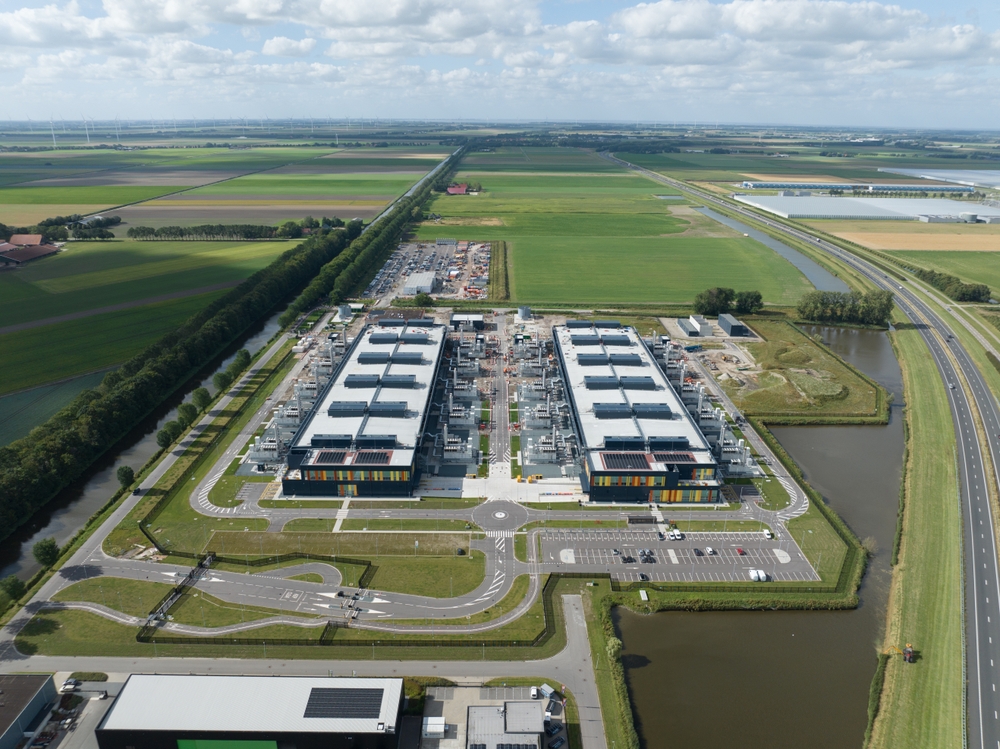
This is one example of a data center. [Shutterstock image]
Editor’s Note: This story was updated at 3:34 p.m. to include the Chamber of Economic Partnership (CEP) response to our inquiry.
The Marion County Board of County Commissioners voted today (July 21) to schedule a workshop for Sept. 1 to proactively establish guidelines for potential data center developments. The procedural move, however, drew intense scrutiny from residents worried about the region’s natural resources and quality of life.
The meeting featured extensive public comment, heavily tilting against the prospect of data centers entering the county.
“I want to officially go on record and state that I am against the support or building of data centers, hyperscale data centers, or any iteration or variation of a data center in Marion County,“ declared resident and social media influencer Elizar Jose Nieves to the board.
Another resident, Marita Weston, urged the commission to outright reject the workshop, stating, “The community does not want a data center. Not now. Not later. Not in small size… it does not fit Marion County.”
Zoning rules and the impact of SB 484
Commission Chair Carl Zalak III attempted to assure the public that the county is not currently reviewing any active applications, emphasizing that the workshop aims to create a regulatory framework before a developer applies. He clarified the strict zoning requirements currently in place: “As of today, you could only build those in an industrial area with a special use permit. You can’t build it on a piece of ag land in Marion County.”
Zalak also pointed to the recently enacted Senate Bill 484 (the Florida Data Center Protection Act) to justify the need for local preparation. According to a press release from the Executive Office of the Governor, Governor Ron DeSantis signed SB 484 to protect communities from hyperscale data centers. The new law explicitly “preserves local authority over zoning, permitting and land use,” ensuring that local governments can set stricter standards or reject projects entirely without state preemption.
It also strictly prevents large load customers like data centers from bypassing local land development regulations by classifying themselves as electric substations.
Environmental and water concerns
A central theme of the opposition centered on the staggering environmental toll data centers pose, particularly regarding water and electricity. Resident Rebecca Ware highlighted the immediate strain on local aquifers, stating, “The water tables are low. This is the first year we’ve ever had well problem… We don’t need anybody out here taking more water.”
These local anecdotes align with a recent special report by 1000 Friends of Florida, which highlighted that data centers rely heavily on evaporative cooling. The report notes, “most of the water used for cooling is lost to the air and cannot be recirculated.”
The organization also warned of massive energy consumption, finding that “a typical AI-focused data center consumes as much electricity as 100,000 households.”
This potential drain on water resources comes at a time when Marion County is already facing immense pressure to reduce water consumption due to drought and pollution impacting our springs.
Resident Sherry Wilson raised concerns about the noise and vibration generated by the facilities’ massive cooling systems and backup generators.
“We are the Horse Capital of the World… what these things are going to do to the wildlife, livestock and not only that, but think of our human health,” Wilson said. “You know, if you’re sitting in your house and you’re hearing constant humming, what does it do to the mental?”
Industrial site promotions and economic coordination
The debate over industrial zoning is occurring while the Ocala Metro Chamber and Economic Partnership (CEP) actively markets the county’s industrial footprint to outside developers under a contract for services. According to the CEP’s June 2026 County Performance Matrix Report, the organization currently boasts “380 buildings/135 sites“ in its database, accounting for 515 total listings marketed for business attraction.
CEP President & Chief Executive Officer Matt McCormick recently told the “Gazette” that “the CEP supports responsible economic development while respecting the planning and land-use authority of Marion County and the City of Ocala. All projects can present both opportunities and important community considerations. We believe each proposal should be evaluated on its own merits through the established public process.”
The “Gazette” has asked the CEP if they are currently entertaining inquiries for data centers at any of these industrial sites in Marion County.
McCormick wrote, “The CEP markets Marion County’s available sites to a wide range of industries and responds to inquiries from businesses across many sectors. As a matter of standard economic development practice, we do not comment on active prospect inquiries.”
Florida statutes allow the county and the CEP to claim public records exemption to records requests involving economic development efforts.
Under current Florida law, economic development agencies can grant an initial 12-month public records exemption for information regarding a business that is considering locating, relocating or expanding in the state. Generally, these agencies have the authority to extend this confidentiality period for an additional 12 months upon written request.
However, SB 484 did explicitly eliminate the additional 12-month extension for any projects that involve data centers. Therefore, once the initial exemption period ends, public disclosure of data center development deals is required.
“We look forward to working with Marion County throughout the upcoming workshop process and supporting thoughtful discussions that help ensure any future decisions align with the community’s long-term vision and priorities,” McCormick offered.
Alternative perspectives
While the public expressed fierce opposition, some officials suggested a more measured approach. Former Ocala Mayor Kent Guinn thanked the commission for scheduling the workshop, noting it was a necessary step.
“I think it’s important for you to set up these guidelines of what you want those data centers to look like, be it electricity, gas, water, etc.,” Guinn stated, adding, “I think they’ll be great guidelines for the entire region.”
Commissioner Craig Curry also weighed in, sharing insights from a National Association of Counties annual conference, which took place July 17-20 in New Orleans.
“We just got back from an organization called the National Association of Counties, 3,000 counties across all 50 states,” Curry said, noting that data centers are a hot topic nationwide. He added that he spoke with officials from other jurisdictions, stating, “The other ones that attended were able to talk to different counties and different states that have actually built data centers that are living with them.”
Curry emphasized to the crowd that “there’s no decisions been made, but we hear the community.”
Some community members encouraged the commissioners to allow public comment at the workshop.
“When you go into those workshops and it’s closed off [from public comment], it gives the impression that you’ve already made up your mind… and that [you] truly don’t care [about public sentiment],” said resident Joel Hickman.
Commissioner Kathy Bryant responded to Hickman’s concern by saying, “Workshops are just for us to be able to have the opportunity to sit down and talk… if any decision is made to change anything within our land development code or within our comp plan regarding data centers, there will be two public hearings as well as a land development regulation commission meeting. I mean, several opportunities for the public to come at different times of the day to give their input. A workshop is just that; it is a workshop and a workshop only. This board cannot take any action at a workshop.”
The data center workshop will take place at 2 p.m. Sept. 1 in the McPherson Governmental Campus Auditorium at 601 SE 25th Ave. Ocala.
For more information, go to marionfl.org

Support community journalism
The first goal of the Ocala Gazette is to deliver trustworthy local journalism so corruption, misinformation and abuse are not hidden from the public or unchallenged.