
Hidden danger beneath our feet
Why conserving Marion County’s groundwater is critical before the heavy summer rains arrive.
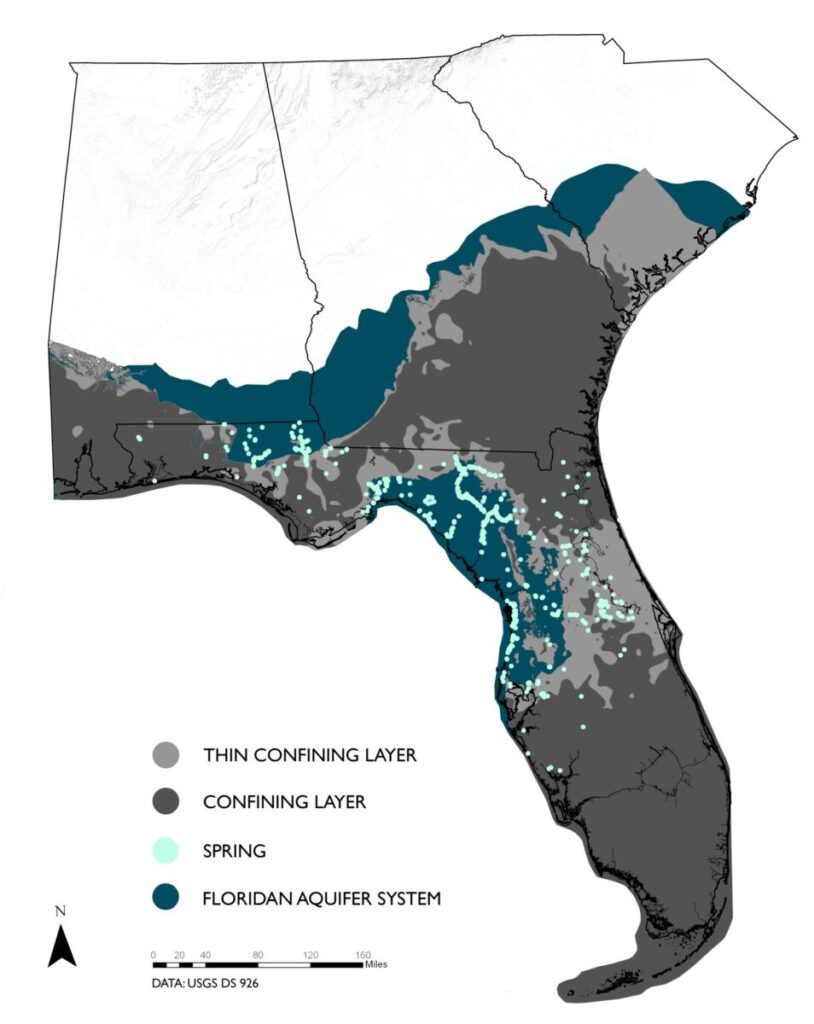
Aquifer confinement illustration. [Haley Moody, director, Howard T. Odom Florida Springs Institute]
As the North Central Florida region bakes under unrelenting sunshine, residents and local leaders are anxiously awaiting the heavy rains that often come in the afternoon this time of year. But environmental scientists and geologists are warning that the combination of a severe drought, excessive groundwater pumping and any sudden deluge of rain is the perfect recipe for a dangerous geological hazard: sinkhole collapses.
The St. Johns River Water Management District recently declared a Phase III Extreme Water Shortage in this region in response to exceptional drought conditions and severely declining groundwater levels. While mandatory irrigation restrictions are put in place to conserve drinking water, experts say reducing our daily draw on the Floridan aquifer is also a matter of public safety.
The mechanics of a collapse
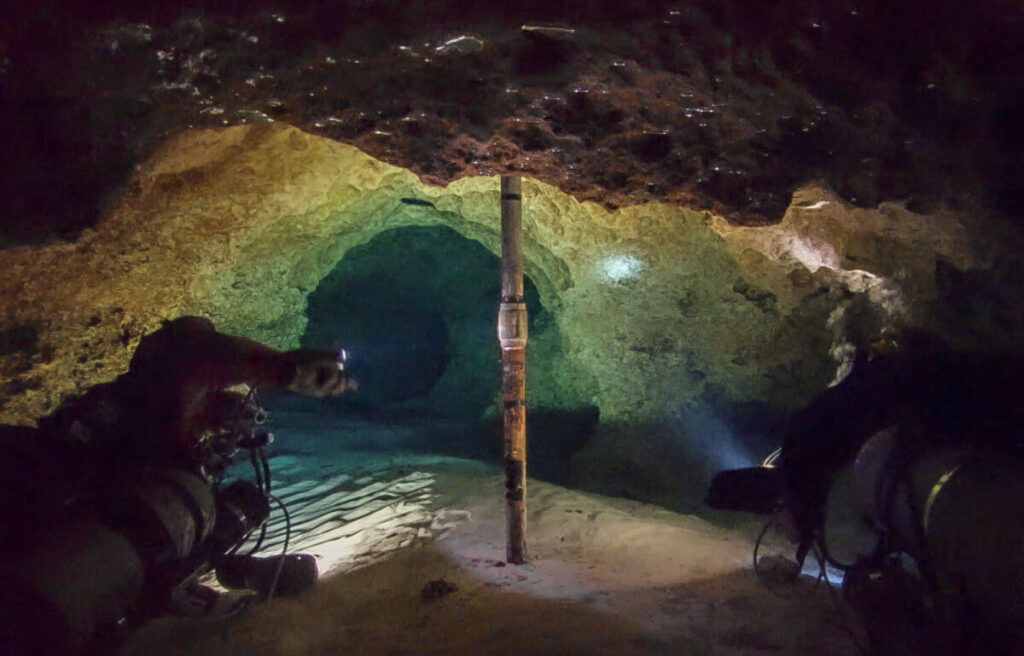
To understand the danger, consider the porous limestone, or karst, that makes up the Floridan aquifer. The aquifer acts like an underground sponge full of water-filled cavities and caves. Under normal weather conditions, the water inside these cavities provides a “hydrostatic buoyancy effect,” which literally helps hold up the ceiling of the underground limestone cavities.
However, during a prolonged drought—exacerbated by human groundwater withdrawals for drinking, agriculture and lawn irrigation—the water levels plummet, stripping away this vital support.
Haley Moody, director of the Howard T. Odum Florida Springs Institute, explained the phenomenon during a June 5 meeting with community members about the current health of Silver Springs.
“If the aquifer level drops in a lot of places in Florida, it’s the water that’s holding up the land above it, so if that water level drops too far, the land can drop right along with it and we get sinkholes,” she explained.
Because Marion County features areas where the aquifer is completely unconfined and highly susceptible to dissolution, the county’s own Aquifer Vulnerability Assessment categorizes the region west of Silver Springs as “most vulnerable” and “more vulnerable.”
When the rain finally comes
The greatest danger, paradoxically, arrives when the drought breaks. According to a comprehensive sinkhole report by the Florida Department of Environmental Protection’s Geological Survey, heavy rainfall over a short period acts as a massive trigger for sinkholes.
When rain saturates the earth, it adds an immense amount of weight to the “overburden” sediments—the sand and clay sitting directly above the unsupported limestone cavities. Simultaneously, the heavy rainfall softens these overburden sediments, causing the weakened, unsupported ceilings to abruptly collapse under the sudden pressure.
Bill Hawthorne, a senior environmental scientist with the institute, who has extensively studied Marion County’s ecosystems, warned residents about this scenario during the community meeting.
“As we’re experiencing this drought and groundwater withdrawals and getting a very low aquifer level, it’s exposing these large openings underground,” Hawthorne explained, referencing photos of recent sinkholes specifically in Marion County. “If we get a lot of rainfall sometime later this year, maybe next year, and those aquifer levels are still really low, it adds a ton of weight to the ground above and causes a lot higher or more frequent sinkholes.”
A dangerous historical precedent
This warning is not based on speculation; it is a well-documented geological pattern.
In the first half of 2012, North Central Florida experienced a moderate to extreme drought that drastically lowered water levels in the Floridan aquifer system. In late June, Tropical Storm Debby dropped up to 28 inches of rain over the region.
Because the aquifer levels had been drawn down near or below the top of the limestone rock, the buoyancy effect was gone. The geological survey concluded that the “additional weight of the water, in conjunction with the already lower water levels in the FAS [Floridan Aquifer System], set the stage for sinkhole collapse.”
The result was an outbreak of hundreds of triggered sinkholes across Hernando, Suwannee, and surrounding counties.
Geologists note the activities of humans, such as heavy groundwater withdrawal, can mimic or exacerbate these natural drought conditions, artificially triggering sinkhole development.
For Marion County residents, the message from scientists is clear: adhering to water conservation mandates isn’t just about protecting the ecological health of Silver Springs. Holding back from draining the aquifer is a critical structural necessity.
If the community continues to stress the aquifer during this drought, the ground beneath our homes and roads may not be able to support the weight of the water when the heavy rains finally return.

Support community journalism
The first goal of the Ocala Gazette is to deliver trustworthy local journalism so corruption, misinformation and abuse are not hidden from the public or unchallenged.