
Growing a rainbow garden
Colorful, nutrient-dense foods can help promote good health.
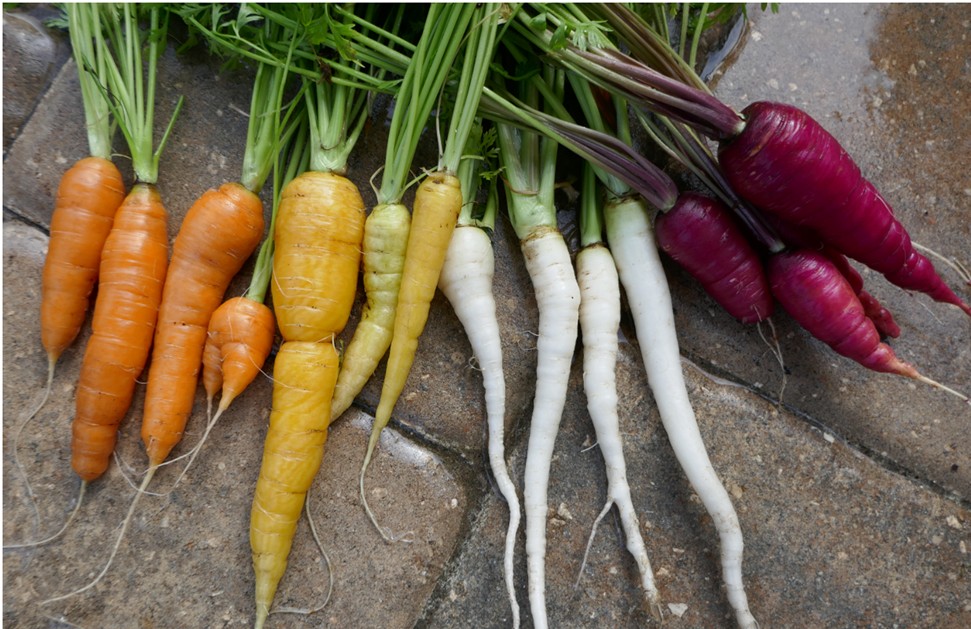
Rainbow carrots. [Photo courtesy UF/IFAS Marion County]
Growing a garden throughout the year can provide nutrient-dense food that promotes good health. A rainbow garden is a type of garden that includes fruit and vegetables that contain all the colors of a rainbow.
Many of these bright colors are plant pigments that also function as antioxidants. Virtually all antioxidants originate only from plants. Consuming regular servings of these brightly colored foods is associated with reducing the risk of developing many chronic diseases, such as cardiovascular disease and some types of cancer. The greatest abundance of antioxidants are found in brightly colored fruit and dark leafy green vegetables.
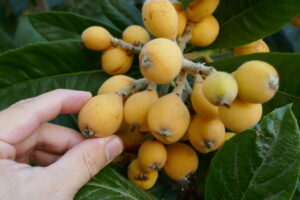
Loquat fruit. [Photo courtesy UF/IFAS Marion County]
First, it is important to touch on the basics of growing a sustainable garden. Most crops need to be grown during certain times of year, such as during the warm or cool season for North Central Florida. Select the right crop for the season and select the best possible varieties. If you are unfamiliar with the best varieties, the University of Florida’s “Vegetable Gardening Guide” contains a list of recommended varieties and other key information.
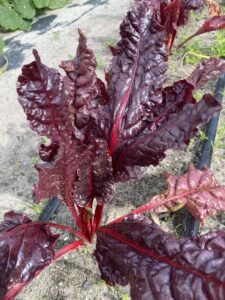
Swiss chard. [Photo courtesy UF/IFAS Marion County]
Now that the gardening basics have been covered, let’s go over the specific crops that can turn a standard garden into a rainbow garden. As mentioned earlier, each crop has a time of year when it will grow best, so we will divide crops into warm-season and cool-season crops.
Cool season crops primarily consist of dark leafy green vegetables. These can contain key carotenoid antioxidants, such as lutein and zeaxanthin, which can support eye health. Some of the most common cool-season garden crops are broccoli, cabbage, carrots, cauliflower, kale, legumes and spinach.
Cool season fruit crops include blueberries, loquats, mulberries, nectarines, peaches, persimmons, plums, strawberries, various peppers and tomatoes. Most citrus varieties are harvested during the cool season and are rich in vitamin C and carotenoids. Citrus grows best in well-drained, good-quality soil and in dappled sunlight.
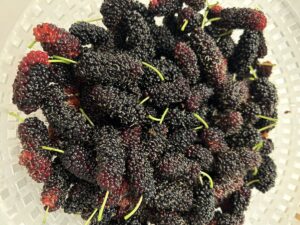
Mulberries. [Photo courtesy UF/IFAS Marion County]
Perhaps the most well-adapted of these crops to Florida’s climate is the sweet potato, which contains many brightly colored varieties. They need full sun, regular water and a moderate amount of fertilizer to produce an abundant crop. New sweet potato plants are grown from the vines that emerge from the tuber. These are called “slips.” Once the vines are several feet long, they can be cut into slips about six inches long and planted two or three inches deep. Sweet potato crops are usually ready for harvest after about 120 days. Once harvested, they can remain in good condition for several months if stored in a dark and well-ventilated location.
With a bit of planning, a productive rainbow garden is a very real possibility for Florida gardeners.
For gardening questions or inquiries about upcoming classes, reach out to the UF/IFAS Marion County Extension office at (352) 671-8400 or email [email protected]
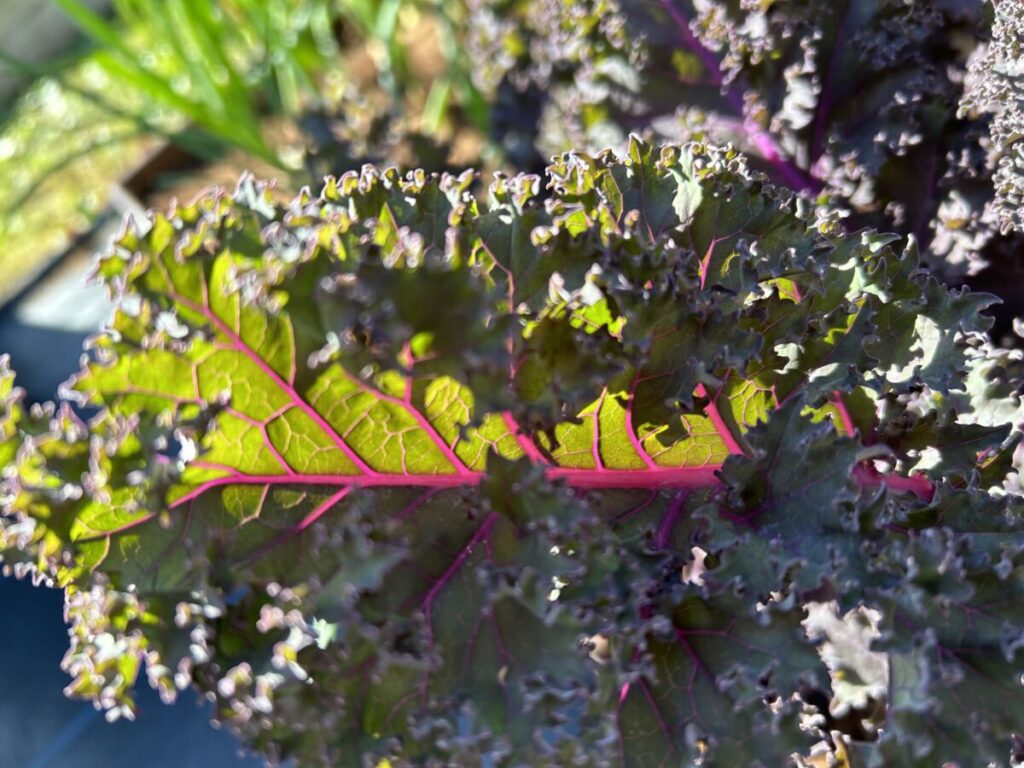
Red Russian kale. [Photo courtesy UF/IFAS Marion County]

Support community journalism
The first goal of the Ocala Gazette is to deliver trustworthy local journalism so corruption, misinformation and abuse are not hidden from the public or unchallenged.