
Research scientist to speak in Ocala
The IHMC evening lecture series continues Feb. 12 with Dr. Nicole Rendos speaking about walking.
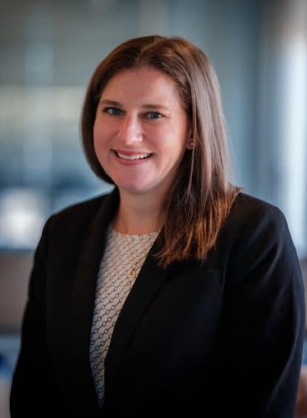
Nicole K. Rendos, Ph.D. [Photo courtesy IHMC]
If you are near downtown Ocala on the evening of Feb. 12, you may want to consider walking over to the Institute for Human & Machine Cognition campus to hear guest lecturer Dr. Nicole Rendos speak about that very thing — walking.
Rendos will continue the IHMC Ocala Evening Lecture Series with a talk titled, “We All Start Walking The Same – So Why Don’t We End That Way?”
According to materials provided by IHMC, walking is one of the first skills we learn in life, and one of the most important for maintaining independence, health and quality of life. Yet as we age or develop chronic conditions, the way we walk often changes in subtle ways long before problems become obvious.
Rendos will explore how walking develops across a lifespan and why aging and chronic diseases affect the way we move and how small changes in walking mechanics can have major consequences for balance, mobility, fall risk and long-term independence.
“Drawing from biomechanics research and clinical studies, this talk will highlight why walking is not just an automatic movement, but a skill that can be protected, improved and preserved at any age,” IHMC noted.
Rendos is a research scientist at the institute and assistant professor in the department of Movement Sciences and Health at the University of West Florida. Her research focuses on biomechanics and rehabilitation medicine, with a long-term goal of improving functional mobility and quality of life for individuals living with chronic disease, primarily diabetes and diabetes-related complications. She is the principal investigator of a National Institutes of Health funded clinical trial examining the use of audiovisual biofeedback to improve walking mechanics in individuals with diabetic peripheral neuropathy.
Rendos earned a bachelor’s degree from West Virginia University and a post-professional master’s degree from the University of Virginia, both in athletic training. She completed her Ph.D. in biomechanics and exercise physiology at the University of Miami, followed by two post-doctoral fellowships in neurophysiology and rehabilitation medicine biomechanics. She holds professional certifications in sports medicine and human performance as a certified athletic trainer, certified strength and conditioning specialist and fellow of the American College of Sports Medicine. She is president-elect of the Southeast Chapter of the American College of Sports Medicine. Prior to joining IHMC, she served as an assistant professor in the School of Medicine at Emory University in Atlanta, where she maintains an academic affiliation.
The doctor was born in Westchester County, New York, and raised between Westchester and neighboring Rockland County.
“Both of my parents commuted into New York City each day for work, but I grew up in the suburbs just outside of the city,” she shared via an email exchange.
When we asked about her life as a child/young adult, Rendos noted that she was “both studious and athletic growing up, and I also spent a significant part of my childhood and teenage years playing musical instruments.”
“I graduated from both high school and college with a 4.0 GPA. In high school, I was a competitive athlete, swimming backstroke in the fall and participating in indoor (winter) and outdoor (spring) track and field as a pole vaulter. When I entered college, my interest in sports and health naturally led me to study athletic training, which allowed me to work closely with athletes in a healthcare setting. The demands of that program required more than 20 hours per week of hands-on clinical work with sports teams on top of my classes, making it difficult to continue competing in track and field beyond my freshman year. Instead, I transitioned to endurance sports, including marathon running and triathlons, activities that I continue to pursue today,” she noted.
Rendos said that before she went to college, she wasn’t sure if she wanted to pursue a career in forensic science, music or healthcare.
“That changed during my senior year of high school, when I sustained a significant elbow injury while pole vaulting. During my recovery, I was introduced to the field of athletic training and quickly realized it combined many of my interests — science, movement and helping people. I pursued that path through a post-professional master’s degree in athletic training, which included completing a master’s thesis. That research experience became a turning point and sparked my interest in scientific investigation. It ultimately led to a career in research that has continued through my Ph.D. training, postdoctoral fellowships and current role as a research scientist. I have now pursued this work for more than 15 years,” she explained.
She offered that her research career initially focused on endurance athletes and sports-related injuries, drawing from her background in athletic training and sports medicine.
“This focus began to shift after a conversation with my husband while he was in his first year of medical residency as a foot and ankle surgeon. At that time, he was frequently performing partial-foot amputations due to complications from diabetes. During that conversation, I learned that while the standard of care prioritized wound healing, patients were often not referred to rehabilitation to relearn how to walk and function after the amputation. That realization was where my research focus shifted from studying injuries in endurance athletes to helping individuals with chronic disease walk more effectively and reduce risk for further complications,” Rendos stated.
She became connected with IHMC during her fifth year as an assistant professor in the School of Medicine at Emory University.
“A colleague who held a joint appointment with Georgia Tech and IHMC introduced me to several members of the IHMC research team. Through these early conversations, I realized IHMC would allow me to expand my research in new and meaningful ways, including exploring prosthetic technologies and better understanding how chronic disease affects the body over the course of a lifetime. While this type of work would have been possible at Emory, it would have been more difficult and slower to pursue,” Rendos shared. “What ultimately drew me to IHMC was its highly collaborative environment. Being surrounded by scientists who are leaders in their fields, and working alongside them on a daily basis created an opportunity to grow my research and help people in more impactful ways. That combination made IHMC the right place for the next chapter of my career.”
The IHMC Ocala campus is located at 15 SE Osceola Ave.Each evening lecture begins with a reception at 5:30 p.m., followed by the talk at 6 p.m. The lectures are free to attend but registration is encouraged as seating is limited. To RSVP, go to https://ihmc-20260212.eventbrite.com
To learn more, go to ihmc.us

Support community journalism
The first goal of the Ocala Gazette is to deliver trustworthy local journalism so corruption, misinformation and abuse are not hidden from the public or unchallenged.