
Ocala faces budget strains amid tariff controversy
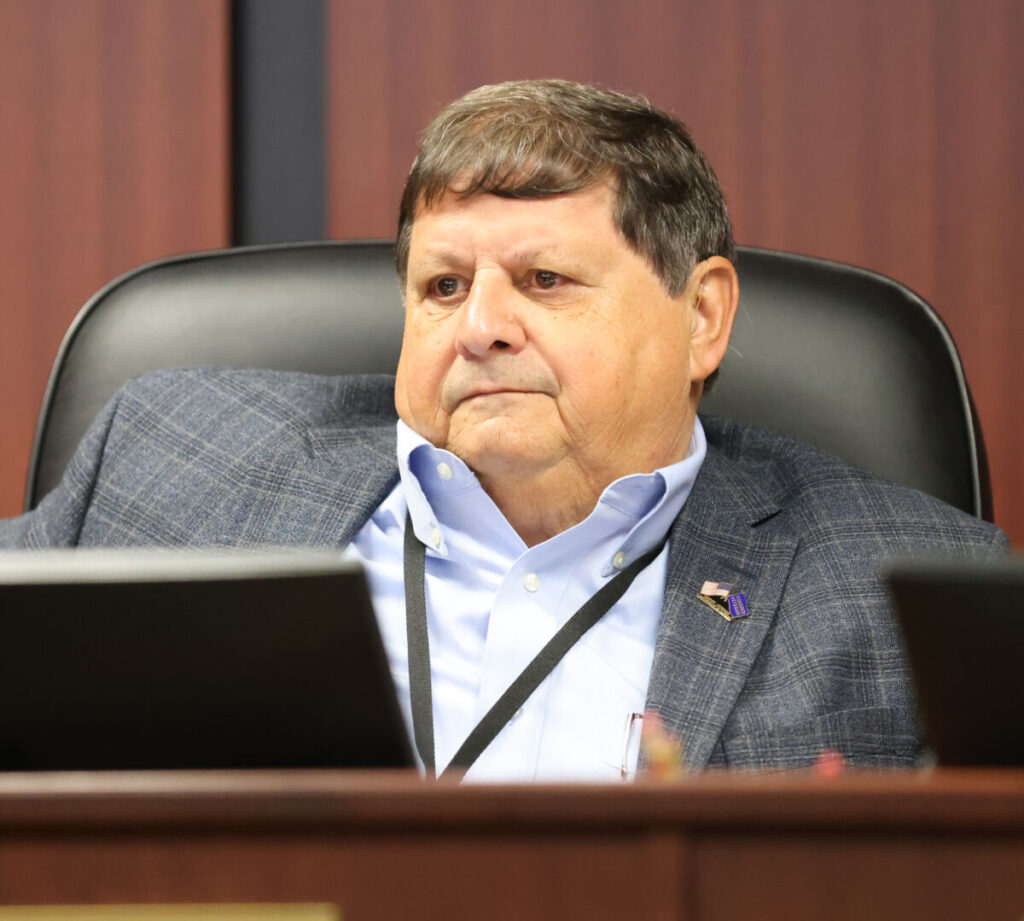
Ocala City Councilmember Jim Hilty listens during an Ocala City Council meeting at City Hall. [Bruce Ackerman/Ocala Gazette file photo]
Ocala officials who recently have commented upon the real or potential impacts on their budgets caused by tariffs have been cautioned about drawing that link—at least, for now.
During two recent City Council meetings, officials have cited tariffs as the reason for their budget problems. Also noted was the uncertainty caused by efforts at the state level to possibly modify or eliminate property taxes in Florida, which could wreak havoc on local governments.
Since then, discussions on social media have exploded into anger and blaming, leading at least one City Council member to call for caution in blaming the politically charged tariffs for the problems.
“Right now, in the economy, it’s not showing up, even as of today, hasn’t shown up in the CPI,” said council member James Hilty. “So, I’d be cautious going forward using that we’re increasing because of tariffs.”
The issue started Aug. 5 when Director of Fleet Management John King cited tariffs as the reason behind asking for a budget resolution to cover a $395,000 deficit in the office’s account.
The shortfall, he said at the City Council meeting, “is because of really unforeseen expenses in automotive parts due to tariffs. We’re requesting funding to bring that account back out of the deficit so that we can continue to buy parts and operating supplies to repair our fleet of vehicles.”
Councilman Ire J. Bethea Sr. questioned whether the parts are being purchased in the United States.
“The great majority of automotive parts, supplies, including vehicles, are sourced globally. So, it’s just not even parts that are put together here in America. Different parts and pieces of those parts are sourced globally,” King said.
The council approved Budget Resolution 2025-170, transferring $395,000 from the General Fund Reserve to cover the deficit.
Then, at an Aug. 12 budget workshop, Hilty noted King’s tariff reference after Budget Director Tammi Haslam cited tariffs as a key driver of rising 2025-2026 budget costs.
“The cost of goods and services consumed by the organization continues to rise, which could worsen with the impact of tariffs,” Haslam said. “We are monitoring the possibility of a ballot amendment in 2026 to modify or even eliminate ad valorem taxes, and the budget office continues to work to develop a long-term plan to identify the needs of the organization over the next few years and determine viable funding sources for those needs.”
Hilty interjected with a comment on the use of the word “tariffs.”
“You mentioned part of the budget increases was because of tariffs and last time Mr. King mentioned that, it created a big stir,” Hilty said. He noted that as of that meeting, the full impact of the tariffs, which are being rolled out, are not being felt in the economy.
Haslam clarified her comments by saying, “I was just anticipating what might occur in the future, not what’s occurring currently, just, it’s just a day-to-day flow with that topic.”
Hilty’s cautionary comment followed public backlash sparked by online articles linking the fleet deficit to tariffs.

Support community journalism
The first goal of the Ocala Gazette is to deliver trustworthy local journalism so corruption, misinformation and abuse are not hidden from the public or unchallenged.