
City Council considers $1.15 billion budget for fiscal year 2025-2026
Public hearings are set for Sept. 3 and 16 in council chambers at City Hall.
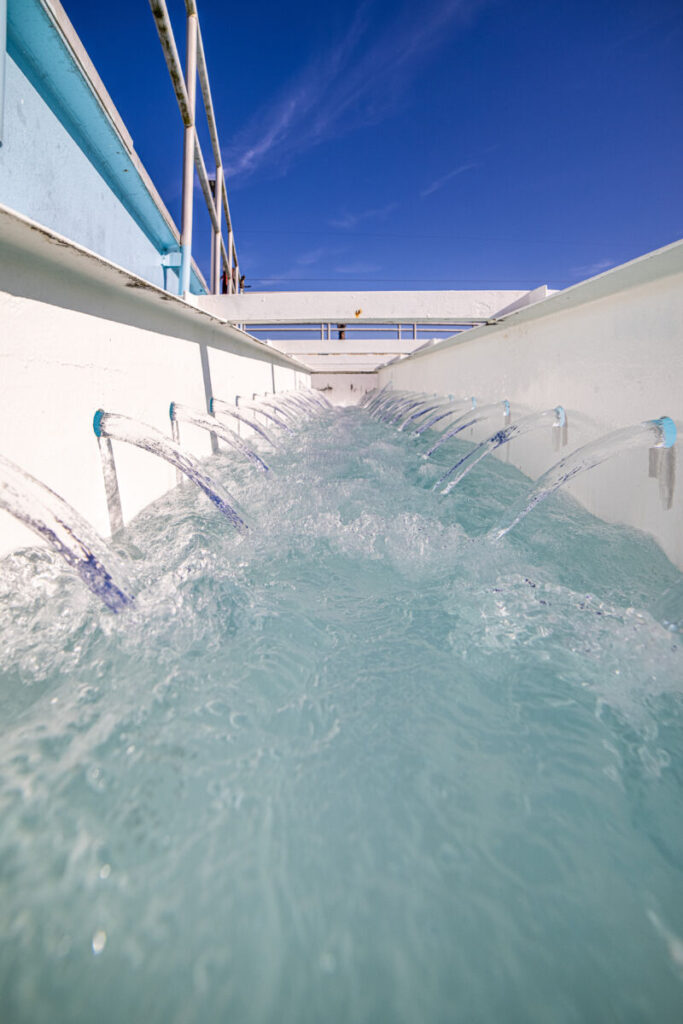
The city of Ocala’s proposed 2025-2026 budget includes a modest water rate hike, the only utility adjustment for the year. [Ocala Gazette file photo]
Ocala City Council members got their first look at the proposed $1.15 billion budget for fiscal year 2025-2026, which envisions no millage rate increase for property owners while addressing rising costs and potential challenges, such as a 2026 ballot amendment that could impact property taxes.
At a city hall workshop on Aug. 12, Budget Director Tammi Haslam said the budget aligns with the city’s five strategic goals: positioning Ocala as an economic hub, ensuring fiscal sustainability, fostering an engaged workforce, achieving operational excellence and enhancing quality of place.
Chief Financial Officer Janice Mitchell noted that, with salaries, benefits and supply costs rising, Ocala’s rapid growth is helping to keep the tax rate in check.
“Commercial and residential development boosts sales tax and other revenues, allowing us to fund services without raising millage,” she said.
Public hearings on the budget are set for 4 p.m. on Sept. 3 and Sept. 16 in council chambers at City Hall. The new fiscal year begins Oct. 1.
Haslam began her presentation of the budget with the general fund, proposed at $188.1 million, which keeps the current millage rate of 6.6177 mills. This is the 11th consecutive fiscal year without an increase in the millage rate. This rate will generate $53.6 million in ad valorem revenue, a $5 million increase from the current year due to rising taxable property values.
Mitchell emphasized the city’s reliance on diverse revenue streams, including sales tax, gas tax, communication tax and enterprise fund transfers.
“Our police budget alone exceeds ad valorem revenue, so we depend on multiple sources,” she said.
Ocala’s budget draws from several revenue sources to fund city services. The fire rescue assessment, staying at current rates, aims to collect $18.2 million. The city announced the fire assessment fee rates on Aug. 1 as part of the truth in millage (TRIM) notices, which are mailed to property owners.
The penny sales tax is expected to bring in $12.2 million, with 60% going to transportation and the rest split evenly for police and fire equipment. Additionally, $29.8 million comes from city utility customers, including $20.1 million from electric service, $6.1 million from water service, $2.5 million from sanitation service and $1.1 million from the Ocala Fiber Network. Utility taxes add $12.3 million, while communications taxes contribute $3.3 million.
The general fund maintains a 20% reserve for cash flow and emergencies, such as hurricanes, where upfront costs may precede FEMA reimbursement.
Mitchell noted uncertainty about future FEMA funding.
“FEMA is great and everything, but you have to pay for those things up front and then they reimburse you,” she said. “This year, we’re very conservative because we don’t know what’s going to happen with FEMA. You have a federal government that we don’t know what’s going to happen yet, whether FEMA will remain as is, but you have to be prepared for that. As a CFO, I have to be prepared for if I must have the funding to pay for two natural disasters, two hurricanes and wait for reimbursement, or maybe never get reimbursed, or get less reimbursed, then we have to do that. That’s why we carry reserves.”
The budget includes a modest water rate hike, the only utility adjustment this year. Mitchell explained that the city employs Raftelis, a financial consulting firm, to conduct detailed rate studies every few years.
“They analyze our system. They analyze capital improvements, replacement cycles, everything, to ensure solvency while providing clean water and reliable services,” Mitchell said.
Ocala’s 2025-2026 Capital Improvement Plan would invest $76.4 million in 60 projects to boost infrastructure and growth. Key projects include $10.1 million for electric system upgrades and storm hardening, $14.4 million for engineering (including $1 million for two roundabouts on East Fort King Street to curb speeding), $5.3 million for Ocala Fiber Network expansion, $21.9 million for sewer and water resources like lift stations and treatment facilities and $3.9 million for facility upgrades, including an 800-space parking garage for a hotel development on SE 40th Street.
Mitchell highlighted the city’s proactive approach to replacing aging infrastructure, such as 95 Automated External Defibrillators for the Ocala Police Department and 17 for the electric department.
“We’re standardizing AEDs to match Ocala Fire Rescue and AdventHealth for training efficiency,” she said, noting a staggered replacement cycle to manage costs.
Public safety accounts for 45% of general fund dollars, with the budget allocating $500,000 for a proposed fire training facility.
“Police and fire (employees) currently travel for specialized training like range practice or driving courses. A local facility would save time and improve skills,” Mitchell said. “Right now, it’s just in a conceptual phase.”
Community sponsorships total $150,000, supporting groups including the Marion County Children’s Alliance and the Community Foundation for Ocala/Marion County. The $1.7 million in CRA grants, managed by the Growth Management Department, will fund streetscapes, land acquisition and gateways to enhance downtown areas.
Residents can review budget documents at ocalafl.gov/government/city-departments-a-h/budget/budget-documents.

Support community journalism
The first goal of the Ocala Gazette is to deliver trustworthy local journalism so corruption, misinformation and abuse are not hidden from the public or unchallenged.