
Mark Emery to lecture at IHMC
The Jan. 22 talk will delve into “Our Amazing Wild Backyard.”
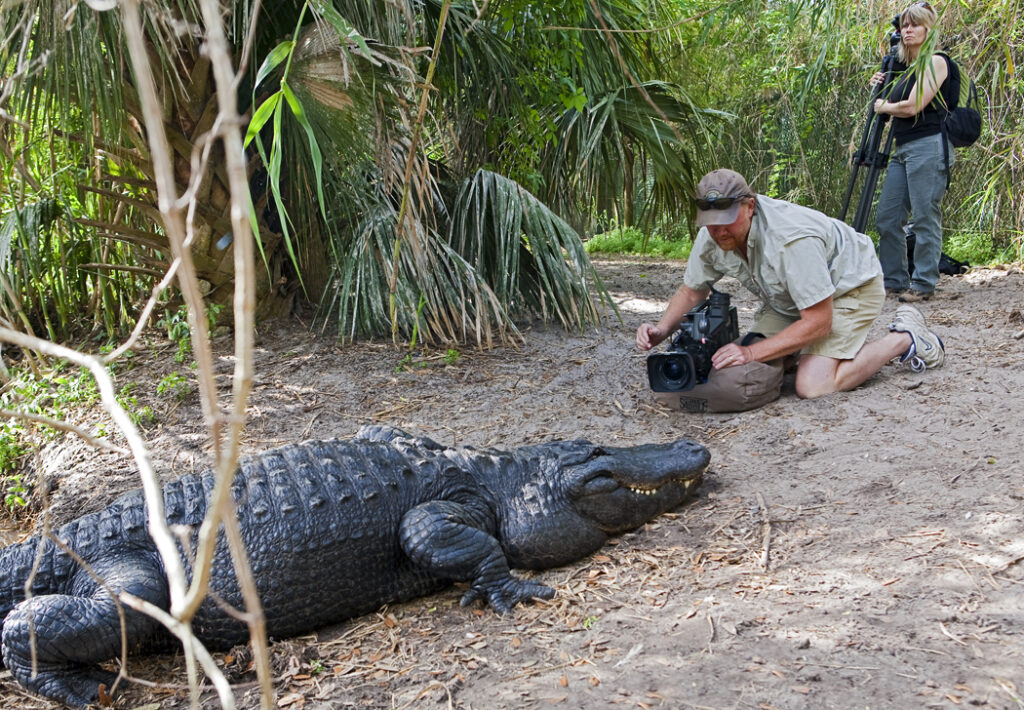
Mark and Mary Emery on the job.
Emmy Award-winning Ocala cinematographer, photographer and composer Mark Emery has worked in more than 35 countries. He and his wife, Mary, spend half of each year in Alaska, the other half at home in Ocala.
Mark came to Ocala in 1959 as a toddler. In his early life, he kept an eye out for poachers at the expansive Drake ranch. He once lived in the woods alone for nine months, after which he milked rattlesnakes and wrestled alligators at the famed Ross Allen Reptile Institute and also piloted glass-bottom boats at the Silver Springs attraction.
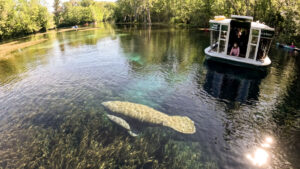
Manatee in the Silver River.
His work has appeared on many televisions channels and in print media such as National Geographic, PBS, the Discovery Channel, ESPN, the Smithsonian Channel, “The (London) Times,” “Newsweek,” the BBC and more. He has composed music and scored soundtracks for TV shows, films and commercials around the world.
He has filmed the world’s most aggressive crocodile, ferocious grizzly bears and many other species of reptiles, fish, fowl and four-footed mammals in North and South America, Europe and Africa.
But he believes that his own backyard — the whole of Ocala and Marion County — holds an incredible treasure trove of amazing wildlife and beautiful scenery.
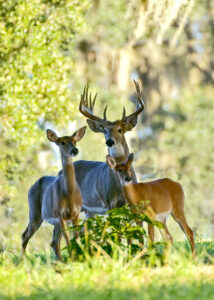
A buck with two doe.
On Jan. 22, Mark will be the guest speaker for the Institute for Human & Machine Cognition’s evening lecture series. The talk is titled “Our Amazing Wild Backyard.”
The “Gazette” did a phone interview with Mark on Jan. 5 to learn about what he will discuss during the free presentation.
“I’ve been to about 35 countries and Mary has been with me to a lot of them. And you come back and you go, ‘Our backyard is pretty spectacular.’ I can go to Paynes Prairie and see all the alligators I want. I can find bison and wild horses and deer and turkeys,” he said.
He said he will talk about those kinds of public places, but also about private lands.
“Cattle ranches are great assets here for wildlife. A lot of people don’t know that. We’ll go into a little of that because there’s a wonderful ‘poo factor’ to it. They leave little piles everywhere and then there will be sandhill cranes and other critters that feed off that and pick up grain that hasn’t been digested, and it turns into an incredible factory for critters,” he said with a laugh.
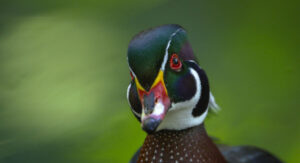
A wood duck.
“We’ve been to Venezuela and we’ve seen caiman at low water and tons of birds and different species, and they are exotic to us, but if you come here and you see a pileated woodpecker and a cardinal, you’re going to say those are both pretty cool. One’s bright red and one’s just got a big ole head and he’s knocking it into a tree. I’m going to try to build up what we have right here,” he added.
He mentioned the beauty of the hundreds of freshwater springs in the area as well as the many horse farms in the region, and how they attract wildlife.
“We are putting out some of the greatest horses in the world right here because you have lime rock right near the top of the soil and that produces a gravy of better minerals for all these animals,” he noted.
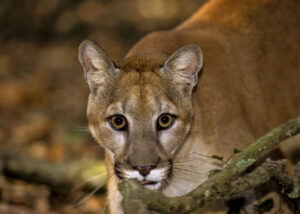
A Florida panther.
Mark said that big ranches in Marion County, such as the Drake property, which now has 5,800 acres in a conservation easement that can never be developed, and properties such as a 16,000+ acre piece owned by John Rudnianyn, can be real havens for wildlife such as deer, black bears, migrating birds, wild turkeys and more. He spoke about one 40,000-acre parcel of four contiguous ranches in the area that is home to Florida panthers.
“I think they’ve been there 50 years or so. We need to not populate those areas and sell them out. Supposedly, panthers are only in South Florida, but they are not, they are up here in places like that, where they have that much room to feed. They are eating wild hogs, which are tearing up the ground. Those are the jobs those big predators do. They are phantoms, so you hardly ever get to see one,” he noted.
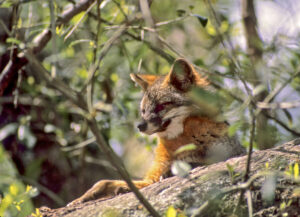
A grey fox in a tree.
Mark said he most recently has been working with a National Geographic team to photograph and film manatees in the Silver River.
“The density of wildlife is much greater in Florida than in Alaska. Up there, they get dense around one food source (salmon) and that lasts a couple of months, but there is a long time there where things are pretty scattered as far as wildlife. But right here, any day, you go to the Silver River and you’re going to see tons of birds and wildlife. Yesterday we saw wild turkeys, deer and tons of manatees, and lots of species of fish and turtles. So, you’re looking at that and thinking okay, Alaska is great in the summer when it’s 100 degrees in Ocala, but you come back here and there’s a lot more to see day in and day out. It’s pretty spectacular,” he offered.
And one of the things that helps him create spectacular images in the area is what he refers to as the “God rays.”
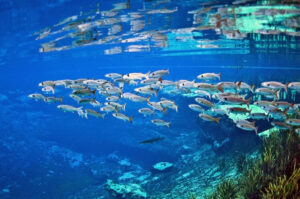
Mullet in the Silver River.
“When you get underwater, you’ll see little particles in the water and it’s back-lit, and you’re on the other side of it and looking back towards the sun,” he explained about the phenomenon. “I’ve noticed when people come here form Hollywood, they are stunned. I’m always looking for that particular kind of accent if I can find it; big columns of light coming down.”
When he is in Ocala, Mark is part of the Silver Springs Professional Dive Team, whose members don scuba gear and clean up the bottoms of the glass-bottom boats and the left-over movie statues in the springhead of Silver Springs. He said that is one way he can be part of local conservation efforts, which he will speak about during the lecture.
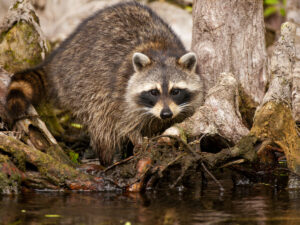
A raccoon.
“You don’t have to change the world; you don’t have to do a list of things. Find one or two things that you can do. In our world, we’re gone half the year, so we don’t sign up for things we won’t be there for. But the thing we do every month is clean the bottom of the glass-bottom boats at Silver Springs. We have a group of about 10 divers. We all make little films about it, too. You’ll see us working with manatees right behind us or doing all kinds of things when we’re down there. It’s some pretty prestigious divers. Silver Springs has several different clubs that monitor the springs and provide services,” he noted.
Each IHMC lecture beings with a reception at 5:30 p.m. The venue is located at 15 SE Osceola Ave., in downtown Ocala. The events are free to attend but seating is limited. To register, go to eventbrite.com/e/mark-emery-ocala-evening-lecture-tickets-1976746519051
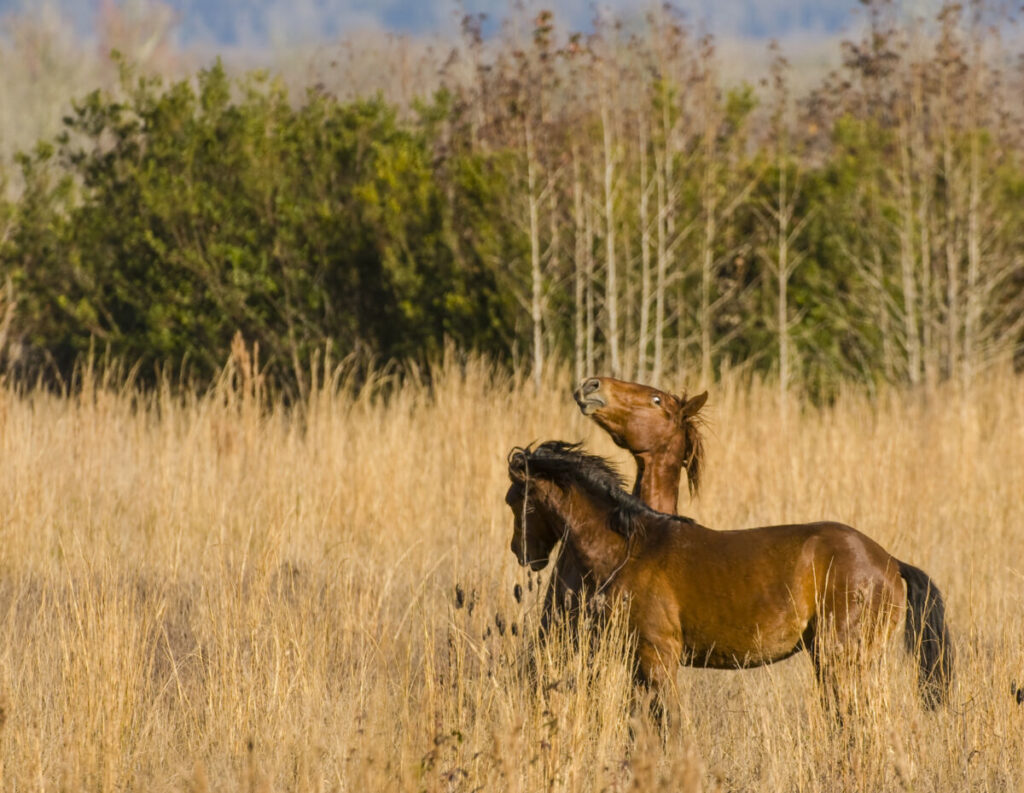
Wild horses.

Support community journalism
The first goal of the Ocala Gazette is to deliver trustworthy local journalism so corruption, misinformation and abuse are not hidden from the public or unchallenged.