
Marion County stalls on CSX lawsuit
Officials cite 'litigation strategy'
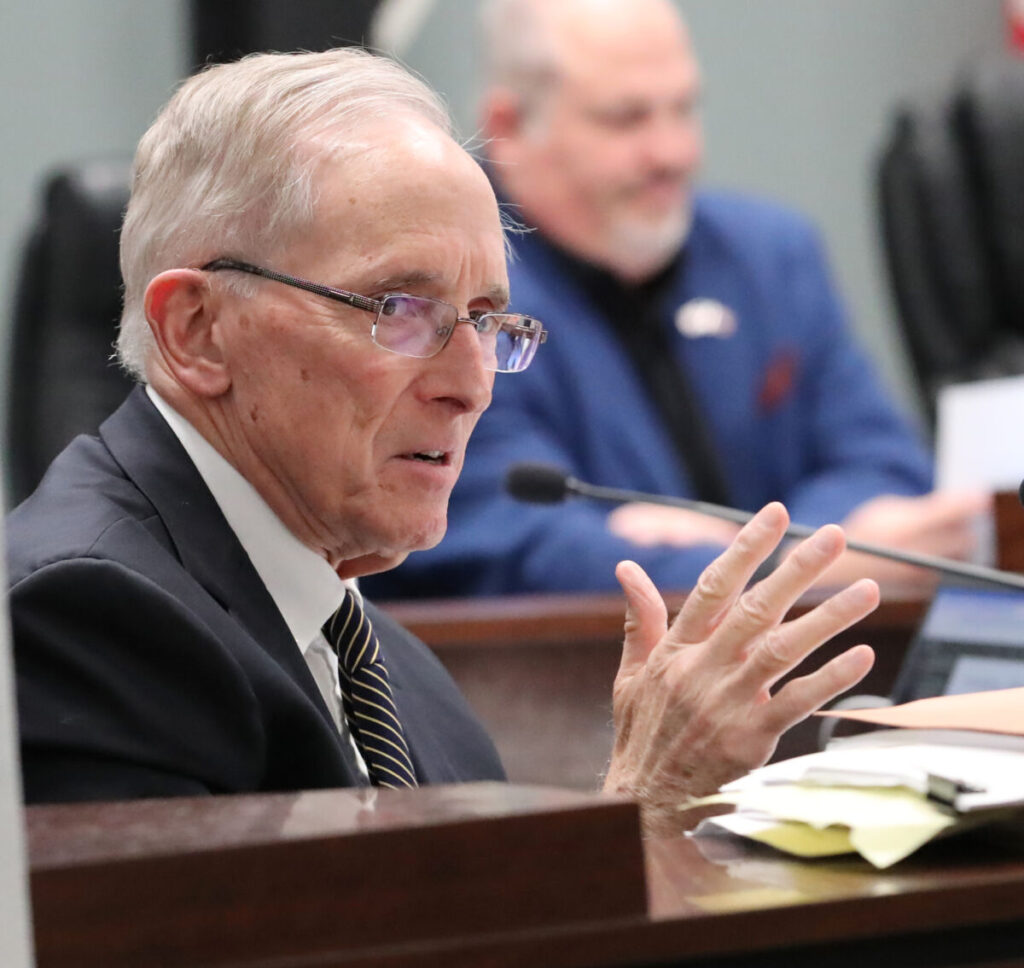
File Photo: County Attorney Matthew Minter speaks as hundreds of people fill the Marion County Commission auditorium to oppose the Jumbolair expansion during the Marion County Commission meeting in Ocala, Fla. on Tuesday, FFeb. 20, 2024. The Jumbolair expansion proposal was withdrawn before the meeting started. 200 people signed up to speak against the expansion. [Bruce Ackerman/Ocala Gazette] 2024.
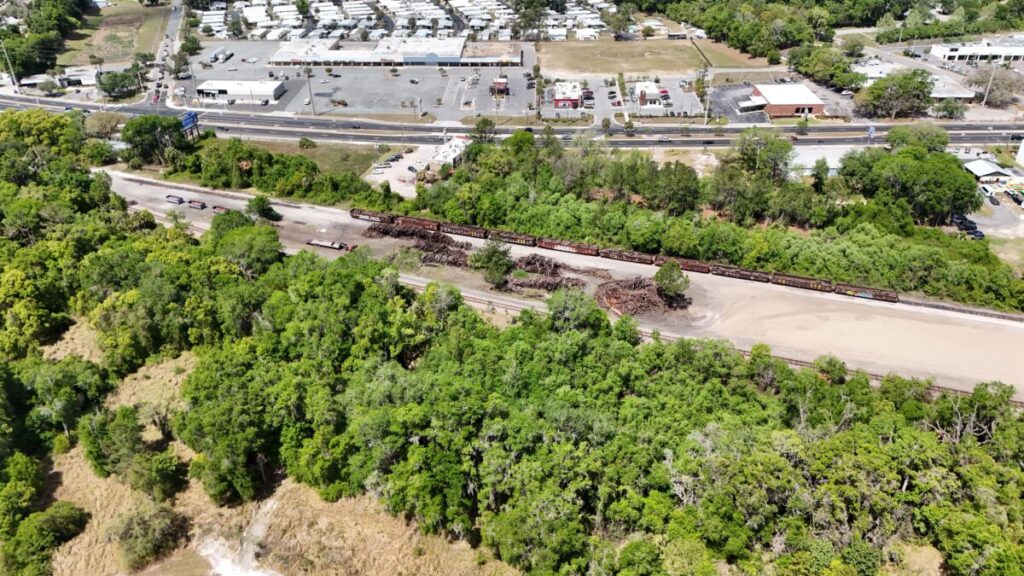
More than two months after a massive fire burned a stockpile of roughly 100,000 creosote-treated railroad ties near a first magnitude spring, Marion County officials have decided to continue stalling serving legal action against CSX Transportation.
Despite public statements on the county’s website claiming it was partnering with the city of Dunnellon to file an injunction against CSX after the Feb. 1 fire, a lawsuit was not filed by the county until a month later, on March 3.
County administrators and emergency officials traveled to Dunnellon on Feb. 9 to meet with Mayor Walter Green and City Attorney Andrew Hand. During that meeting, they discussed the pending lawsuit and the logic of Dunnellon joining the action, given that the largest percentage of the ties were situated within city limits rather than county jurisdiction.
They also told the city officials they were inclined to file the suit for injunctive relief but not serve CSX the lawsuit or any of the measures that usually come with injunctive relief, such as obtaining a hearing in front of the judge for an emergency relief. The county did not ask the court to issue a summons for service of process of the complaint on CSX. Without service of process, CSX was not on the hook to answer the county’s complaint.
But the city of Dunnellon did not join the county’s suit. Instead, CSX filed an appeal of Dunnellon’s code enforcement action with the court on Feb. 18. The court has ordered that initial briefs are due on April 29.
Marion County Attorney Guy Minter also noted that taking aggressive legal action might be less urgent now because CSX had removed a “substantial quantity” of the ties and verbally committed to removing all remaining materials by the end of February.
But February ended and all the rail ties were not removed. The county filed its lawsuit March 3, but, sticking to the strategy they outlined to Dunnellon, county officials have made no attempts to move the suit forward.
When pressed on the delay—and specifically asked to explain why the county was not planning to serve the lawsuit—Marion County Attorney’s Office representative Linda Blackburn refused to answer directly in a March 5 email.
“Because this matter is currently in litigation, we are limited in what we can share,” Blackburn wrote. “The information you’re requesting relates to attorney work product and litigation strategy, which the County is not in a position to discuss publicly.”
Blackburn further stated that the county’s goal is “not to litigate this matter in the court of public opinion, but to resolve it as efficiently and cost-effectively as possible directly with the entities involved,” adding that they are working with CSX to pursue an “expedient and practical resolution.”
The county’s opaque legal stance was reiterated during a April 7 update by Minter to the commission when he acknowledged there were still some rail ties left on the Dunnellon side of the property. He asked the commission if they’d like to give CSX a bill to pay back the cost of Marion County Fire Rescue’s efforts but noted the county was still not inclined to serve the complaint on CSX. He said his office continues to favor favoring a direct resolution with CSX rather than a court battle.
Minter also noted that Florida Department of Environmental Protection was continuing to oversee CSX remediation of the site and was satisfied with the results thus far.
This stance mirrors internal county communications sent during the height of the crisis. Text messages exchanged between county officials on the day of the fire show that Marion County leaders were eager to pass the reins to CSX and Dunnellon officials from the very beginning.
Although requested two months ago, the county has yet to provide the text messages of Commission Chair Carl Zalak during the crisis.
On the evening of Feb. 1, as the toxic fire subdued, Marion County Fire Chief James Banta texted county administrators that incident command would be moving to City Hall to “start transferring responsibility to CSX.” He expressed relief regarding the multi-agency response, writing, “Great collaboration with partners on this one. Thanks,” and noted that the fire department would begin focusing on cost recovery.
The following day, Banta firmly drew the line on the county’s involvement in the aftermath. “Jurisdiction is simple. City of Dunnellon and CSX,” Banta texted on Feb. 2. While he noted he would be happy to help or take over completely if asked, he stressed “Immediate hazards are minimal at most” and that “everyone needs a day to get situated.”
As previously reported, Marion County Comprehensive Emergency Management Plan (CEMP), indicates that the area’s geology is highly susceptible to contamination.
The CEMP explicitly warns: “The western half of Marion County is a high recharge area of permeable sands and an ‘unconfined aquifer’ with an increased vulnerability to HAZMAT spills.” The county plan further notes the material covering the aquifer is 30 to 200 feet thick, consisting “mainly of incohesive and permeable sand.”
History provides a grim warning of what happens when creosote meets this type of porous Florida soil. According to federal toxicological profiles, a very sandy substrate at the American Creosote Works Superfund site in Pensacola allowed a massive plume of wood-preserving wastes to migrate directly into the underlying sand and gravel aquifer. At similar sites, creosote components have been found to move 20 to 60 feet vertically into the water table.
Under the CSX cleanup plan for the Dunnellon, only 2.5 feet of soil was removed and tested, after the fire department used more than a million gallons of water to fight the fire.

Support community journalism
The first goal of the Ocala Gazette is to deliver trustworthy local journalism so corruption, misinformation and abuse are not hidden from the public or unchallenged.