
STATE NEWS BRIEFS
Hurricane season, bills to DeSantis, cold cases
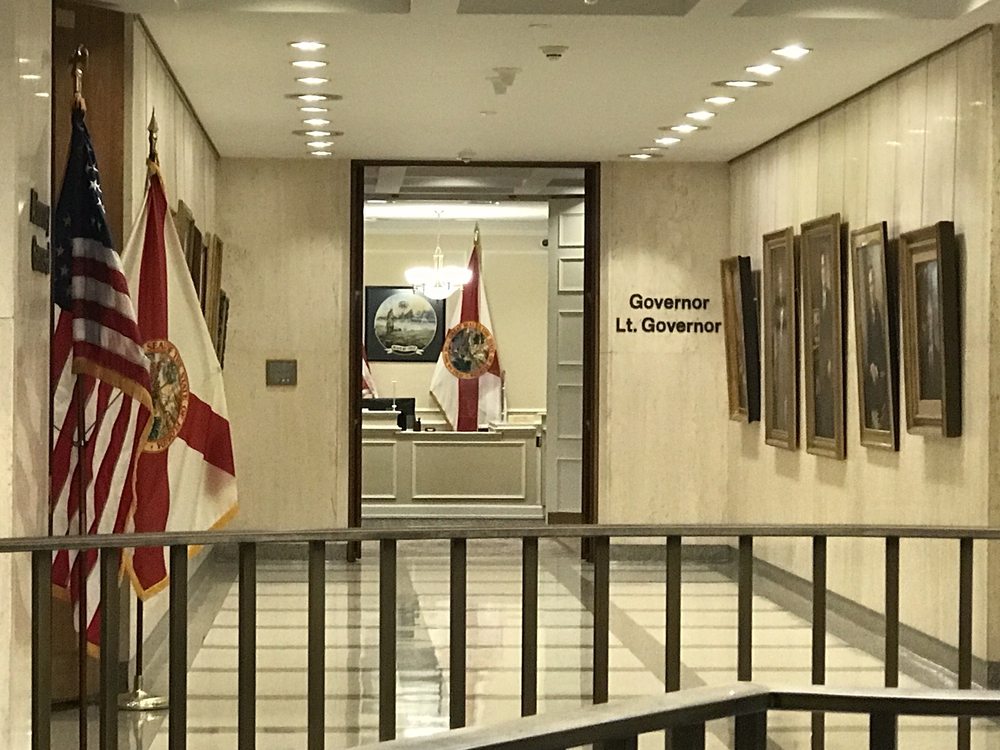
Inside the Florida State Capitol. [Photo courtesy dos.myflorida.com]
CSU forecasts ‘below-normal’ storm season
Colorado State University researchers on April 9 projected a “somewhat below-normal” Atlantic hurricane season.
The school’s forecast models predict 13 named storms, instead of 14 to 15 in an average year, six hurricanes instead of seven and two reaching major storm strength instead of three.
The researchers based their model on waters being slightly cooler than normal in the eastern and central tropical Atlantic and for currently weak La Niña conditions to likely transition to El Niño in a few months.
“We anticipate El Niño being the dominant factor for the upcoming hurricane season, driving increased levels of tropical Atlantic vertical wind shear,” the researchers posted online.
Vertical wind shear usually helps weaken or disrupt storms.
The model still shows sea surface temperatures in the western tropical Atlantic warmer than normal, as has been the case in recent years.
The storm season runs from June 1 to Nov. 30.
The meteorological company AccuWeather previously predicted 11 to 16 named storms for 2026, with four to seven reaching hurricane strength.
The AccuWeather forecast also included the potential development of El Niño weather phenomenon conditions, which would limit tropical activity to near or below historical average levels, especially in the second half and climatological peak of the season.
Last year, the Atlantic produced 13 named storms and five hurricanes, with four reaching Category 3 — winds of 111 mph to 130 mph and storm surge of 9 feet to 12 feet above normal tide.
None of the 2025 storms, though, made a direct landfall in Florida or the U.S.
From 2022 to 2024, Florida took direct hits from six hurricanes, including four that were Category 3 or stronger.
AccuWeather, one of several outfits that will release outlooks for the season, included in its forecast the potential for three to five of the named systems to directly affect the U.S.
Ag enclave, cursive writing and Trump highway bills headed to DeSantis
Top of Form
Bottom of Form
A bill allowing single-family homes on some property zoned for agriculture was sent to Gov. Ron DeSantis on April 9.
The measure (SB 686) allows agricultural land bordered by development to be classified as an “agricultural enclave” and developed to the same density as the adjacent parcels.
Bonita Springs Republican Rep. Adam Botana, the sponsor of the House version of the bill, argued on the House floor on March 11 that the proposal “is about protecting property rights and ensuring a fair and transparent process with landowners asking local governments for direction about their property.”
The Republican-controlled House voted 90-20 for the proposal, which the Senate approved 34-2.
Friends of the Everglades classified the proposal as “pro-sprawl,” limiting public review from the development approval process.
A staff analysis of the bill notes developments submitted for the enclave property “must be treated as a conforming use, notwithstanding the local government’s comprehensive plan, future land use designation or zoning.”
“If development affects an established wildlife corridor, local governments are encouraged to incorporate site design measures that maintain habitat permeability,” the analysis states.
The enclaves can only be used for single-family homes in counties with populations under 1.75 million.
Only Miami-Dade and Broward counties have more than 1.75 million residents, based on 2025 estimates from the University of Florida Bureau of Economic and Business Research.
DeSantis has 15 days to act on the measure.
Bills from the 2026 legislative session were sent to Gov. Ron DeSantis on Thursday requiring students to be proficient in cursive writing, creating a specialty license plate for the Ultimate Fighting Championship and naming a road connecting the Atlantic to the Gulf coasts after President Donald Trump.
The road designation is for 124 miles of State Road 80 that stretches from Palm Beach County to Lee County. It is part of a transportation package (SB 628) that names several other roads and facilities, including the addition of the late Florida State University Football Coach Bobby Bowden’s name to Tallahassee International Airport.
The cursive writing requirement is part of an education package (SB 182) and students would have to demonstrate cursive proficiency by the end of fifth grade. Another piece of the bill directs school districts to place portraits of Presidents George Washington and Abraham Lincoln in a “conspicuous place” within every public school.
The measure also allows private schools enrolling 150 or fewer students to operate in commercial or mixed-use zoning districts without needing a special exception or land use change.
More specialty license plates could be on the way under a bill (SB 246) that starts the process to create plates for the Miami Northwestern Alumni Association, Christopher Columbus High School, the Ultimate Fighting Championship, the U.S. Naval Academy, U.S. Military Academy, Miami Dade College, Florida Film Legacy, and St. Petersburg College.
DeSantis has 15 days to act on the bills.
State teams with forensic company to address cold cases
Attempting to clear some of the approximately 21,000 unsolved murder cases in Florida, the Office of Statewide Prosecution is contracting with Othram, a Texas-based forensic technology company specializing in human identification.
Othram’s DNA detection technology is expected to provide new leads through forensic genetic genealogy, according to a release from the Attorney General’s office.
Attorney General James Uthmeier outlined the partnership while at the Florida Department of Law Enforcement regional operations center in Miami on April 8.
“As we continue to prove this new technology works, we’re able to track DNA evidence through family trees to catch bad guys, my hope is we’ll continue to put more resources and attention into it,” Uthmeier said.
Uthmeier said the state is using grants from his office to pay for the program.
The release from Uthmeier’s office notes that in addition to the unsolved cases, the state has nearly 900 cases with unidentified human remains.

Support community journalism
The first goal of the Ocala Gazette is to deliver trustworthy local journalism so corruption, misinformation and abuse are not hidden from the public or unchallenged.