
Marion County hires lobbying firm
The goal is to push back against "presently unattainable” state water regulations.
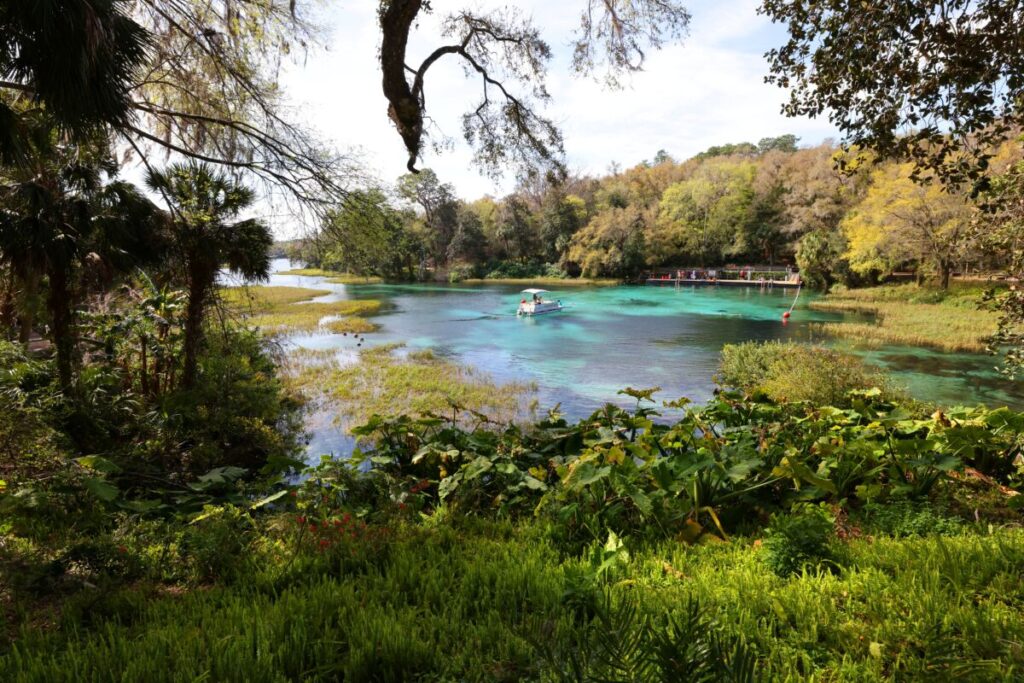
The main spring is shown at Rainbow Springs State Park in Dunnellon on Feb. 28, 2024. [Bruce Ackerman/Ocala Gazette file photo]
The Marion County Board of County Commissioners voted April 7 to hire a lobbying firm to negotiate with the state over new environmental regulations that county officials say are financially devastating and logistically impossible to achieve.
Commissioners approved a one-year, $108,000 contract with Tallahassee-based Ballard Partners. The firm, which will be paid in $9,000 monthly installments, was hired to represent the county’s interests before the Florida Department of Environmental Protection (FDEP) regarding compliance with the new Basin Management Action Plan (BMAP) for Silver Springs and the Rainbow Springs Group.
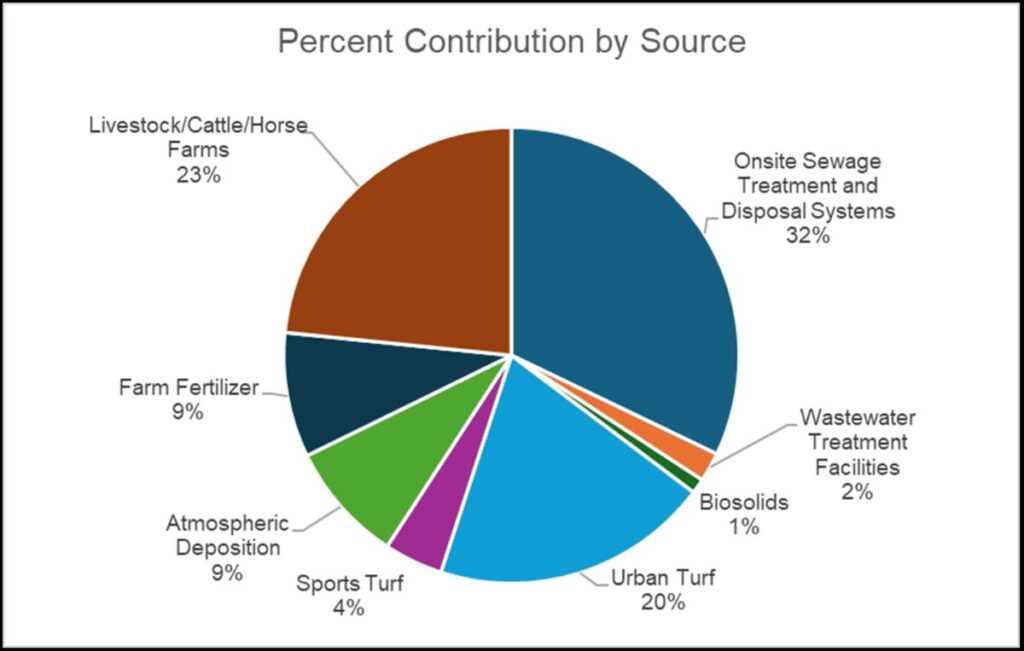
The FDEP developed the BMAP as an initiative to improve the water quality of the state’s Outstanding Florida Springs, which are impaired by excessive nitrate nitrogen. According to FDEP estimates, the total nitrogen load to groundwater in the basin exceeds 4.3 million pounds annually. To restore the water quality to the state’s target of 872,862 pounds, the BMAP necessitates a basin-wide reduction of more than 3.1 million pounds of nitrogen.
Marion County officials assert, however, that the state’s mandates are completely out of reach. In a May 2025 letter to the FDEP, County Engineer Steven Cohoon formally requested an extension to the timeline and a reassessment of the targets, stating that the proposed nutrient reduction goals are “presently unattainable due to environmental, economic, technical, and logistical constraints.”
Cohoon noted that current plans only allocate about 2.87 million pounds of reductions, leaving a 270,000-pound shortfall even before accounting for future population growth.
As previously reported, Marion County’s overall sports field footprint is also expanding, as the county recently approved additional sports fields at the World Equestrian Center, which is located in an area that is subject to the Silver and Rainbow BMAP.
The ±251-acre complex, owned by Golden Ocala Equestrian Land, LLC, is located near State Road 40 and sits within the county’s Secondary Springs Protection Zone. The BMAP boundary covers the groundwater contributing areas for the Silver and Rainbow spring sheds, encompassing the Ocala area where the WEC complex is situated.
Because the WEC Sports Complex plan includes multiple outdoor sports fields for baseball, soccer, softball and football, it falls under the BMAP’s “Sports Turfgrass Fertilizer” (STF) loading category.
As a private facility within the BMAP boundary, it is subject to specific STF regulations and will be required to adhere to the 2025 Sports Turf Best Management Practices (BMP) Manual to protect water resources and reduce nutrient leaching into the aquifer. This is a distinct difference to public school sports fields, where the state assigns the nitrogen reduction burden to the local county government The required nutrient reductions from private sporting facilities are assigned directly to the private owners.
Cohoon’s letter also highlighted a specific conflict over the state’s calculations for STF reductions.
“According to FDEP, sports fields at public schools have been classified under the sports turfgrass fertilizer (STF) loading source and attributed to the county,” Cohoon wrote. “However, Marion County Public Schools and the Marion County Board of County Commissioners are two distinct elected entities and should not be consolidated into a single ‘Marion County’ designation. Nutrient reduction allocations should be assigned separately, with Public Schools recognized as an independent responsible entity.”
County Attorney Guy Minter on Tuesday echoed the engineer’s concerns regarding the high costs and the county’s lack of jurisdiction over many of the pollution sources the state expects them to mitigate.
“The way that they have crafted this rule is oppressive, to say the least, not only for Marion County, but I mean literally, we’re talking in the billions of dollars that they said it would cost Marion County to clean up the springs,” Minter told the commissioners.
Minter pointed out that the county is being unfairly tasked with fixing nitrogen pollution generated by sectors it does not oversee.
“One of the ironies is that that includes the effects of agricultural land that we have no control over, and also issuance of septic permits by the health department that we don’t control, and so we’re asked to be responsible for the effects of things that we don’t have control over,” Minter said.
County officials evaluated the possibility of a legal challenge against the FDEP but ultimately decided that hiring a lobbyist to negotiate directly with the agency would be more productive and cost-effective.
“Rather than spending a lot of money trying to litigate this rule with the state agency, our recommendation [is to] engage the services of Ballard Partners, a Tallahassee lobbyist who’s had a lot of experience negotiating issues with the DEP in the past, and we feel like this would be our best chance for coming up with some reasonable resolution of this issue with Marion County,” Minter stated.

Support community journalism
The first goal of the Ocala Gazette is to deliver trustworthy local journalism so corruption, misinformation and abuse are not hidden from the public or unchallenged.