
Humanoid robots
The IHMC Ocala Evening Lecture series will feature Robert Griffin on Dec. 9.
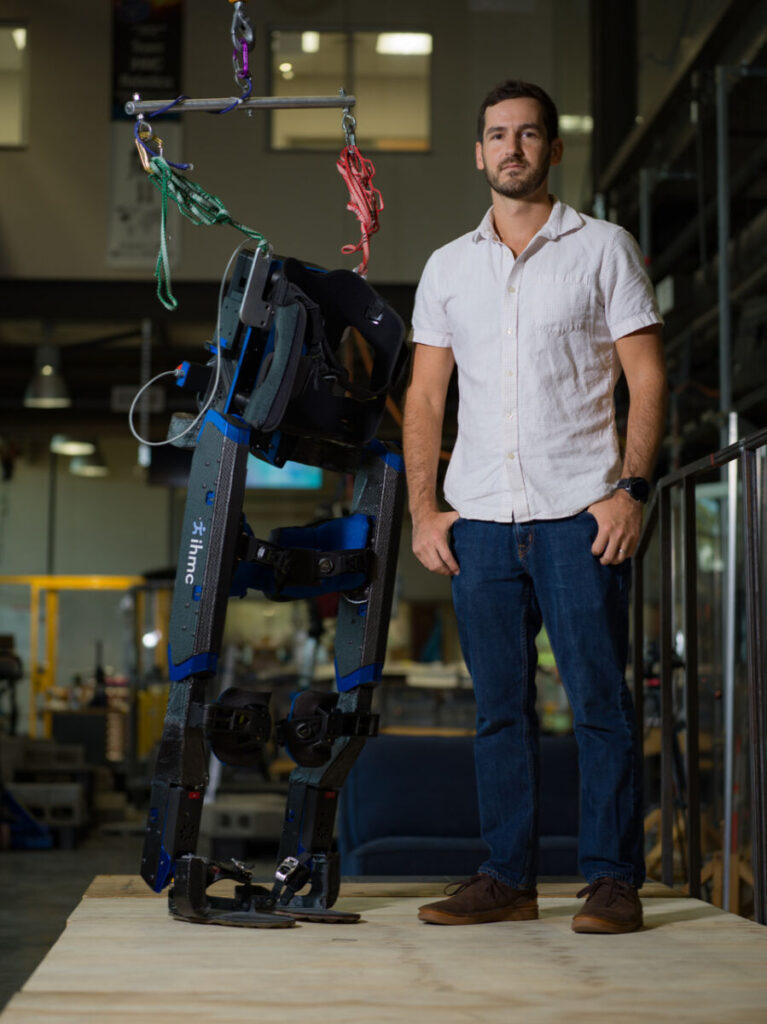
Robert Griffin, Ph.D. [Photo courtesy IHMC]
Robert Griffin, Ph.D., will lecture on “The Potential of Humanoid Robots, from Past, Present, to Future” at the Institute for Human and Machine Cognition in Ocala on Dec. 9.
Griffin earned his bachelor’s degree from Tennessee Tech University and his doctorate from Virginia Tech, with a primary research focus on the control of bipedal robotic mobility for humanoids and exoskeletons. He is a senior research scientist at IHMC and focuses on improving mobility and autonomy for legged robotics and powered exoskeletons.
Griffin leads the IHMC robotics group and heads a number of projects focusing on advancing humanoid robots. This includes projects from the Office of Naval Research, DEVCOM and Army Research Lab, mostly centering around the development and advancement of a next generation humanoid robot called Alex. He also is involved with the IHMC exoskeleton team, which most recently designed novel exoskeletons to carry loads and protect the musculoskeletal system to assist Department of Energy workers during nuclear remediation activities.
IHMC recently was named the Outstanding Research Organization in the 2025 Humanoid Robotics Industry Awards for its Nadia project. The awards are sponsored by Humanoid Robotics Technology in partnership with Novanta. IHMC was recognized among competition such as the University of California at San Diego, Massachusetts Institute of Technology, the University of California at Berkley, Standford University, Shanghai Tech University, the Instituto Italiano di Tecnologia, Harbin Institute of Technology, Peking University and ETH Zurich.
In his lecture, Griffin will discuss some of the history of humanoid robots, IHMC’s role and contributions to advances, as well as the potential likely (and unlikely) applications of these seemingly limitless systems.
To learn more about Griffin, the “Gazette” did an email Q&A with him.
Where were you born and raised?
“I’m from Chattanooga, Tennessee. Moving to Pensacola is the first time I’ve lived outside of Appalachia.”
What kind of kid/young adult were you?
“I was a pretty studious kid, although I played a number of sports and was in Boy Scouts. I always liked to do well in school but also liked to play sports and do martial arts, go camping, etc.”
When did you know what you wanted to be when you grew up?
“I grew up knowing I wanted to be an engineer. Both my parents were engineers and my dad’s dad was an engineer. I was always into technical things and always loved building things. I like engineering because it’s a combination of both working with your hands and building something with math and research and science.”
What inspired you to be on the path you are on currently?
“For most of college, I wanted to work in aerospace. But around senior year, I discovered robotics and really fell in love. I like the combination of building the robot and then making it move, which is what drew me to controls. When you combine that with discovering new things, robotics research was a pretty obvious choice.”
What is the most rewarding thing about your work?
“There are so many things. I’ve loved being able to build exoskeletons to help people who are paralyzed walk and folks do tasks they can’t otherwise. I love building new robot systems and getting them to move for the first time and do something new. And I’ve loved Science Saturday, getting to teach kids about the world around them and gain a deeper appreciation of science and how hands on it can be.”
How did you become connected to IHMC?
“IHMC was the second-place team in the DARPA Robotics Challenge (DRC) from 2012-2015 and first place in the US. At that time, I was working on my doctorate at Virginia Tech and was on another DRC team. My first exposure was seeing IHMC at this competition and seeing how much fun everyone was having while doing exceptionally well. I then met with a few of their engineers at a conference in the fall and came down to work on the exoskeleton project as a visiting researcher. After graduating, I joined full time.”
Griffin said he likes to run and do endurance sports.
“I have a wife and two little girls, which has made my race distances much shorter. I enjoy reading and cooking when I can,” he shared.
Each IHMC evening lecture begins with a reception at 5:30 p.m. The events are free to attend but reservations are requested and may be made at ihmc-20251209.eventbrite.com
To learn more, go to ihmc.us/life/evening_lectures/ocala-lecture-series
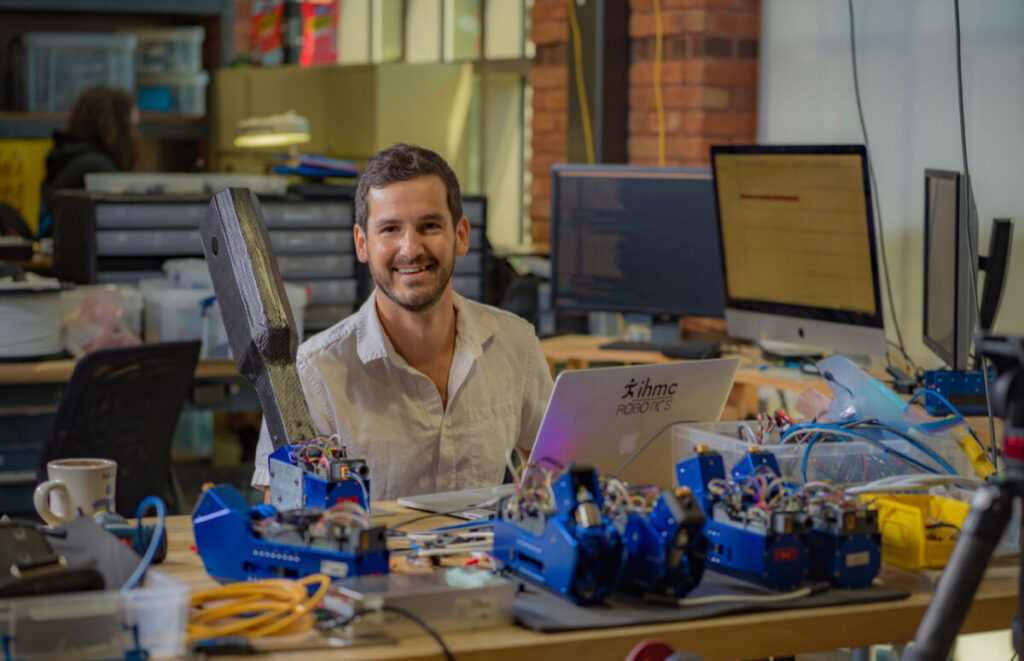
The IHMC Ocala Evening Lecture series will feature Robert Griffin on Dec. 9. [Photo courtesy IHMC]

Support community journalism
The first goal of the Ocala Gazette is to deliver trustworthy local journalism so corruption, misinformation and abuse are not hidden from the public or unchallenged.