Florida? Or North Korea?
DeSantis talks about the “free state of Florida” while strong-arming broadcasters, our Capitol Columnist writes.
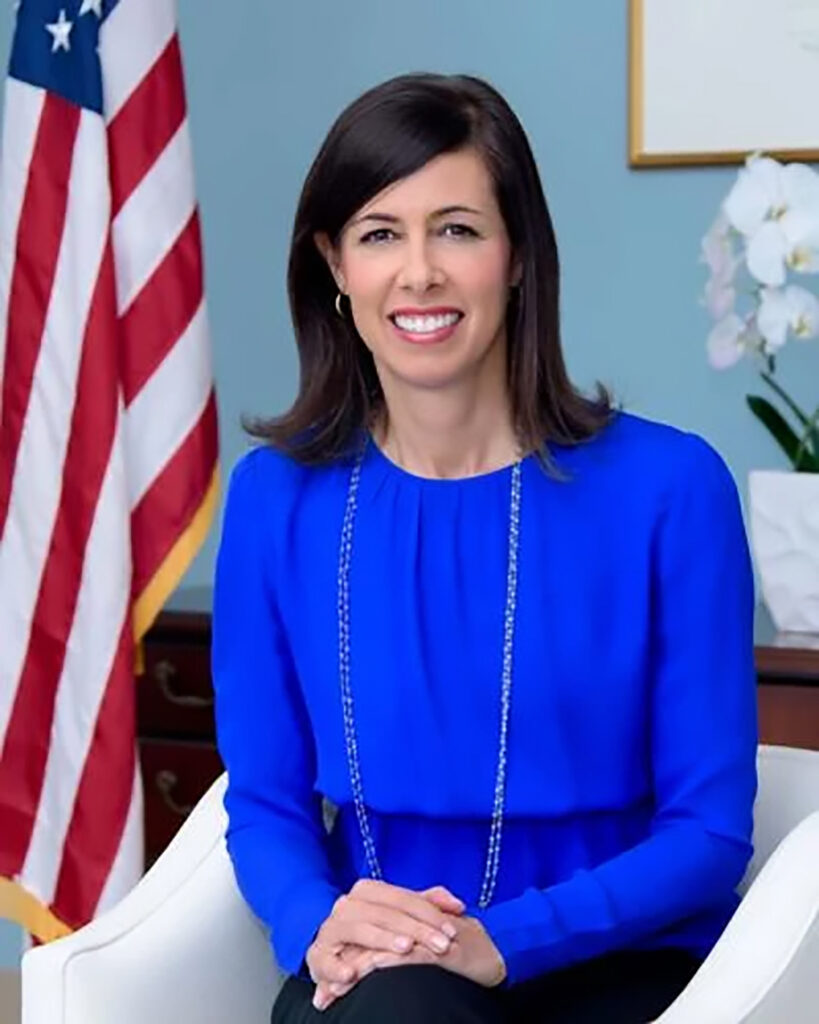
Jessica Rosenworcel, who chairs the Federal Communications Commission, criticized threats against broadcasters. [Federal Communications Commission]
Political advertising has become increasingly nasty in recent elections, as voters seem to accept and even reward the most scurrilous and far-fetched accusations candidates can sling at each other.
But one of this year’s hottest Florida contests has led to something new in attack tactics.
The state claims that a TV spot for Amendment 4—a ballot initiative that would restore abortion rights—is a sort of air pollution.
The Florida Department of Health has advised broadcasters that, like a burst sewer or a hazardous waste dump, the advertisement is a public-health hazard. Women who are still eligible for abortions under the state’s six-week gestation limit might mistakenly think they’re not or might go to unsafe extremes to get treatment in another state, the DOH contends.
Fortunately, Chief U.S. District Judge Mark Walker has told the state to knock it off. Walker, who has slapped Gov. Ron DeSantis around on some other culture-war issues, was uncommonly blunt in saying the state can advocate for a political position, but it can’t stifle free speech by using criminal law to browbeat opponents.
“To keep it simple for the state of Florida,” Walker wrote in a temporary restraining order against the state, “it’s the First Amendment, stupid.”
The challenged advertisement features a woman who, while 20 weeks pregnant in 2022, was diagnosed with brain cancer and was told by doctors she couldn’t receive chemotherapy or radiation while pregnant. If the same conditions occurred now, under the six-week law Gov. Ron DeSantis signed last year, she said she couldn’t end her pregnancy and wouldn’t be alive.
The health department disagrees.
“The advertisement is not only false; it is dangerous,” a DOH attorney wrote to a Gainesville TV station.
It’s true that the new law allows abortions after six weeks under very limited circumstances. Something like, if the moon is in the Seventh House and Jupiter aligns with Mars, the Cubs make the playoffs and at least two physicians, one of whom must be left-handed, feel like it.
By the strained reasoning of the DOH, some women who are eligible might mistakenly believe they can’t get abortions and might do something desperate and dangerous. Therefore—First Amendment guarantees of free speech be damned—the department felt comfortable warning broadcasters of criminal penalties for causing “a sanitary nuisance” that endangers public health.
But there’s an obvious difference. Counting the toxins in air and water and nabbing a polluter is one thing.
Second-guessing a physician or speculating what different patients believe after seeing a TV spot is something else. And the courts have always given very wide leeway to political speech in election campaigns.
Fortunately, broadcasters weren’t intimidated. Jessica Rosenworcel, who chairs the Federal Communications Commission, said, “Threats against broadcast stations for airing content that conflicts with the government’s views are dangerous and undermine the fundamental principle of free speech.”
Maybe some stations might be bullied into dropping ads from Floridians Protecting Freedom, the political committee sponsoring Amendment 4. It’s cheaper to give up revenue from one advertiser than fight the state, with its unlimited tax dollars. But it wasn’t hard to see the state was bluffing about calling the cops.
The DOH threat against the abortion advertisements is a prominent part of the governor’s attempts to use state agencies to further his political ends. The Department of Transportation, Department of Children and Families and Department of State have all been put to work against the abortion amendment and Amendment 3, which would allow recreational marijuana use.
Jason Garcia, in his excellent “Seeking Rents” online newsletter, estimates the state has spent about $16 million on “public service” advertising that advances DeSantis’ positions.
It’s interesting that the DOH didn’t slap he cuffs on any broadcaster execs for supposedly polluting the airwaves with ideas that DeSantis doesn’t like in the closing weeks of the campaign season. He could probably find one of his allied state attorneys and some judges he appointed to make a case if the state were serious about prosecuting those who air the pro-Amendment 4 spot.
But that’s what motions to dismiss or the appellate courts are for. The state doesn’t want to prosecute; it wants to keep the amendment from getting the required 60 percent of the vote on Nov. 5.
The Mob is better at this sort of stuff. It will just send a couple big guys around to say, “Nice little business you got here—be a real shame if, y’know, something unfortunate was to happen ….”
DeSantis likes to talk about “the free state of Florida.” But isn’t strong-arming broadcasters more like something you’d expect to see in, oh, maybe Venezuela and North Korea?
Bill Cotterell is a retired Capitol reporter for United Press International and the Tallahassee Democrat. He can be reached at [email protected]

Support community journalism
The first goal of the Ocala Gazette is to deliver trustworthy local journalism so corruption, misinformation and abuse are not hidden from the public or unchallenged.