
Conflicting information on $14 million Heart of Florida contract
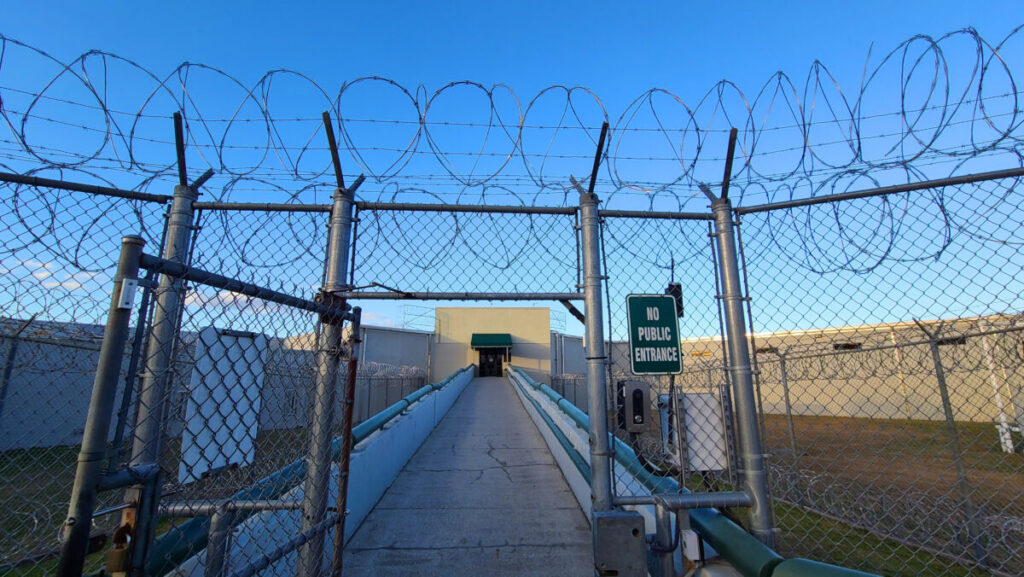
The Marion County Jail is shown at the Marion County Sheriff’s Office in Ocala on Dec. 28, 2020. [Bruce Ackerman/Ocala Gazette file photo]
Even as Marion County taxpayers pay more each year for inmate health care, evidence suggests the rising costs are not translating into better medical treatment behind bars.
Heart of Florida Health Centers, the nonprofit under contract to provide care at the Marion County Jail, has seen its revenue climb 60% in just three years—from $28.5 million in 2021 to $45.8 million in 2023, according to IRS filings.
That includes a major expansion of its jail contracts, with Marion County boosting its agreement from $8 million a year to $14 million annually in 2023 and onboarding Sumter County jail in 2022 for almost $5 million annually.
But while the money has grown, so have troubling questions about the quality of inmate care.
The “Gazette” has previously documented multiple in-custody deaths tied to medical neglect, including cases such as “Deadly Detox at MCSO Jail” and the death of Jacob Oakie, where medical records raised concerns about delayed treatment and the use of force upon inmates who were near death.
A nurse who had monitored the jail’s compliance with medical standards before being fired described in a whistleblower complaint violations ranging from falsification of medical records and systematic denial of medical care and access to the grievance system for disabled inmates.
Meanwhile, the top eight executives for Heart of Florida, including Marion County Jail medical director Dr. Jose Rodriguez, reported annual compensation ranging between $242,000 and $336,000 for CEO Matt Clay.
The most recent IRS filing, which only covers activity through February 2024, shows the organization reported a $6.5 million surplus. Heart of Florida has refused to provide financial accounting specific to jail operations, despite requests from the “Gazette.” That means the full impact of the $6 million increase in the Marion County contract since August 2023 is not yet visible in public filings.
As previously reported by the “Gazette,” the Marion County Jail has recorded four times the number of in-custody deaths over the past four years as the national average for prisons, and many can be attributed to questionable medical care.
Conflicting narratives on inmate medical costs
During a July 23 budget workshop with the Marion County Commission, Sheriff Billy Woods said he expected costs under the Heart of Florida contract to rise by another $400,000 in the 2025–26 budget year.
When commissioners asked about the rising costs, Woods said they were related to hospital expenses. He also said Heart of Florida had “low-balled” its bid but argued it was still better than competitors.
IRS filings show a different picture.
In the 2021-22 budget year, Heart of Florida reported paying AdventHealth Ocala $3.1 million for “medical services.” Since then, filings indicate they have decreased patient costs for hospitals.
In 2022- 23, AdventHealth was no longer disclosed as one of its highest-paid contractors. Instead, the only hospital disclosed is Ocala Regional Medical Center receiving $303,562. In 2023-24, both hospitals reappeared, with payments of $1.26 million to AdventHealth and $404,154 to Ocala Regional.
“Heart of Florida provides a good service. One of the biggest things in it is the hospital care,” Woods told commissioners, noting that under the contract the provider covers inmate hospital bills.
“There’s a company out there that has presented something to me that is zero cost to me and zero cost to Heart of Florida, but it provides insurance to the inmates. So, where that’s going to benefit us is in the future negotiations,” Woods said.
“But Heart of Florida is one of the best. Okay? Regardless of what these articles are being written out here, I don’t give a crap what the media is saying. Heart of Florida does a damn good job of providing the services for the inmates,” Woods added.
“They get a better medical service than you and I. I don’t get a doctor 24/7—they get a doctor and medical 24/7 and all they got to do is ask for it,” he said.
However, jail records and employee testimony contradict that claim.
Former staff have told the “Gazette” that staffing gaps often left only one registered nurse responsible for both infirmary monitoring and intake assessments. Records also show that post-booking hospital visits in 2023 and 2024 dropped to less than half of historic levels.
Pharmaceutical costs across Heart of Florida’s organization nearly doubled between 2021 and 2024, from $1.46 million to $2.96 million, but other patient care expenses did not see similar increases.
Woods had his office’s attorney sit on Heart of Florida’s board of directors since the contract began in 2020. The “Gazette” asked current MCSO attorney Marissa Duquette if she received information as a board member about inmate care costs. She has not responded.
The “Gazette” also asked whether Heart of Florida had provided documentation to substantiate claims of increased patient costs, specifically for jail care. Neither Heart of Florida, county administration, nor MCSO has responded.
A review of billing between Heart of Florida and MCSO shows very little itemized detail about medical costs billed on behalf of inmates.
Compliance reporting and whistleblower lawsuit
The sheriff’s praise for Heart of Florida contrasts with reports from a nurse Woods hired to monitor the contract.
Monthly reports by Mary Tolbert Coy, a registered nurse and jail auditor, said Heart of Florida frequently had staffing vacancies and failed to meet Florida jail model standards for timely handling of inmate complaints.
Coy was fired in August 2024, and compliance reporting ceased. She has since filed a whistleblower lawsuit alleging retaliation. Coy earned about $100,000 annually at the sheriff’s office.
In sworn interrogatories, Coy said her reports were discounted by Woods.
“Why would I bring that type of trouble to myself, when I made good money and was well liked before my complaints?” she wrote. “I mentioned the toll the retaliation, hostility and environment were having on me. I was fired on Aug. 27 and my benefits ended Sept. 1, 2024. COBRA insurance was not offered to me.”
Coy admitted in her sworn answers that while she was still employed for the sheriff, she tried to get the U.S. Department of Justice and the advocacy group Disability Rights Florida to investigate medical care at the jail because her compliance reporting was ignored.
Jail commissary charges don’t support sick-call volume
Inmates are charged for each sick call through commissary accounts, but records reviewed by the “Gazette” show the number of sick calls billed sharply contradicts with Heart of Florida’s reported volume.
Coy alleges that inmates often submitted multiple requests before being seen; in some cases, they may have only been charged for the visits that actually occurred.
She also said the jail went without dental care for four to six months, leaving inmates in severe pain from abscesses. She reported ongoing issues in mental health care as well, noting compliance failures even after the sheriff’s office extended deadlines for response times.
“The initial medical sick time compliance was for 3 days (72 hours). They went to 7 days and still many cases did not meet the standard, especially Mental Health,” Coy wrote.
Ongoing investigations
Coy’s monthly compliance reports spanned five years, with concerns intensifying after Dr. Rodriguez began serving as medical director of the Marion County Jail starting in 2021 until she was fired in 2024.
Rodriguez previously worked at Lowell Correctional Institution, during the years the “Miami Herald” documented inmate abuse and medical neglect in 2015 until the U.S. Department of Justice intervened in 2020. Rodriguez then left that position and began working for Heart of Florida.
Disability Rights Florida, a nonprofit focused on civil rights in prisons, has been investigating conditions at the Marion County Jail since 2024.
In an Aug. 15, 2025, email to the mother of inmate Mayra Ramirez, who died in MCSO custody, DRF attorney Annette Scott-Smith wrote: “After reviewing records related to Ms. Ramirez’s death, DRF has determined that there is probable cause to believe that medical neglect may have contributed to her death.”
That determination came nearly two years after Ramirez died under Heart of Florida’s care at the jail.

Support community journalism
The first goal of the Ocala Gazette is to deliver trustworthy local journalism so corruption, misinformation and abuse are not hidden from the public or unchallenged.