
Ocala’s 2025 election looms
Here are the open seats, candidates to date and key details
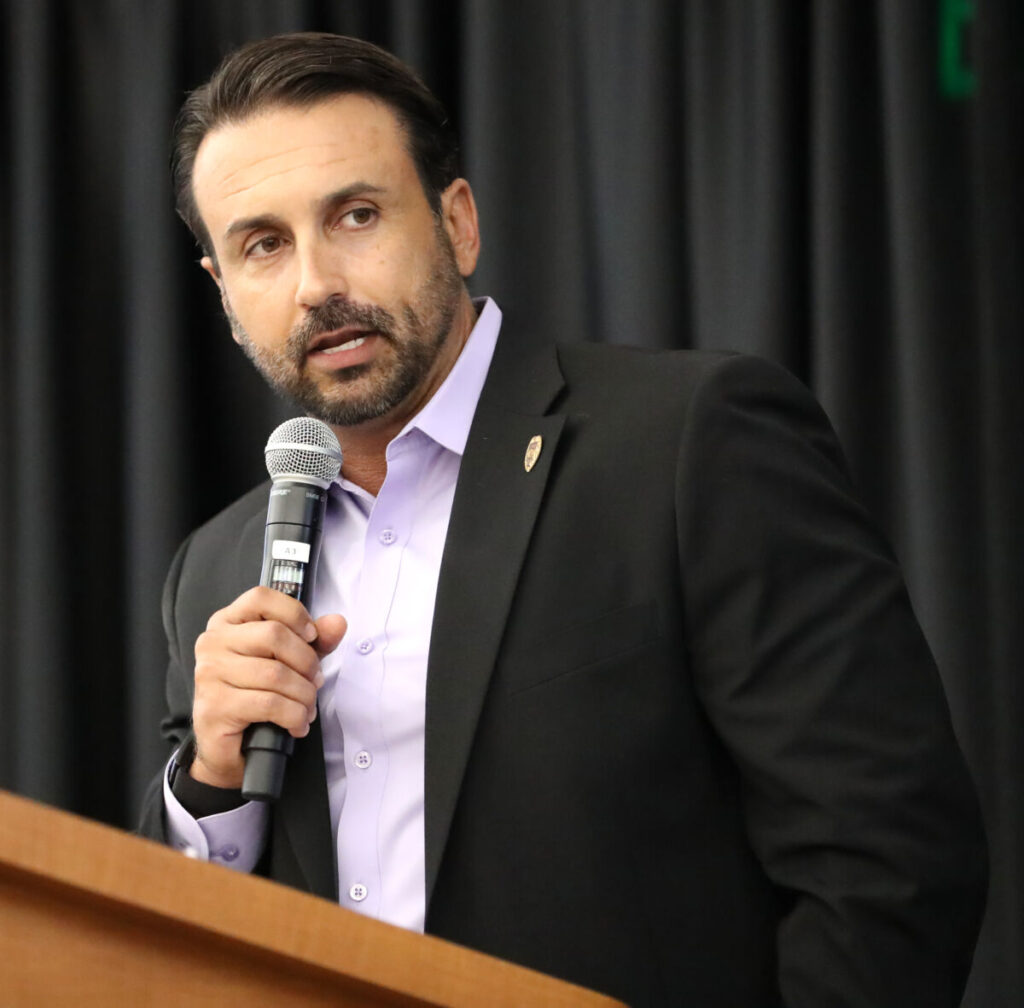
Ocala Mayor Ben Marciano is running for re-election. [File photo by Bruce Ackerman/Ocala Gazette]
Ocala’s general election on Sept. 16 will shape the city’s future, with the mayor’s seat and three city council positions at stake in the nonpartisan elections. As candidates file to run and campaigns are created, voters will decide who they think will best address key issues such as population growth, cost of living and public safety.
Here is an early look at the elected positions on the ballot, who has filed to run and critical deadlines for the 2025 election cycle.
The positions include the office of mayor of Ocala, which has a two-year term and a $550 monthly salary. The mayor holds veto power and oversees the Ocala Police Department.
Incumbent Ben Marciano, elected unopposed in 2023 with $110,200 campaign donations raised, has filed for re-election. He has reported $1,000 in monetary contributions and no expenditures to the Marion County Supervisor of Elections. His 2023 campaign, backed by the Professional Firefighters of Marion County and Ocala’s Fraternal Order of Police, focused on public safety and health initiatives.
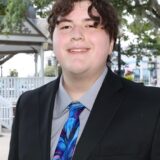
Zackary Feliciano is running for mayor of Ocala. [Bruce Ackerman/Ocala Gazette]
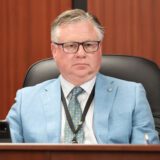
Ocala City Councilman Barry Mansfield is running unopposed for re-election. [File photo by Bruce Ackerman/Ocala Gazette]

Ocala City Councilman Jay Musleh is not seeking re-election. [File photo by Bruce Ackerman/Ocala Gazette]

Mark William Clark is running for the City Council District 3 seat. [Submitted photo]
“I later received a second (master of science degree) in national resource strategy from the National Defense University. I have worked on nuclear missiles and the B-52 bomber, managed major acquisition programs for the U.S. Air Force and managed large organizations at the National Security Agency,” Clark said.
Clark said he has served both his country and his fellow citizens for his entire career. He and his wife, Mary, have lived in Ocala for more than 14 years. They have three children and five grandchildren. Clark has served on the board of directors for the Bellechase community in Ocala for more than nine years, in several capacities, including president of the board of directors.
With District 3 facing rapid development and challenges such as congestion on Maricamp Road, Clark emphasized collaborative and fiscally responsible solutions.
“Traffic flow and safety are always a great concern and need to be addressed with care and fiscal responsibility,” he said. “The city is on the Transportation Planning Organization and partners with the state and county on identifying solutions to traffic issues. In Ocala, I would like to see a pedestrian-friendly environment where businesses can thrive and customers can enjoy themselves.”
Clark sees small businesses as vital to District 3’s economy, particularly in revitalizing areas such as downtown Ocala and Fort King Street.
“I have always had an interest and concern for small businesses. They are the backbone of our economy,” he stated.
“As the Small Business Advocate at the National Security Agency, I championed the vitalization of reaching small businesses to deal directly with the agency. In Ocala, I envision a future where small business prospers and helps our community grow. This can be encouraged by the city being flexible and responsive to the needs of business to build, adapt and remodel. The city needs to facilitate the growth and not inhibit the progress that small business can provide to the community,” Clark said.
On housing affordability, Clark acknowledged the challenges involved with combating the issue.
“Many people speak of the challenge to provide affordable housing, but no one seems to be able to define ‘affordable,’” he said.
He proposes encouraging developers to invest in diverse housing options while securing state and federal grants to expand infrastructure like roads, utilities and information networks. For public safety, he prioritizes funding stability and proactive planning.
“As the district grows, the placement and construction of new fire stations must be a priority during the approval process of the developments. The city will need to build concurrent with the development to anticipate the needs,” he said.
Clark said he is committed to preserving Ocala’s historic charm, such as the Fort King National Historic Landmark.
“History is what makes us a community. The social bonds of historic places are what provides the character and charm of Ocala. I would support incentives for historic preservation for homeowners and businesses. The growth of Ocala will always need to look to the needs of the community and ensure Ocala is the great place to live and work,” he said.
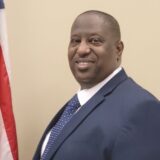
TamBoura Jenkins is running for the City Council District 3 seat. [Submitted photo]
Jenkins brings a diverse background rooted in blue-collar values and community service. Originally from Youngstown, Ohio, Jenkins comes from a family of medical professionals and teachers. A registered nurse since 1998, he also works as a real estate agent, which he said reflects his commitment to serving others. His wife is also a nurse.
“I went to school at Youngstown State University and then I went to Georgia State University in Atlanta, Georgia, and I went to Augusta State University, which is now the Medical College of Georgia. Once I graduated from there, I worked as a nurse for a number of years and then I moved here to Ocala,” Jenkins said.
Jenkins is a member of the Rotary Club and Toastmasters and volunteers as a minister at The Life Center church. He formerly volunteered as a minister at the Marion Correctional Institution but is taking a break at present.
Addressing District 3’s bustling corridors like Maricamp Road and historic areas like Fort King Street, Jenkins emphasized practical approaches to growth while preserving Ocala’s unique charm.
“I want to keep Ocala beautiful. I think the historic Ocala is beautiful as it is,” he said.
Jenkins said he is dedicated to maintaining the city’s character while fostering progress.
“I’m of the old mind in thinking that we shouldn’t change too much. I do believe in changes; you have to keep moving forward. You have to keep pressing forward; however, you don’t want to alienate the conservatives as far as their way of conserving and preserving old Ocala,” Jenkins said.
“As far as the historic district, I will keep it as it is. I will keep it up and we will definitely celebrate Ocala’s history. Celebrating Ocala history is a good thing,” he said.
Jenkins believes supporting local small businesses is helpful for Ocala’s economy.
“I love going down to the downtown market. We go down to the downtown market that promotes local Ocala, local small businesses and I go there faithfully every weekend,” he said.
A proponent of small businesses, Jenkins proposes compelling major corporations to reinvest 10% to 15% of their earnings into the community to support smaller enterprises.
“Make the bigger business reinvest back into the community. That’s the major point,” he said.
Jenkins also advocates for lower impact fees for small businesses to counter the dominance of large corporations.
“I think we should reenact impact fees on the major corporations, not on the small companies, but on a major corporation, such as Lennar,” Jenkins stated.
On housing affordability, Jenkins suggests help for long-term residents such as offering financial incentives for local residents to stay in Ocala rather than leave.
“We want to keep the local talent local,” he said.
To ensure public safety, he supports increased funding for police and fire services, praising recent budget allocations for police overtime and calling for better staffing and training to address fire department challenges.
Jenkins emphasized OPD’s great work in monitoring the recent No Kings protests the weekend of June 14.
“I think they did a wonderful job with the protests,” he said.
On traffic and pedestrian safety, Jenkins acknowledges the limitations of local control over state roads but stresses collaboration with the Florida Department of Transportation and city planning to improve city-managed roads.
“There is allotment, I think the half-cent (sales) tax, they can utilize some of that for the roads. And I think the biggest issue as far as that’s concerned is you have to get with the Department of Transportation and everybody else from the zoning and planning department and come up with a better plan than what we have,” he said.
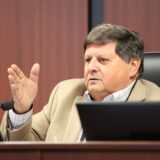
Ocala City Councilman Jim Hilty is seeking another four-year term. [File photo by Bruce Ackerman/Ocala Gazette]
More candidates may file before the July 11 deadline, but these early contenders have set the stage for the races. Financial reports, mandated by Florida Statutes, show Marciano and Mansfield leading in fundraising.
According to the U.S. Census Bureau’s Population Estimates Program, Ocala’s most recent population estimate is 68,426 as of 2023. This reflects a 4.46% increase from 2022, making these seats critical as the city navigates rapid growth and challenges like infrastructure, education and health disparities.
To run for city council, candidates must meet specific qualifications outlined in the Ocala City Charter and Florida statutes. Candidates must be registered voters and residents of Ocala for at least one year before the election. For district-specific seats, they must reside in the district they aim to represent at the time of qualification and throughout their term.
Additionally, candidates cannot hold another elected public office, per Florida’s “Resign-to-Run” law requiring resignation from any such office upon qualifying. Candidates must also file necessary paperwork along with state-required forms like the Statement of Financial Interests. Ocala’s nonpartisan city council elections are held in odd-numbered years like 2025.
The qualifying period runs from noon July 7 to noon July 11 at the city clerk’s office. All required documents and fees must be submitted by this deadline to appear on the ballot. Missing this deadline disqualifies candidates, making early preparation essential.
The city clerk’s office, led by Angel Jacobs, oversees the filing process. Candidates can also contact Marion County Supervisor of Elections Wesley Wilcox for guidance.
Key election dates include:
Voter registration deadline: Aug. 18.
Mail ballot request deadline: Sept. 4, by 5 p.m.
Early voting: Sept. 11-13, 10 a.m. to 6 p.m.
General election: Sept. 16, 7 a.m. to 7 p.m.
Run-off election (if no one in a multi-candidate race wins a majority): Nov. 18.
Learn more by visiting ocalafl.gov or votemarion.gov or contacting Angel Jacobs at the City Clerk’s office at [email protected].

Support community journalism
The first goal of the Ocala Gazette is to deliver trustworthy local journalism so corruption, misinformation and abuse are not hidden from the public or unchallenged.