
Ocala residents may see utility rate hikes
Additional funds will be needed to help finance a proposed $116M infrastructure overhaul.
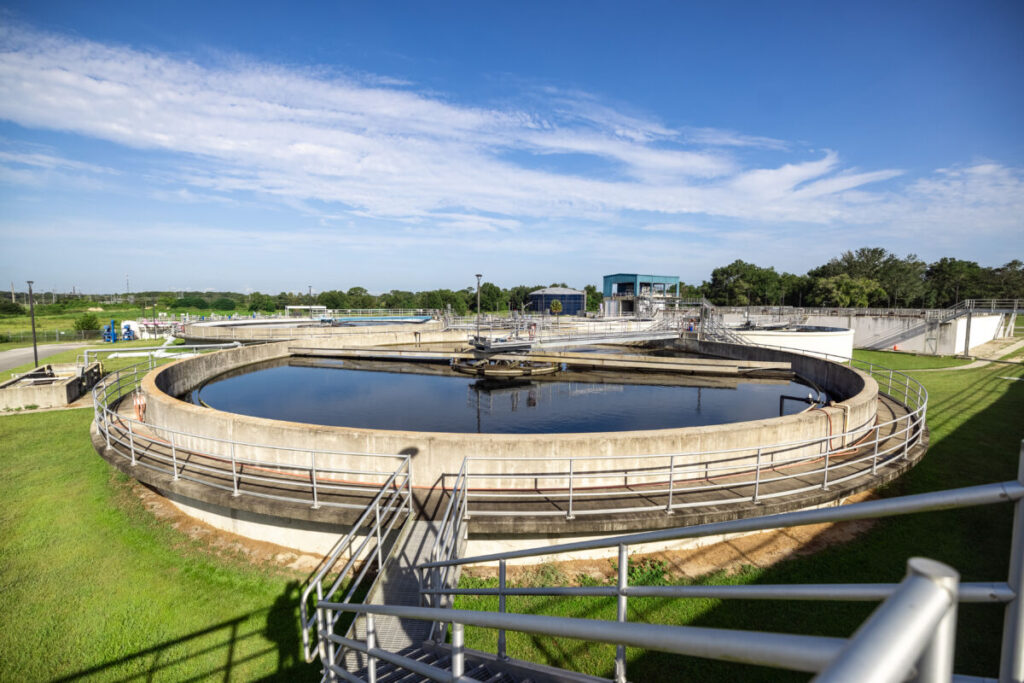
City of Ocala wastewater treatment center. [File photo by Dave Miller]
Ocala residents could see increases to their water utility bills if the city council approves a proposed $116 million capital improvement plan to modernize the city’s water and wastewater systems.
The proposal is expected to increase costs to customers, including a 5% annual hike in residential water and wastewater rates from 2026 to 2029, followed by a Consumer Price Index-based adjustment (minimum 4%) in 2030. For a typical residential customer using 6,000 gallons per month, their bill would rise from $86.46 in 2025 to $109.28 by 2030, an increase of $22.82 over five years.
Commercial customers will face a “true-up” adjustment to align rates with service demands, increasing usage rates by approximately 56 cents over five years (1–1.5% annually), generating an additional $1 million annually by 2030.
According to council member Jim Hilty, customers received a notice about the proposed rate hikes in their May billing statement.
Council members got their first look at the proposal on June 3. A final vote is scheduled for the public hearing on June 17. If approved, the new rates and fees will take effect on Oct. 1, 2025.
The plan, outlined in a Utility Rate and System Development Fee Study by Raftelis, a utility management consulting firm, aims to modernize the city’s water and wastewater systems over fiscal years 2026 to 2030. The stated goal is to ensure reliable service for a growing population while equitably distributing costs among new and existing customers.
The $116 million initiative targets critical infrastructure projects, including a $46.4 million expansion of Water Treatment Plant #2, $24.7 million for system capacity and efficiency improvements, and $6.6 million for the design of Water Reclamation Facility #3.
Hilty emphasized the need for these upgrades at the June 3 meeting.
“The improvements are those recommended in the Master Plans to extend the service life, reduce the risk of service disruptions and minimize the need for emergency repairs,” Hilty said.
“Project prioritization is guided by the Master Plans, which rank and recommend capital improvement projects,” he continued.
Along with the rate increases, the city plans to finance these projects through a combination of updated development fees and low-interest state loans, including a $49.7 million Water State Revolving Fund Loan and a $7 million Wastewater State Revolving Fund Loan.
According to Hilty, the rate increases are necessary to ensure continued service delivery.
“The average residential customer will see a 5% increase in their bill,” he said. “All costs include a conservative escalation factor to account for future expenses at the time the project is implemented.”
To support growth without overly burdening current ratepayers, the plan raises development fees for new customers, phased in over four years to comply with Florida’s 50% annual cap. Water fees per Equivalent Residential Unit will increase from $823 to $1,235 by 2029, and wastewater fees will rise from $3,148 to $4,722.
“The purpose of the fees is to cover the actual cost of system capacity improvements required to support the development,” Hilty said.
The proposal also updates miscellaneous charges to reflect current costs, including raising the city-installed 5/8-inch meter fee from $2,005 to $4,440, introducing a $65 maintenance disconnect/reconnect fee, and increasing fees for non-payment reconnections, meter tampering and industrial wastewater permits.
City officials said the plan prioritizes fiscal responsibility by maintaining a 90-day operating reserve of $7.5 million in 2025 and 150% debt service coverage to meet loan obligations. The city will transfer funds annually to the Construction Fund and deposit $200,000 yearly into the Renewal and Replacement Fund for ongoing maintenance, with General Fund transfers growing from $6.1 million in 2025 to $10.7 million by 2030 to support broader city services.
A review of the study every three to four years, officials said, will ensure adaptability to economic or operational changes.
The June 17 public hearing will be held at City Hall, 110 SE Watula Ave. Residents can attend the meeting, submit speaker forms to [email protected], sign up in person or email comments to [email protected].
For more information, contact the Utilities Department at (352) 629-2489, visit ocalafl.gov or review the Raftelis study at ocala.legistar.com

Support community journalism
The first goal of the Ocala Gazette is to deliver trustworthy local journalism so corruption, misinformation and abuse are not hidden from the public or unchallenged.