
The Importance of Resolving the Immigration Crisis Before the 2030 Census
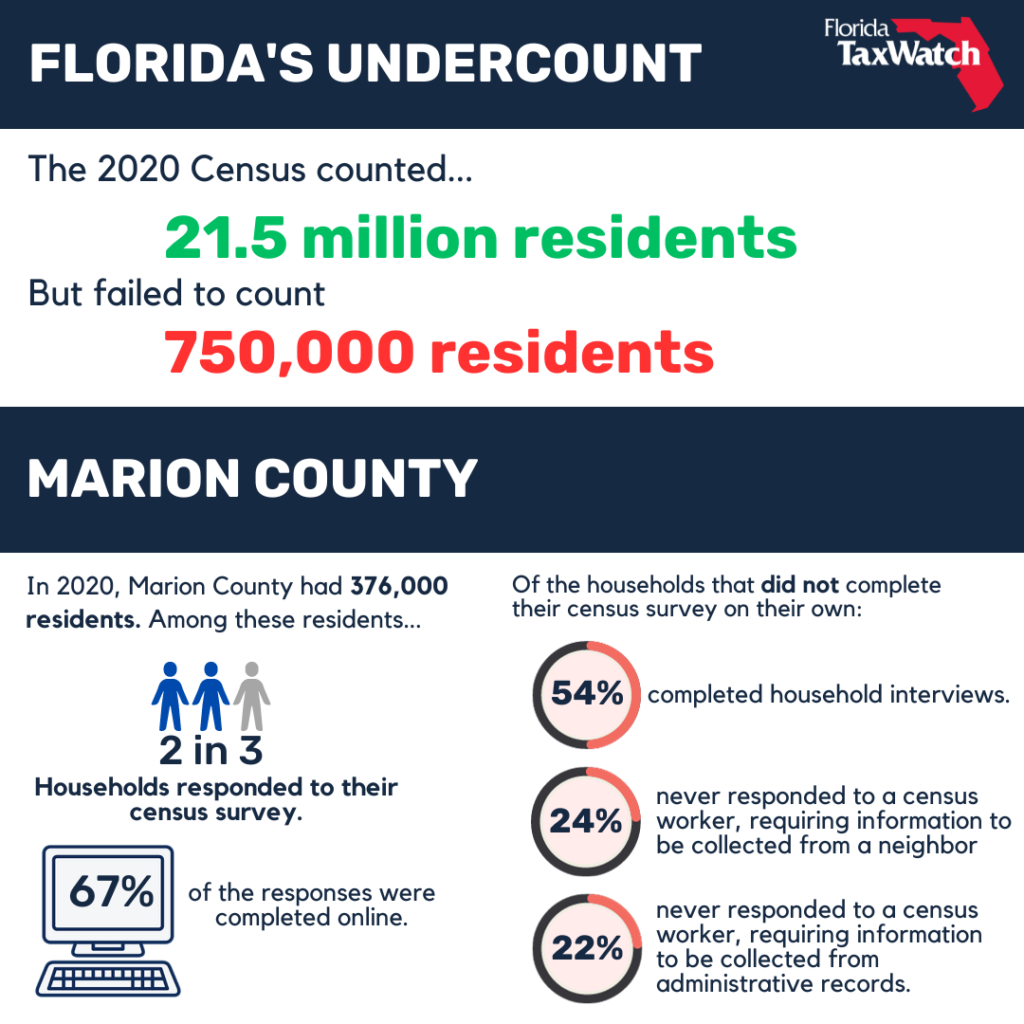
Infographic Source: Florida TaxWatch
April 1, 2025, marks the halfway point between the 2020 and 2030 Census. In 2020, Florida was one of six states with a statistically significant undercount, with 750,000 residents left uncounted. This undercount sets us back in both representation and funding for the decade of 2020-2030 by tens of billions of dollars, which Florida’s accurate census would otherwise provide.
For the first time since 1940, Florida gained fewer than two new congressional seats following the 2020 Census. Florida needed approximately 171,561 additional residents counted during the 2020 Census to gain its second seat—a number far lower than the estimated undercount. Without the second seat, the interests of Florida taxpayers may lose in a tight vote by Congress.
The 2020 undercount not only reduces congressional representation but also reduces our state’s share of critical federal funds. Based on per capita grant spending, Florida is estimated to lose between $11 billion to $21 billion by the end of the decade due to the 2020 Census undercount. As a state prone to natural disasters, we are more likely to experience the larger end of this shortfall.
Florida taxpayers deserve better, especially since Floridians are already shortchanged in its receipt of Federal grants-in-aid. Consistently, data reveals Florida as a donor state, contributing more money to the federal government than it receives back in grants. Florida TaxWatch’s most recent study revealed that the state pays $1.58 for every $1.00 of federal grants received, the second highest per dollar cost nationwide, second only to Nebraska.
In part, the census undercount occurred due to a hesitancy to count immigrants. In 2020, the Administration proposed including a question of citizenship on the census survey. Although ultimately deterred by the United States Supreme Court for the 2020 Census, this policy still created a distrust in government that limited immigrant participation. A recent research paper found that noncitizens, especially those from Latin American countries, were less likely to complete their census form. In Florida, the number of projected residents from El Salvador, Guatemala, and Honduras was 11 percent greater than the number counted by the U.S. Census.
This controversy taught Florida an important lesson: We should not let the political debate over illegal immigration interfere with efforts to count every person (as the U.S. Constitution requires) because failure to count every person diminishes our state’s political power in Congress and result in a loss of tens of billions of dollars in federal funding.
Census-derived federal funds are intended to provide states with the capacity to serve all of their residents. Regardless of their legal status, immigrants utilize public goods and services, and, thus, failing to count immigrants could result in a strain of funds that affect all residents. Immigrants are less likely to fill out their census if they fear arrest and deportation.
The next four years of strong immigration control will limit the number of unauthorized immigrants present during the 2030 Census. As we reflect on the anniversary of Census Day, let us remember that while strong immigration policies are essential, they must also be balanced with the safeguards needed to protect Florida taxpayers in the decade to come.
Dominic M. Calabro has led Florida TaxWatch’s world-class research team – the “eyes and ears” of taxpayers – as President and CEO for nearly all of the organization’s 45-year existence.

Support community journalism
The first goal of the Ocala Gazette is to deliver trustworthy local journalism so corruption, misinformation and abuse are not hidden from the public or unchallenged.