
“Orbits and Ice Ages: The History of Climate”
Professor of astronomy and planetary sciences to lecture at IHMC in Ocala on April 10.
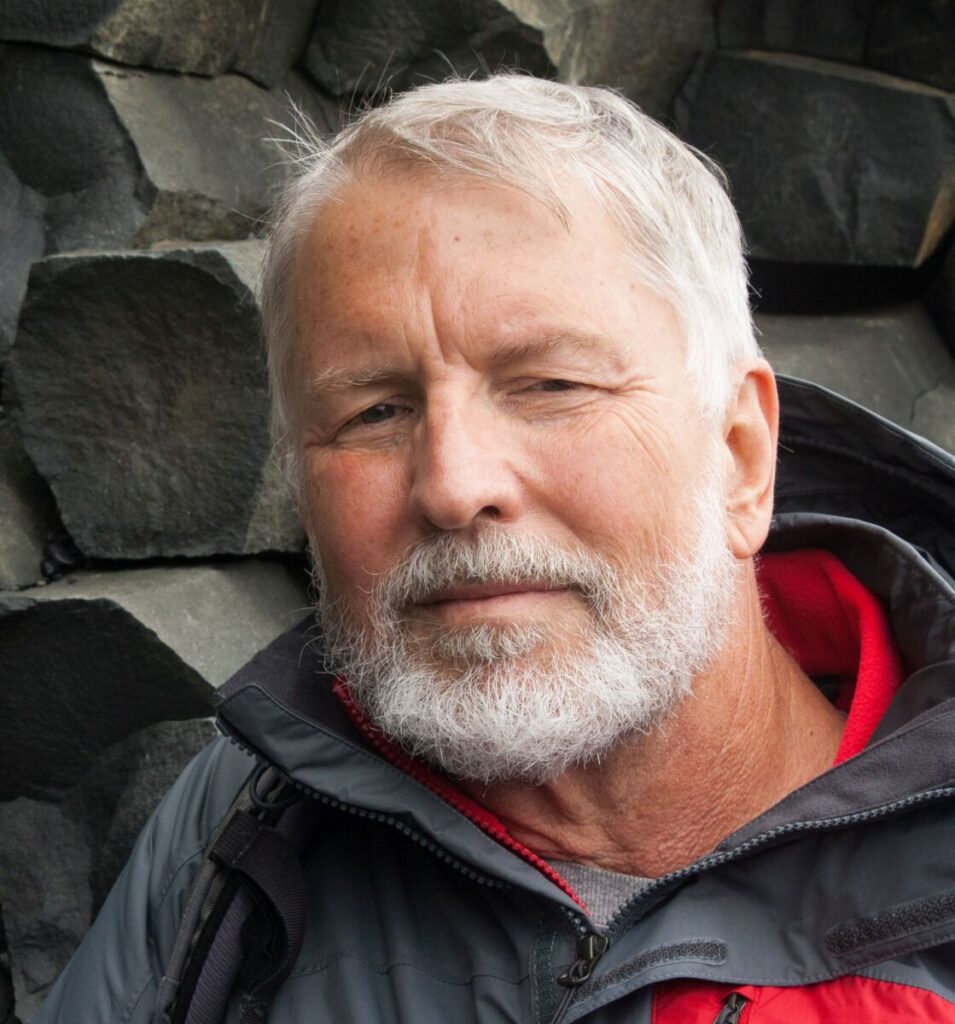
Dr. Daniel Britt [Photo courtesy Dr. Britt]
Dr. Daniel Britt has a lengthy resume of impressive credentials, and even has an asteroid named him: 4395 DanBritt.
He is the Pegasus Professor of Astronomy and Planetary Sciences at the Department of Physics at the University of Central Florida. He was educated in geology at the University of Washington and Brown University. His career includes service in the US Air Force as an ICBM missile launch officer and an economist for Boeing.
Britt has served on the science teams of four NASA missions to Mars, comets and asteroids. He currently does research on the physical properties and mineralogy of asteroids, comets, the Moon and Mars, and is the director of the Center for Lunar and Asteroid Surface Science (CLASS). He has served as chair of the Division for Planetary Sciences of the American Astronomical Society and the Planetary Geology Division of the Geological Society of America.
He will lecture at the Institute for Human & Machine Cognition in Ocala on April 10, on the topic of “Orbits and Ice Ages: The History of Climate”
IHMC materials note that, “Climate change has become a major political issue, but few understand how climate has changed in the past and the forces that drive climate. Most people don’t know that 50 million years ago there were breadfruit trees and crocodiles on the shores of the Arctic Ocean, or that 18,000 years ago there was a mile-thick glacier on Manhattan and a continuous belt of winter sea ice extending south to Cape Hatteras. The History of Climate provides context of our current climate debate and fundamental insight how the climate works.”
Britt told the “Gazette” that he became involved with the team at IHMC because, “We have a common interest in the hardware and details of space exploration.”
Since the topic of climate change can be “touchy” in conversation, we asked Britt what kind of reception he gets when he speaks on the subject.
“What I try to deliver is the context of climate change. As a result, this is not sound bite science, so I need the hour to explain the background and the context of where we are in a climate that evolves over geologic time. Climate change is not a scientific controversy, the data and the facts are very well known. It is a political controversy where people pretend that there is uncertainty where really none exists,” he stated.
“During the question-and-answer period, people do challenge me on the things I present but I have the advantage of only presenting verifiable reality—no models, no speculation. I am happy to answer these questions and address these challenges with the basic attitude that reality does not care about a person’s politics,” he added.
Britt’s background includes living in California, Florida, Ohio, Michigan and Washington state, as well as in England.
“I was born in Ann Arbor, MI, but my father was a career Air Force officer, so I lived all over. I was generally an inquisitive and adventurous kid, who made the most of exploring many new places that my parent’s travels exposed me to,” he shared.
He said his early interests were primarily in history and economics, and he had some notable mentors in those areas as well as planetary science along the way.
“My major influences were the economists Milton Friedman and Doug North, both of whom won the Nobel Prize. I got to study under Doug North when I did my master’s degree in economics. In my 20s, I got very interested in space exploration and decided to change career fields. At that time, I had a master’s degree in economics and was working for Boeing, but I decided that it would be much more interesting to get in on the science side of planetary exploration. So, at 32 I went back to school and got a BS, MS and PhD in geology,” Britt explained.
“During my undergraduate years, I spent three years doing paleoclimatology work by cutting up and measuring ice cores in one of the leading labs in the country. Some of the data I will show in my talk in Ocala, I actually took,” he added.
Britt said he was very lucky to get into one of the top planetary science graduate programs in the world and that he had many interesting adventures as a graduate student, including spending the summer at the Smithsonian and three trips to Russia.
“My influences getting into planetary science were Carl Sagan and Dave Morrison, both of whom I subsequently got to know and who became good colleagues,” Britt noted.
The IHMC campus is at 15 SE Osceola Ave., in downtown Ocala. Each evening lecture begins with a catered reception at 5:30 p.m., with the talk at 6 p.m. The events are free to attend, but seating is limited. To RSVP, go to ihmc-20250410.eventbrite.com or call (352) 387-3050.
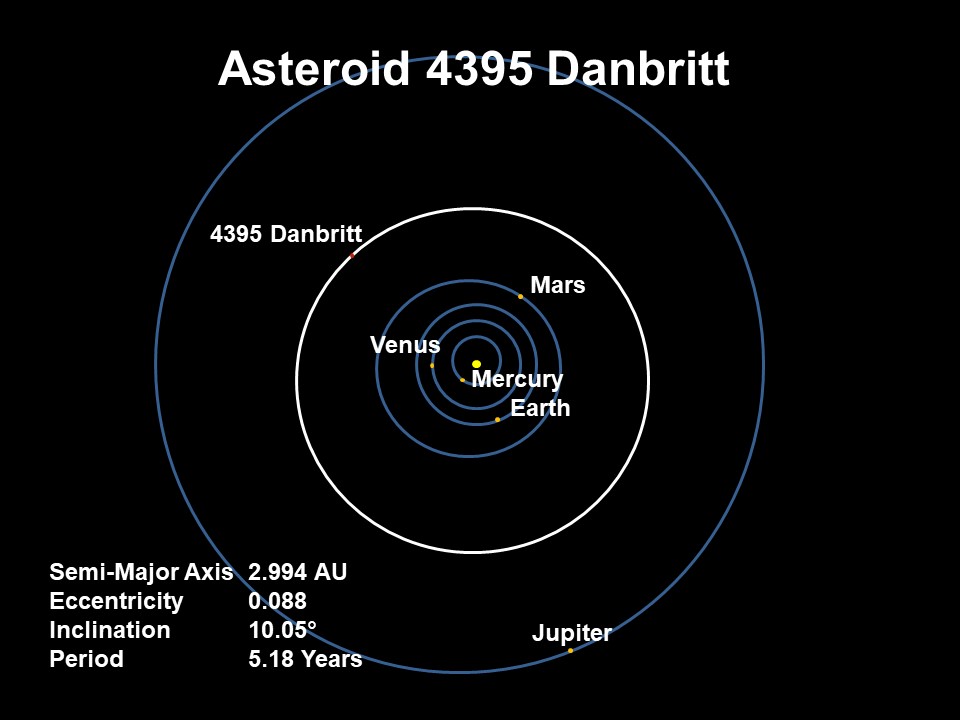
This map shows the location of the asteroid named for Dr. Daniel Britt. [Photo courtesy Dr. Britt]

Support community journalism
The first goal of the Ocala Gazette is to deliver trustworthy local journalism so corruption, misinformation and abuse are not hidden from the public or unchallenged.