
Marion County bird watchers set 2024 records
Tom Hince was the first to record 300 species locally; Tami Reece documented 253 species to top the prior record.
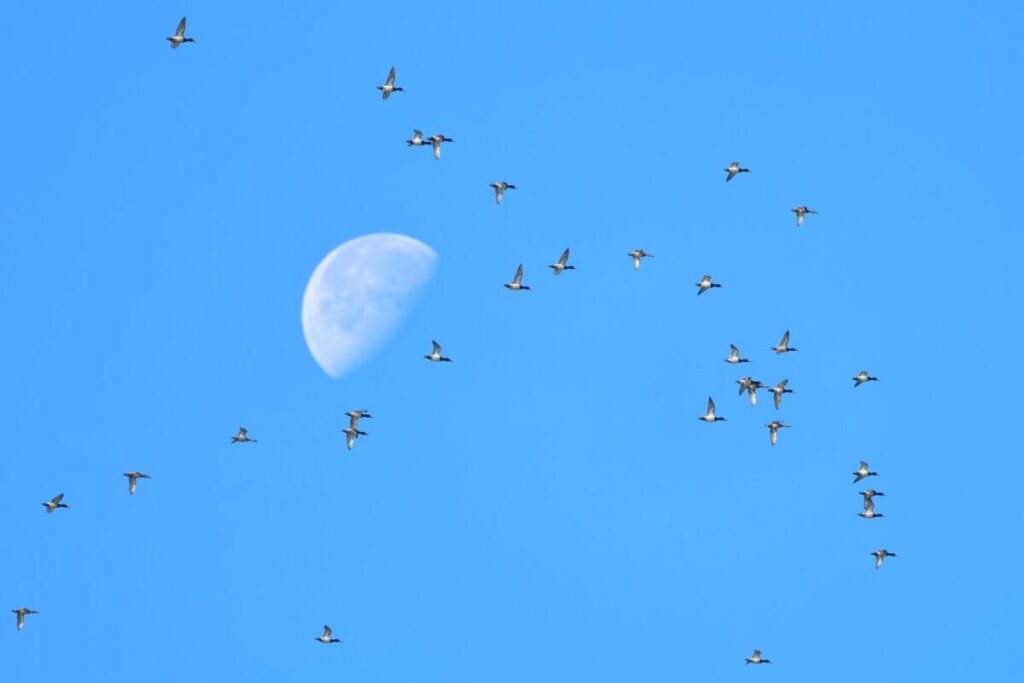
Lesser scaup passing the moon [Photo courtesy Tom Hince]
Local birders soared past previous records in 2024 for the number of species spotted in Marion County. Tom Hince of Dunnellon spotted 268 species during the year and became the first person to record 300 species in the county.

Tom Hince
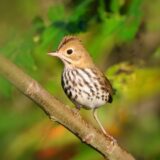
Ovenbird [Photo courtesy Tom Hince]
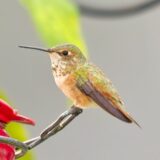
Rufous hummingbird. [Photo courtesy Tom Hince]

Tami Reece
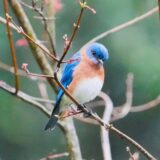
Eastern bluebird. [Photo courtesy Tami Reece]
By the end of the year, she had logged 998 hours birding—not including drive time and research. Reece not only broke the county’s previous record of 251 birds, set in 2021, but surpassed it by documenting 253 species, including 18 that were entirely new to her.
“It’s kind of like a full-time job; maybe even two,” Reece said with a laugh.
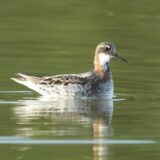
Red-necked phalarope. [Photo courtesy Tami Reece]
“Birds, birds, and more birds,” she said. “I had hopes each day of finding a new rare bird. But by December I was preoccupied with ‘when will this year get over with!'”
Beyond simply identifying birds, Reece challenged herself to photograph as many as possible to provide visual proof of her findings.
“Birding is largely an honor system, but when it comes to rare species, documentation is key,” Reece explained. “A picture speaks a thousand words.”
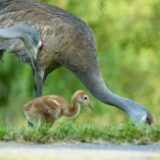
Sandhill cranes. [Photo courtesy Tami Reece]
For Hince, the most exciting bird of the year was the black-capped petrel he spotted on Lake Weir after Hurricane Milton had passed.
“This is strictly an offshore/pelagic bird that has only been seen in the interior of Florida a few times,” he said.
Hince’s record-shattering year didn’t come easily. He’s been birding for more than 60 years. In 2024, he spent more than 100 days hunting birds. And there’s far more to birding than merely “birdwatching.”
“My effort was very targeted and focused. I spent hundreds of hours studying weather and bird movements on the internet. A typical day started two hours before dawn making sure I was at my destination very early. On many great days, the best birding is early as birds orient themselves after a long night of migration or being blown around by storms. I rarely saw other birders until I was on my way out of a site, and when many of the best opportunities were over.
But not every quest was successful. Hince searched more than a dozen times before finding an elusive American bittern, an uncommon but regular winter visitor.
And Reece spent more than 40 hours searching for a yellow-crowned night heron, an uncommon but not unfamiliar local species.
“I kept hearing reports that people were seeing it, and I went back and forth so many times,” Reece said. “I never found it.”
For those interested in learning about birds and birdwatching, to go marionaudubon.org and click on the “getting started” tab.

Support community journalism
The first goal of the Ocala Gazette is to deliver trustworthy local journalism so corruption, misinformation and abuse are not hidden from the public or unchallenged.