
A legend behind the (underwater) lens
Jordan Klein Sr., noted for his pioneering efforts in developing underwater camera housings for motion pictures and underwater cinematography, dies at age 98.
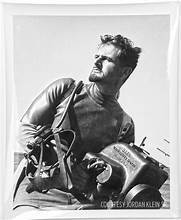
Jordan Klein Sr. [Photo courtesy Jordan Klein Jr.]
|
Getting your Trinity Audio player ready...
|
If you’ve held your breath while watching MI6 agent James Bond wrestle SPECTRE bad guys underwater in the hit movie “Thunderball,” cheered for nice guy Tom Hanks and mermaid Daryl Hannah to be together in “Splash,” wanted to get into a swimming pool filled with alien pods in “Cocoon” or enjoyed the antics of bottlenose dolphin “Flipper” and his pals Sandy and Bud, then you know the work of Jordan Klein Sr.
The long-time Marion County resident earned numerous awards and accolades for his many engineering and technological inventions, particularly in underwater cinematography. In 2001, he was honored with an Academy Award for Best Technical Achievement for his pioneering efforts in developing underwater camera housings for motion pictures. In 2019, he was honored by the Ocala Film Foundation and the city of Ocala with a Walk of Fame plaque, which is embedded in the sidewalk outside the historic Marion Theatre.
It is fitting that a celebration of life for Klein, who died Oct. 1 at the of 98, will be held at the theater on Nov. 9.
Klein was born Dec. 1, 1925, in Cleveland, but his family moved to Miami when he was quite young. He moved to the Ocala area in the 1970s, according to his son Jordan “Jordy” Klein Jr.
“He was on his second marriage and his second wife really loved horses. And, combined with that, there were a lot of changes going on in south Florida and Miami, changes that my dad wasn’t real crazy about, both living there and raising his family there,” Klein Jr. said.
“He said it was like paradise up here. He bought that big building on 17th Street for a fraction of what he sold his building in Miami for, and labor was cheap and all that. He had the springs for when he did his filming, and his wife was happy because she had the horses. It was a win-win thing,” he recalled.
According to historical information about Klein, he was drafted into the U.S. Navy at the start of WWII and served in the Pacific theater of operations. Having always had an affinity for the water, he put his skills to work in Jacksonville on crash boat duty and later as a bosun’s mate on the USS Trenton destroyer escort.
“He was sent as part of the first wave to hit the shores of Japan and was three days into the journey when they dropped the atomic bomb. After the war, he borrowed some money and bought a Navy PT boat, converting it into the first dive boat on Miami Beach. He also opened one of the first dive shops on Miami Beach. During this time, he modified an old compressor and started an air compressor company called Mako Compressors that catered to the emerging scuba diving industry,” notes an online biography.
Klein became popular in the “Miami scene” and “Life” magazine did a story on him. Then Samuel Goldwyn of MGM Studios called and asked if he could construct an underwater housing for one of their large Mitchell cameras. He was offered the role of underwater engineer and cameraman for “20,000 Leagues Under the Sea,” marking the start of his underwater cinematography career, the biography states.
Among the more unusual of Klein’s pursuits, he enjoyed stock car racing and even beat renowned NASCAR driver Fireball Roberts in a race.
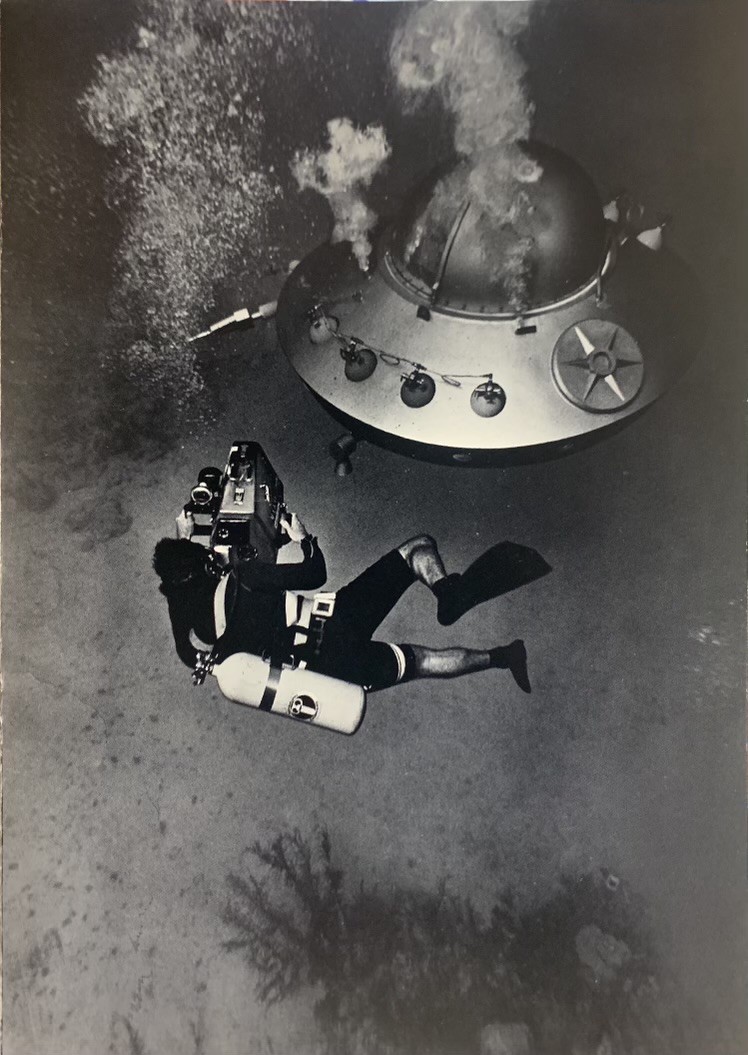
Jordan Klein Sr. [Photo courtesy Jordan Klein Jr.]
Timeline highlights include:
- At age 10, in 1938, Klein developed an interest in diving and began building underwater camera housings using brass plates and silver. As his skills improved, he created underwater housings for Rolliflex, Bolex and Leica cameras. He contributed to early underwater films like “Creature from the Black Lagoon” using his first set of custom camera housings.
- He gained recognition for his work on TV shows such as “Sea Hunt” as well as television commercials and print media ads. He refined underwater housings for still photography and motion picture cameras in 8mm and 16mm formats.
- In 1959, he designed the Mako Shark camera housing, one of the first commercially available underwater camera housings, aimed at amateur divers.
- His housings evolved to accommodate 35mm cameras.
- He served as director of underwater engineering for “Thunderball,” which won the Academy Award for Best Visual Effects in 1966.
- In 1967, he co-developed the CryoLung, a liquid-air breathing device that significantly extended dive times.
- His underwater cinematography remained in demand, as seen in films such as “Hello Down There,” “Captain Nemo and the Underwater City” and the TV movie “The Aquarians.”
- By the 1970s, he was working on films including “The Day of the Dolphin,” “Mako: Jaws of Death,” “Jaws” and “Cocoon.”
- Subsequent projects included “Miami Vice,” “Flight of the Navigator,” “Jaws: The Revenge” and “Wild Hearts Can’t Be Broken.” He was involved with “SeaQuest DSV” and collaborated with the Discovery Channel on a number of nature documentaries.
“Even in his later years, Jordan remained passionate about his craft, continuing to innovate and explore well into his 90s. His adventurous spirit, technical genius and contributions to both cinema and diving make his life a story of relentless pursuit and discovery” noted the online obituary.
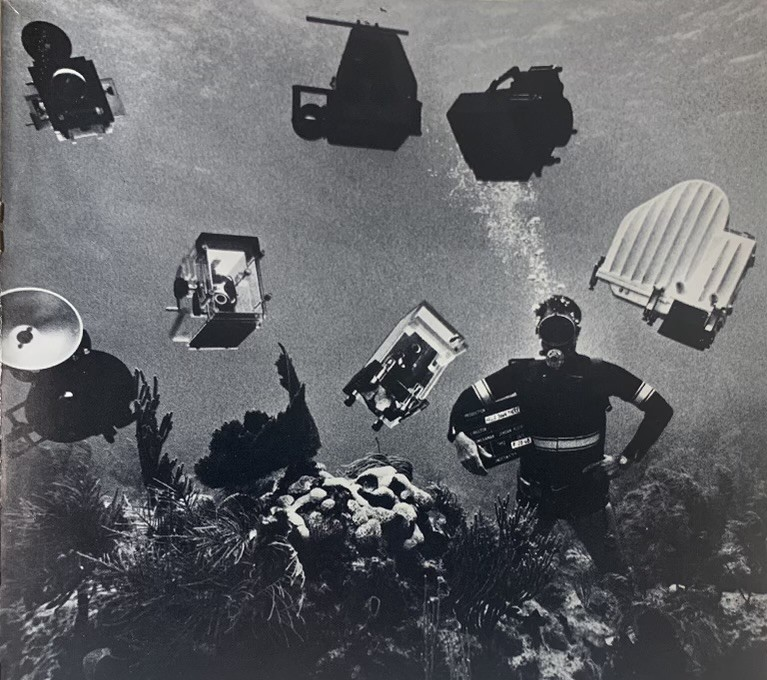
Jordan Klein Sr. [Photo courtesy Jordan Klein Jr.]
Jordy Klein himself has achieved notoriety as an aerial and aquatic cinematographer. He is the owner of Jordan Klein Film & Video and Xcam Aerials, Inc. As one might expect, he learned a lot from his father.
“In the early days, up until about 2006-ish, everything was shot on film for the most part, especially for theatrical and episodic type shows. To put film in a film magazine to shoot with a film camera, you would put it in a changing bag. It had arm/sleeve things you would put your arms through, and you could take the film out of the film canister and put it in the film magazine so it wasn’t exposed to light. My dad taught me to do that and when I was about 4 years old, I actually fit in the changing bag. I could zip myself in and load film magazines for my dad. Basically, I say, I was born in a changing bag,” the junior Klein offered.
He said he also often went on movie sets with his dad.
“In my early days in Miami, I hung out in Ivan Tors’ studio with Ron Howard and Clint Howard and all the guys from ‘Flipper’ and all the shows they were doing there. It followed a natural progression,” he recalled.
“On top of that, my dad had Mako Air Compressors on 17th Street in Ocala for years. I worked there as a design engineer through my school (Lake Weir High School) and college years (then the Central Florida Community College) and I had to make a decision when he sold the company as to whether I wanted to remain working at the air compressor company or go full time into the movie business and I chose the movie business. I joined the cameraman’s union when I was in the 12th grade in high school, so I guess at that point would be when I considered (myself) dedicated to that career,” he explained.
Among his and his father’s acquaintances in the Ocala area were the families of Jack Clark, who was noted for his involvement in business, politics and the arts; the Ray family, who owned Silver Springs at the time; Bruce Mozert, another pioneer of underwater photography, whose iconic images helped put Silver Springs on the map; and Newt Perry, whose swimming prowess and entrepreneurial spirit led to his involvement in movies and opening the famed Weeki Wachee attraction that featured mermaids using his air hose technology and underwater breathing chambers.
“My dad had one of the Perry submarines that he acquired through a movie production and, as far as Mozert, they were acquaintances because of the industry they were in, but my dad was more into theatrical and episodic-type productions,” Jordy recalled.
He said his father was “a very practically minded person, not much time for chit chat or small talk. If he was listening to the radio, it was always talk radio or something going on other than music because he kind of felt that was a waste of time. He had a very engineering-type practical mind.”
He said his dad often offered “these one-liner things, like, ‘Do something even if it’s wrong, or ‘He who hesitates is lost.’ He had a ton of little sayings, such as, ‘Logic dictates.’”
“He had this saying when he first started, that there were people looking though a glass-bottom bucket to see underwater. He knew there was a better way and just through his own inspiration he designed self-contained underwater breathing apparatuses and once he started to perfect that, and the air compressors used to fill those tanks to go underwater, he then began to set his sights on photography. I guess his legacy would be the evolution of underwater exploration and technology in the evolution of underwater photography and cinematography,” Jordy offered.
From one photog to another
Ocalan Mark Emery is an award-winning filmmaker, musician and photographer. He most recently shot footage for BBC’s “Live Alaska,” “PBS Live,” “BBC Natural World – Florida: The Sunshine State” and sections of a four-part series on North America for the Smithsonian Network. Emery also has been recognized with a plaque on the Walk of Fame in front of the Marion Theatre. He and his wife, Mary, have long enjoyed a relationship with the Klein family.
“As for learning how to film, particularly underwater, there could not have been more important influence than the many years I spent with Jordan and his son Jordy Klein,” he said.
Emery said most folks in the film industry can be secretive, concerned that you will “borrow” from their hard-won skill set and become competition down the road.
“I was sure I wanted to do natural history films but needed to learn so many skills to compete at the national and international levels. I learned most of it from working with the Kleins. I never felt they were secretive with us. They taught Mary and I how to load film cameras, about stabilizing underwater cameras and how use light for natural exposures with film and later digital,” he stated.
“We had many fine adventures with him,” Emery said of Klein Sr.
“Maybe little known among his many accomplishments were the first American-made shark shows for the Discovery channel. There were several Australian shark shows that were over the top dramatically at that time, but Jordan didn’t go that way. Luckily, they found local writer and editor Parker Bauer to tone it down and teach us something while still being blown away by the images and action,” Emery noted.
And, he added, “Jordan had at that time a unique knowledge of shark behavior for a filmmaker. He had worked with very large tiger sharks, a known man-eater, for one of the James Bond series. The footage on the big screen was memorable for me as a young fan of the Sean Connery shows.”
Emery said he worked on movie sets with father and son and that he was impressed by his Klein Sr.’s demeanor on the set.
“We did a nighttime shoot for a film called ‘China Moon’ and I was able to talk with him between his underwater shoots and learned so much about how he thought about what he was trying to get while he was trying to get a shot that was going to appear on the big screen,” Emery shared.
Emery said he felt that his friend never really accepted that he was getting older.
“When he turned 90, I saw him at Millers Marine having his carburetor being worked on. I was surprised, but I shouldn’t have been. When I asked what he was up to, he said, ‘I turned 90 so I want to go 90 in my boat.’ He did, of course; he put a friend on board and then raced across the lake reportedly at 90 miles an hour,” Emery explained.
“Later in his life and mine, I started training interns, doing my best to pay it forward. I would bring up-and-coming cameraman and filmmakers by to visit with him and talk shop. I think he enjoyed that, and I am sure they did,” Emery offered.
Emery also noted that memorabilia was scattered around the place from several different film eras.
“The scooters Jordan built for James Bond’s ‘Thunderball’ hung from the rafters, black and white shots of him with director Ron Howard and many others were highlights for any visitor,” he noted.
“He will be missed at our home,” Emery continued. “He and his wife always welcomed us, and we had many fascinating conversations with him about his work. Most folks in our industry knew about his Academy Award but not from him, I never heard him bring it up in conversation. Mary and I were lucky to know and work with him and his son, it literally changed our life.”
Celebration of life
The senior Klein was the husband of Lori Klein, with whom he shared 35 years of marriage. In addition to Jordy, he was a stepfather to Monty Klein, Brad Storz and Tracey Braun, and father-in-law to Arlene Klein, Lanora Storz and Jason Braun. His grandchildren are Tyler Klein, Elle Klein, Rossi Klein, Brandon Storz, Chloe Braun, Lilly Braun and Gable Braun.
The celebration of life for Jordan Klein Sr. will begin at 2 p.m. Nov. 9 at the Marion Theatre. His son said there will be several showings of a 20-minute video about his dad’s life and that there will be food trucks and drinks for purchase.
In lieu of flowers, the family requests that donations be made to the Wounded Warriors Project, “a cause close to Jordan’s heart.”
To learn more about the celebration of life, go to bit.ly/3NFPEDz
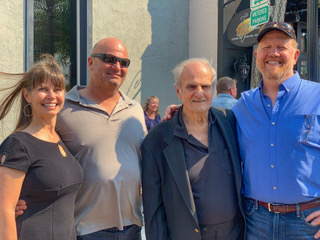
From left, Mary Emery, Jordy Klein, Jordan Klein Sr. and Mark Emery are shown during Klein Senior’s induction into the Walk of Fame in front of the Marion Theatre. [Photo courtesy Mark Emery]

Support community journalism
The first goal of the Ocala Gazette is to deliver trustworthy local journalism so corruption, misinformation and abuse are not hidden from the public or unchallenged.