
Medical examiner amends autopsy in 2023 jail death
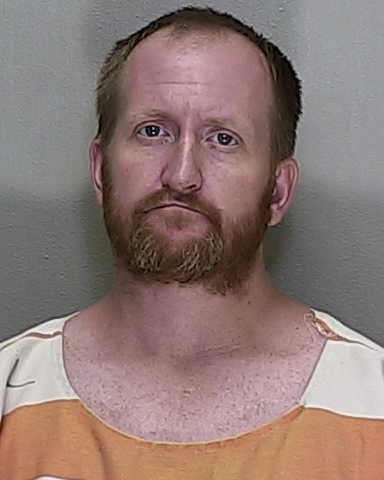
Darrell Davidson’s booking photo at Marion County jail on June 3, 2023.
By Jennifer Hunt [email protected]
When Leslie Daugherty stumbled across an “Ocala Gazette” investigation detailing the agonizing final days of her brother Darrell Edward Davidson, she finally saw the missing pieces of a disturbing puzzle come together.
In February 2026, months after the “Gazette” published its findings regarding Davidson’s October 2023 death in the Marion County Jail, Daugherty reached out to the newsroom. “I’m his surviving sister that claimed his body,” she wrote.
Now, her relentless push for accountability on behalf of her brother—and the young toddler son he left behind—has prompted a significant medical and legal reversal.
At Daugherty’s request, the District 5 Medical Examiner’s Office re-examined Davidson’s case file, specifically reviewing the jail’s security footage. Following that review, the medical examiner officially amended Davidson’s autopsy report on June 12, changing both the cause and manner of death from “natural” to “undetermined”.
Originally, the medical examiner ruled that the 39-year-old died from natural causes linked to a blood disorder (myeloproliferative disorder). However, the amended report acknowledges the harrowing reality captured on the jail’s security cameras.
“The videos show the decedent’s condition deteriorating following the use of force incident,” the amended autopsy states. “Although no potentially fatal injuries were found at autopsy, the temporal relationship between the use of force incident and the decedent’s deterioration and subsequent death cannot be ignored.”
The “Gazette’s” original investigation exposed massive discrepancies between the jail’s official narratives and the physical evidence. While jail staff and nurses documented only a few minor, self-inflicted cuts following violent use-of-force incidents (which included corrections officers using pepper spray and a Taser on Davidson), the medical examiner had documented approximately 50 wounds on the prisoner’s body. These unrecorded injuries included fractured nasal bones, a 9-inch bruise on his torso, and massive bruising across his limbs.
Despite the severity of his condition, the jail’s contracted medical director refused to admit Davidson to the infirmary for observation just hours before he was found unresponsive in a cell.
Armed with the “Gazette’s” timeline of her brother’s medical collapse and the amended autopsy findings, Daugherty recently escalated her fight to federal lawmakers.
On May 21, she emailed U.S. Rep. Kat Cammack, requesting immediate congressional oversight and a federal review into potential civil rights abuses and custodial negligence.
In her plea, Daugherty outlined the timeline of missed opportunities to treat her brother’s evolving medical crisis. She argued that a “natural” ruling regarding his underlying disease does not “erase custody responsibility” for the multiple abrasions, lacerations, and systemic failure he suffered while being restrained and denied adequate care.
“The family seeks transparency, accountability, and assurance that all investigative procedures have been conducted impartially and thoroughly,” Daugherty wrote to the congresswoman. “Due to the gravity of the allegations and the public importance of custodial integrity, we believe independent federal scrutiny is warranted.”
The following day, Cammack’s office responded, expressing condolences but declining to intervene. The office stated that the oversight of a county jail, inmate deaths, and alleged misconduct by local detention personnel “fall outside the jurisdiction and authority of this congressional office,” advising Daugherty to pursue state, local, or Department of Justice channels instead.
Daugherty is currently trying to find a lawyer to help her navigate possible remedies.
Davidson’s in-custody death was not investigated by the state attorney’s office or Florida Department of Law Enforcement.
Case law related to the Eighth Amendment prohibiting “cruel and unusual punishment” and the 14th Amendment of the U.S. Constitution, which holds that no state shall “deprive any person of life, liberty, or property, without due process of law; nor deny to any person within its jurisdiction the equal protection of the laws,” clearly require more than just medical malpractice or negligence. An element that must be established is “knowing disregard.”
In the landmark opinion “Estelle v. Gamble,” the Supreme Court concluded “deliberate indifference to serious medical needs of prisoners constitutes the ‘unnecessary and wanton infliction of pain,’ Gregg v. Georgia, supra, at 182-183, 96 S.Ct. at 2925 (joint opinion), proscribed by the Eighth Amendment.
This is true whether the indifference is manifested by prison doctors in their response to the prisoner’s needs or by prison guards in intentionally denying or delaying access to medical care or intentionally interfering with the treatment once prescribed. Regardless of how evidenced, deliberate indifference to a prisoner’s serious illness or injury states a cause of action under § 1983.
Although names of the inmates have been redacted in discovery material reviewed by the “Gazette” in the whistleblower case, some of the similar details indicate Coy referenced Davidson’s case as an example of the concerns she raised as a nurse employed by the sheriff’s office.
Data obtained from the “Gazette’s” investigation of in-custody deaths since 2021 at the Marion County Jail reflects an unusually high number of deaths compared to other county jails throughout the state. Repeated requests to the sheriff’s office for an explanation of what policies and procedures are in place to address these mounting challenges have been denied.

Support community journalism
The first goal of the Ocala Gazette is to deliver trustworthy local journalism so corruption, misinformation and abuse are not hidden from the public or unchallenged.