
Elderly woman’s drug overdose in county jail raises questions, continues deadly pattern
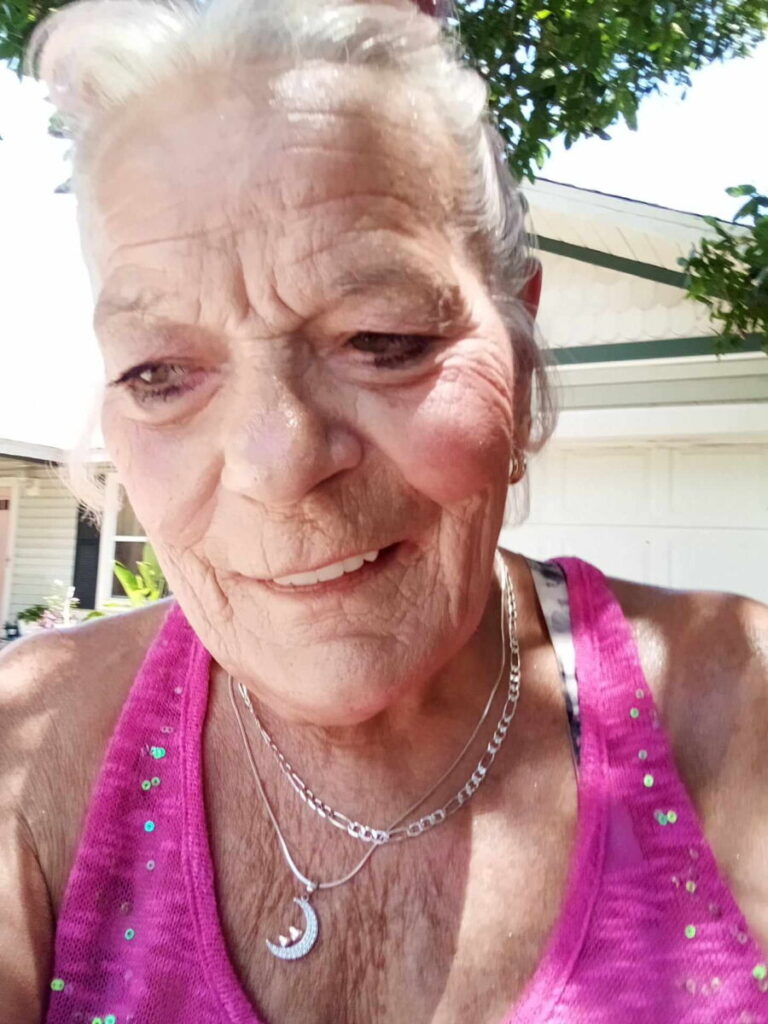
Lora Tucker [submitted family photo]
By Jennifer Hunt Murty
The drug overdose death of 70-year-old Lora Lee Tucker inside the Marion County Jail late last year is a story of missed signals, clinical misdiagnoses and an institutional review that seemingly looked right past the alarming question of how lethal illicit drugs made their way into a secure medical unit.
Her death also fits a disturbing pattern of questionable medical care at the facility. As the “Gazette” has previously reported, Marion County Jail’s rate of in-custody death is three times the national average. During the calendar year of 2025, six inmates – including Tucker — died in custody according to the Marion County Sheriff’s Office, which operates the facility.
The arrest and the infirmary
On Dec. 11, Tucker was arrested on charges of possession of drug paraphernalia, possession of marijuana (less than 20 grams), and possession of a controlled substance (Suboxone). Because she suffered from COPD, atrial fibrillation, hypertension and a seizure disorder, and was dependent on an oxygen tank, Tucker was housed in the jail’s infirmary.
For the first day, Tucker seemed stable, according to jail medical records. But by the afternoon of Dec. 13, her condition rapidly deteriorated. At 12:30 p.m., medical staff found Tucker lying on the floor of her cell. She was confused, combative, clutching her dentures in her hands and unable to follow verbal commands or answer questions.
What the medical records do not reflect is a recognition of the actual medical emergency taking place. Jail nursing staff noted that Tucker’s erratic behavior meant she “could be possible detoxing from Suboxone.” They treated her for withdrawal, administering a Thiamine injection for “detox psychosis.”
The medical records show an omission in her continuity of care. At intake, Tucker reported taking Quetiapine and Alprazolam (a benzodiazepine) daily. The sudden halt of benzodiazepines can cause severe agitation and confusion, yet her charts do not show these being verified or administered during her incarceration.
There is no indication in the medical records that staff suspected an active drug overdose, missing the signs before she collapsed.
At 2:31 p.m., a nurse was alerted that Tucker was no longer moving. She was found lying on her abdomen, without a pulse and unresponsive. A “Code Red” was called and she was transported to AdventHealth Ocala, where she was pronounced dead.
The medical examiner’s toxicology report did find Naloxone (Narcan) in Tucker’s blood, which is the standard injection or nasal spray used to reverse an opioid overdose; however, it was not referenced in Heart of Florida’s medical records or jail records and may have been administered by someone after Tucker was picked up from the jail.
The jail video review and the “unknown deputy”
The autopsy results contradicted the jail’s clinical assessment of drug withdrawal. The medical examiner determined Tucker died of “acute toxicity due to the combined effects of fentanyl, para-fluorofentanyl and methamphetamine.”
Her blood contained lethal amounts of the drugs with a much shorter half-life than the two days she had already been in custody, therefore the drugs had to have been ingested while she was inside the jail.
Despite this startling revelation, the ensuing investigation by the MCSO’s Major Crimes Department yielded few answers.
Major Crimes Deputy Matthew John Larson was assigned to investigate. In his official report, Larson details watching five hours and 22 minutes of infirmary surveillance video leading up to Tucker’s death. However, his narrative lacks any granular detail or critical observation regarding Tucker’s actual condition in the cell, her visible level of distress, or the specific quality of the medical checks being performed. He merely notes that deputies “can be seen appearing to complete the inmate observation logs routinely” and that Tucker is occasionally seen “conversing” or being “tended to.”
In a highly secure, fully staffed jail infirmary, where every employee has a badge and a post assignment, Larson’s video review reveals a baffling anomaly. He writes that toward the end of the video, an “unknown deputy” is seen observing inmates, maintaining the log, and checking on Tucker right before alerting nursing staff at 14:30 hours, or 2:30 p.m.
When questioned about this glaring loose end in the investigation of an unknown deputy, the MCSO offered no transparency. In an email exchange with the “Gazette,” MCSO spokesman Lt. Paul Bloom was asked if the agency has identified the “unknown deputy” on the surveillance video. “If that is not in this report, then no,” Bloom replied.
When asked directly by a “Gazette” reporter, “Would you allow me to watch these videos?” Bloom’s responded: “No.”
The blind spot of the Morbidity Review
On Feb. 2, the jail’s Morbidity/Mortality Review committee convened. The committee formally acknowledged Tucker’s cause of death was “Meth/Fentanyl” while she “was housed in the Infirmary.”
Despite knowing a 70-year-old inmate somehow ingested a lethal dose of methamphetamine and fentanyl while under 24-hour observation in a secure medical unit, the committee asked no questions about contraband.
When asked if there were any systemic concerns, Dr. Jose Rodriguez, the medical director at the jail, stated, “No. The inmate did not give an accurate history on medications.”
MCSO Lt. Richard Nelson concluded, “Everything was done within policy.”
The only corrective action suggested by the committee was to explore the medical information network Surescripts to verify inmate prescriptions at booking.
In the final report closing the case, Larson wrote: “There is no evidence at this time to suggest any criminal foul play and no further leads which would aid in locating any persons involved with supplying or providing the drugs to the decedent, Lora Tucker. There is also no evidence, which would better detail the decedent’s manner of death. It is known, the decedent was alone in her cell when discovered deceased. It is unknown if the ingestion of these drugs were an accident or for suicidal reasons.”
With that, the investigation was halted, and Larson officially noted, “Case status: closed by exception.”
By focusing on prescription paperwork and shielding the surveillance video from public view, the institutional review effectively ignored the security failure that led to the death of Lora Tucker.
On the day of Tucker’s death, when her condition began to deteriorate after returning from first appearances, staff noted she “kept taking her dentures out” and pushing away assistance. When a nurse was alerted that Tucker was lying on the floor of her cell, confused and combative at 12:30 p.m., the nurse noted she “has her dentures on her hands.”
However, the investigative reports do not mention testing the dentures for drug residue or suspecting them as a smuggling vessel.
Family reaction
According to her daughter, Rachelle Tucker, Lora had a complex background marked by severe medical ailments and a long history of substance abuse.
Rachelle described her mother as “kind,” despite having been a severe alcoholic for most of her life, and noted she had a known history of abusing prescription pills, as well as using tobacco and nonmedical marijuana.
Rachelle said her mother’s interactions with law enforcement were always tied to her addiction and were “very petty,” as well as multiple DUIs. Rachelle recalled that in 2010, Lora Tucker was caught driving her late mother’s car, received a traffic violation, had the vehicle towed, and served around 30 days in the Marion County Jail. Rachelle says no one was injured in any of the DUI incidents.
Rachelle emphasized that her mother “wasn’t a criminal” in the usual sense and “wasn’t a legal problem” but a sick person struggling with addiction.
Rachelle said her mother had suffered a serious neck injury years ago and had been prescribed opioid pain medication and Xanax for anxiety, which were likely abused in the context of her addiction.
Rachelle, who lived out of state in Indiana, was unaware of her mother using illicit drugs like fentanyl, however, she acknowledged that Lora Tucker was living in a “bad place” with other drug users.
“In the past, if I heard my mother was in jail or in a hospital, I thought she was in a safe place. Apparently, that was not the case this time,” said Rachelle, who indicated she is searching for more answers after learning of the high inmate mortality rate at Marion County Jail.

Support community journalism
The first goal of the Ocala Gazette is to deliver trustworthy local journalism so corruption, misinformation and abuse are not hidden from the public or unchallenged.