
House approves ‘farm bill,’ study to remove development boundaries
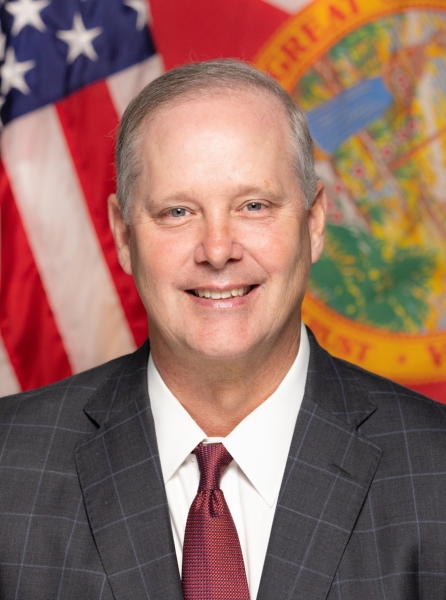
Agriculture Commissioner Wilton Simpson [fdacs.gov]
A bill that looks at removing boundaries barring urban development was approved March 3 by the House, which also backed a separate measure showing support for the agricultural industry.
The Republican-controlled chamber voted 71-38 on a bill (HB 399) that in part directs the Office of Program Policy Analysis and Government Accountability to study the effects of removing the Urban Development Boundary or similar boundaries in Miami-Dade County and other counties.
The measure also lowers the threshold for local government votes on future land use elements of a comprehensive plan from a supermajority to a simple majority.
Miami Democratic Rep. Ashley Gantt said local governments put the boundaries in place to conserve land needed to filter rain, reduce flooding and limit development.
“The voters speak over and over and over that they want this boundary maintained,” Gantt said.
Bill sponsor Rep. David Borrero, R-Hialeah, said his proposed changes are intended to provide land for affordable housing.
“This doesn’t help developers,” Borrero maintained. “This helps the little guy. This helps the firemen, the police officer, the farmer in your district. This helps out the everyday, average worker who can’t afford to live because of property taxes, because of homeowner insurance. They can’t afford their down payment on a home because the median price of a home is $655,000 in Miami Dade County.”
The Senate version of the bill (SB 208) awaits action on that chamber’s floor.
The House earlier Tuesday voted 94-10 to send Agriculture Commissioner Wilton Simpson’s wide-ranging “farm bill” to Gov. Ron DeSantis.
The measure (SB 290) drew concerns from some Democrats over a provision that directs the Department of Environmental Protection to determine if some surplus state-owned conservation lands are suitable for agricultural purposes.
St. Petersburg Democratic Rep. Lindsay Cross said protections are needed to ensure future agricultural uses remain in line with the intended purchase of the conservation land, which could have been for wildlife or water quality protection.
“Some of these agricultural uses may be in conflict with that,” Cross said. “I understand that we want to look at the highest and best use of some of these lands. But I don’t think there’s enough guardrails in the language.”
Rep. Kevin Chambliss, D-Homestead, voiced support for the overall bill to maintain control over domestic food supplies.
“We have to make sure we can grow our own food product and that we make sure one of the strongest economic drivers of the state of Florida is not only protected, but that it thrives,” Chambliss said.
The bill, which addresses numerous issues at the Department of Agriculture and Consumer Services, includes such things as preventing local bans on gas-powered farm and landscape equipment.
The measure also would prohibit commercial solicitation on properties with “no solicitation” signs, adds criminal penalties for receiving or providing unauthorized assistance on commercial driver’s license exams, criminalizes the use of signal-jamming devices that can disrupt emergency calls and repeals a 2016 program designed to financially aid grocery stores in underserved or low-income communities.
The Senate unanimously supported the bill on Feb. 19.
The “farm bill” reached the chamber floors after a controversial provision was stripped out that would have expanded the ability of farmers to pursue legal damages over the “disparagement” of agricultural products.
That measure had raised concerns from conservationists and individuals backing the policies of Health and Human Services Secretary Robert Kennedy Jr.
Current law allows farmers and agriculture groups to pursue damages for “willful or malicious” public dissemination of false information about perishable food items not being safe for human consumption.

Support community journalism
The first goal of the Ocala Gazette is to deliver trustworthy local journalism so corruption, misinformation and abuse are not hidden from the public or unchallenged.