
Digging a little deeper
Understanding soil characteristics can help a good gardener become a great gardener.
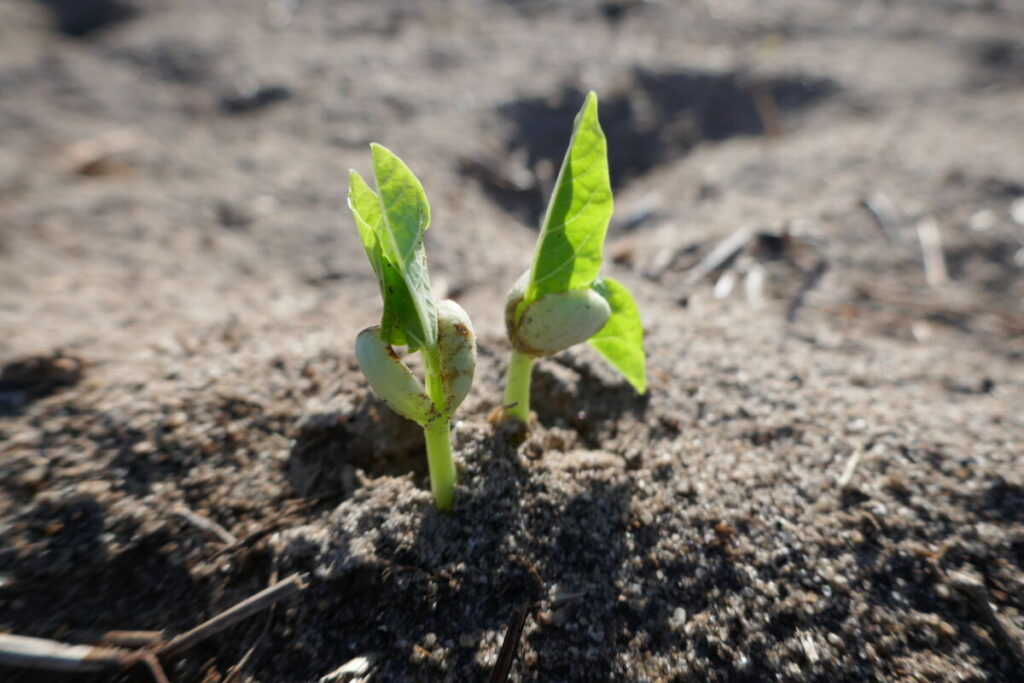
Bean plants emerge from the soil. [Photo courtesy Mark Bailey UF/IFAS Marion County]
So much of a garden’s success depends upon a gardener’s understanding of the fundamentals. Essential components like water and good soil may seem rudimentary to an average gardener. Still, once the finer details are thoroughly explored, a good gardener can become a great gardener.
Let’s start with the absolute foundation of any successful garden, the soil. Soil can be quite complicated when you dig deeper. In fact, there is an entire area of agricultural science dedicated just to the study of soil. The primary purpose of soil is to provide your garden plants with water and nutrients. That sounds quite simple until you ask, “How much water and how often should I water my garden?” The same is true for nutrients: “How much, what formulation and how often?”
To address water and nutrient issues, we must first understand the interconnectedness between soil, nutrients and water. Soil characteristics dramatically affect how effectively water and nutrients are retained in the soil and how readily plant roots can take them up.
Soil texture, such as sandy or clay soils, significantly affects soil water-holding capacity. The larger the pore space, which is the space between soil particles, the less the water holding capacity of soil.
[Photo courtesy Mark Bailey UF/IFAS Marion County]
Sandy soil, which comprises most of the soil in North Central Florida, does not effectively retain water or nutrients.
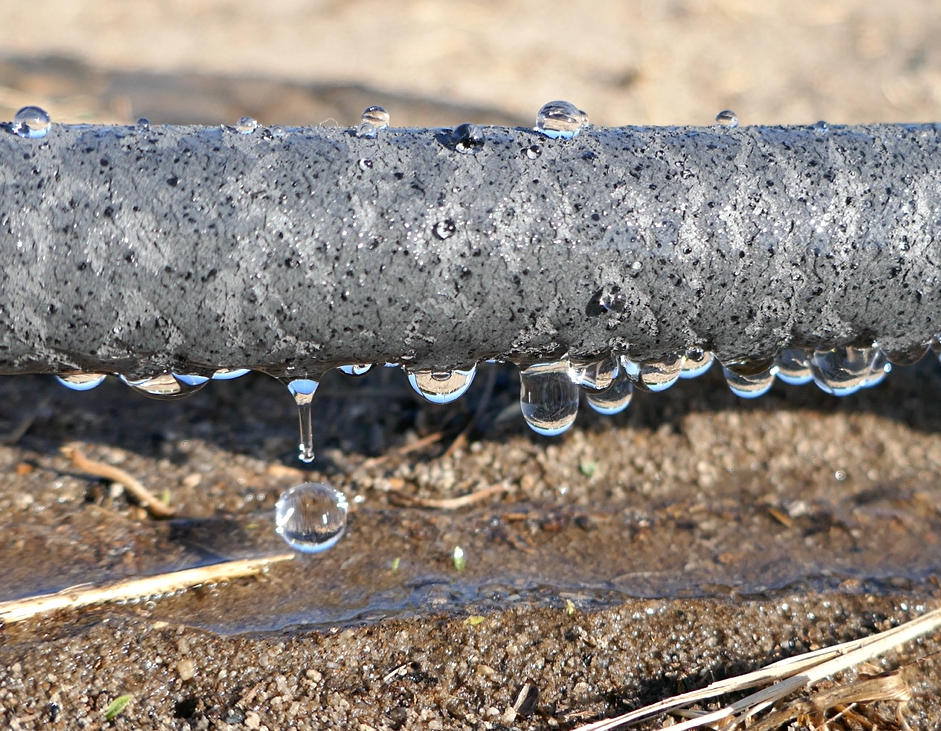
There are two solutions you can use synergistically: increasing organic matter and carefully irrigating your crops with light, frequent irrigation. This irrigation method helps to maintain consistent, not excessive, soil moisture and prevents soil nutrients from leaching into the groundwater. Irrigation timers, combined with drip irrigation systems, are an excellent option for providing your plants with just the right amount of water consistently.
Before we discuss soil nutrients, there is an equally important and directly related topic: soil pH. Soil pH measures how acidic or alkaline the soil is and it dramatically affects the availability of nutrients for plant roots to take up. Soil pH and nutrients are not something you can see or feel in your hands when digging in a garden. The best way to determine your soil pH and nutrient content is to take a soil sample. After you fill out a sample form, your soil samples can be sent to the University of Florida’s Extension Soil Testing Laboratory. A vegetable garden soil sample costs $10 for pH and nutrient analysis. The results will tell you the pH of your garden soil and include specific recommendations. The ideal pH for most gardens will be around 6.5. If soil pH becomes more acidic or alkaline, nutrients become notably less available.
The three most essential nutrients are forms of nitrogen, phosphorus and potassium. If you buy a bag of fertilizer, there will be three numbers on the bag, such as 10-10-10. These numbers will always be in the order nitrogen, phosphorus and potassium, and they represent the percentage of each nutrient in the bag. In the case of a 10-pound bag of 10-10-10 fertilizer, it represents 10% of each nutrient, which is to say, one pound of nitrogen, phosphorus and potassium.
[Photo courtesy Mark Bailey UF/IFAS Marion County]
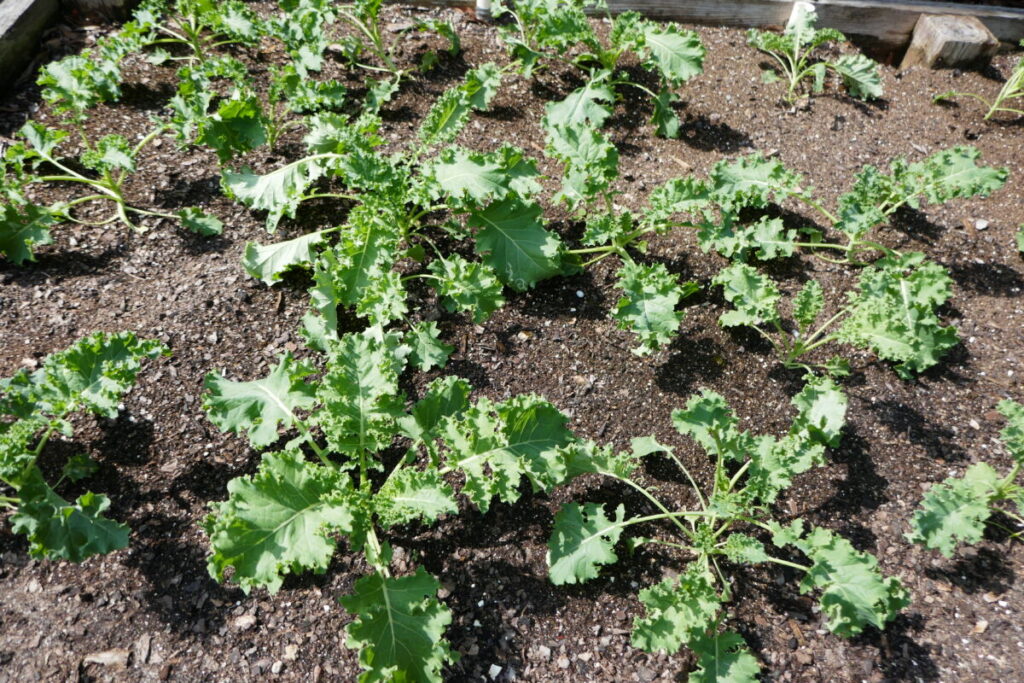
Other nutrients, such as calcium, magnesium, sulfur, manganese, copper and boron, are important micronutrients that promote healthy plant growth. Each plant will have somewhat different needs as far as nutrient requirements. That why it’s a good idea to learn about the needs of each plant before you begin your garden. Providing your plants with consistent nutrients, based upon their needs at their stage of growth, will significantly increase crop yields.
High-quality compost is an excellent source of nutrients and can be added to every garden bed. Where possible, think of nutrients as always entering a cycle: they start in the ground, plants take them up, the plant is harvested, the waste is composted and then returned to the soil. Compost not only increases organic matter, namely carbon content, but also helps increase beneficial soil microbes. Beneficial soil microbes help cycle nutrients into forms the plants can take up, improve soil structure and form symbiotic relationships with plant roots, as found in bean plants. By feeding your soil, you can feed your plants.
A successful garden begins before your first seed is planted. It starts with the soil.
For gardening questions or inquiries about upcoming classes, reach out to the UF/IFAS Marion County Extension office at (352) 671-8400 or email [email protected]

Support community journalism
The first goal of the Ocala Gazette is to deliver trustworthy local journalism so corruption, misinformation and abuse are not hidden from the public or unchallenged.