
Litigation begins following Dunnellon rail tie fire
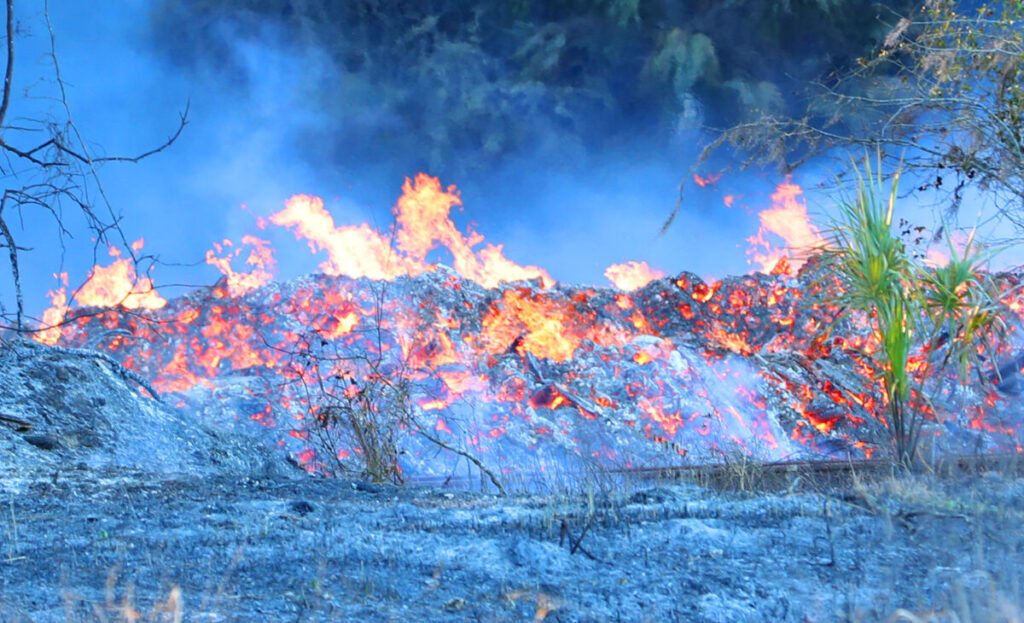
A raging inferno is shown as raliroad ties burn behind the Comfort Suites in Dunnellon, Fla. on Sunday, February 1, 2026. [Bruce Ackerman/Ocala Gazette] 2026.
By Jennifer Hunt Murty
A class action lawsuit filed in Marion County on behalf of all residents, property owners and employees who live, work, or own property within a 30-mile radius of the Feb. 1 Dunnellon railroad tie fire said the defendants displayed an “utter indifference and/or conscious disregard” for the dangers the railroad ties posed to the community.
Brought by plaintiffs Curtis Trammell and Christopher Bryant Crabtree, the Feb. 23 suit was filed by Simeon Genadiev of the Miami-based G Law Group against CSX Transportation, Florida Northern Railroad Company, and Track Line Rail.
CSX Transportation owns the parcel of land where the fire occurred. The rail line is leased and operated by Florida Northern Railroad, and the railroad ties are owned by Track Line Rail, a Texas-based company that had planned to grind the ties on site.
The complaint alleges that the defendants’ gross negligence and reckless storage of creosote-treated wood resulted in the massive release of carcinogenic compounds, toxic fumes and hazardous byproducts into the surrounding air, soil, and water as the stockpile of approximately 100,000 creosote-soaked railroad ties burned, blanketing nearby neighborhoods in heavy smoke.
The lawsuit outlines multiple legal claims, including negligence, private and public nuisance, trespass, and strict liability. The plaintiffs argue that the defendants engaged in an “abnormally dangerous and/or ultrahazardous activity” by storing toxic, highly flammable materials in a residential community without adequate safety precautions, proper inspections, or emergency response plans.
The suit claims the defendants knew or should have known about the severe health and environmental risks associated with burning creosote but displayed an “utter indifference and/or conscious disregard” for the safety and well-being of the surrounding public.
While the lawsuit does not currently assert claims for physical bodily injuries, it seeks substantial compensatory damages for the loss of income, loss of use and enjoyment of property, diminution of property value, and the out-of-pocket costs required for continued soil, water, and livestock testing.
Crucially, the plaintiffs are demanding the establishment of a court-supervised, defendant-funded medical monitoring program. Because exposure to the fire’s toxic byproducts significantly increases the risk of latent diseases—such as liver, lung, and skin cancer—the plaintiffs argue this medical trust fund is necessary to ensure the early detection and treatment of diseases for the impacted community.
The suit is one of several court actions that have emerged or are anticipated following the fire.
Although the Board of Marion County Commissioners has indicated publicly that the county was going to partner with the City of Dunnellon for an injunction against CSX Transportation, none has been filed. Commissioner Carl Zalak told the “Gazette” he believed the county had drafted the injunction complaint and sent it to the Dunnellon city attorney, hoping to file one together.
CSX appeals Dunnellon’s Code enforcement ruling
On Feb. 18, CSX Transportation filed a notice of appeal of code enforcement orders from Dunnellon. The company seeks to overturn rulings regarding the storage of creosote-treated railroad ties on its property.
The appeal specifically targets a Jan. 19 “Findings of Fact, Conclusions of Law and Order” issued by Dunnellon Special Magistrate Audrie H. Hoehn. The order found CSX in violation of multiple state statutes and city codes (including public nuisance violations) at the property located at 20361 E. McKinney Ave.
According to the magistrate’s order, CSX representatives failed to appear at the initial code enforcement hearing on Jan. 13. During that proceeding, city code enforcement officer Chad Ward testified that while some ties had been transported out, thousands of them remained on the property.
The Dunnellon magistrate granted CSX a 30-day window, until Feb. 12, to bring the property into compliance. The order stipulated that if the deadline was missed, a daily fine could be imposed for every day the violation continued.
But then the Feb 1 fire happened, and a subsequent code enforcement hearing was held on the morning of Feb. 10. In its recent court filing, CSX noted that, out of an “abundance of caution,” it is also appealing the ruling made by the magistrate during that Feb. 10 session.
The timing of the appeal presents a stark contrast to the company’s recent public-facing posture. The Feb. 10 hearing occurred just one day after a highly charged Dunnellon City Council meeting where residents demanded accountability for the Feb. 1 fire that sent toxic smoke into neighboring communities. At that council meeting, CSX Regional Vice President of State Government Affairs Craig Camuso attempted to reassure the city of the company’s cooperation.
“Whether we have an injunction filed against CSX or Track Line… makes no difference. We’re here to get this fixed,” Camuso told the council, emphasizing that the safety of the citizens was the company’s top priority.

Support community journalism
The first goal of the Ocala Gazette is to deliver trustworthy local journalism so corruption, misinformation and abuse are not hidden from the public or unchallenged.