
Ground covers native to Florida
These plants can help suppress weeds, retain moisture and prevent soil erosion.

Frogfruit [Photo by Emily Bell, flawildflowers.org]
What is a ground cover? The lowest layer of greenery growing beneath trees would be the answer if your landscape is a forest or heavily treed. When the landscape is void of trees, a groundcover in Florida is defined as low growing plants that spread horizontally, forming an alternative to grass. Native ground cover plants help suppress weeds, retain moisture and prevent soil erosion.
Ground cover for landscaping in Central Florida, especially the very xeric, scrub habitat, can be challenging. This habitat is dry, sandy and sparsely vegetated; reminiscent of the coastal back dunes that developed eons ago. Plants that adapted to this environment over time can endure the harsh conditions like you find at the beaches. These native plants include excellent ground covers that will also cover your yard and require less mowing, water, fertilizer and herbicides.
Another form of ground cover for the sandy scrub habitat are very small mosses and lichens, which form a crust holding the sand together. Examples of mosses and lichens performing this function can be seen along State Road 40 in the Ocala National Forest east of Silver Springs.
Our favorite low growing ground cover, fogfruit (phyla nodiflora), is a hardy species that is tough enough to withstand moderate foot traffic and remain green throughout the year. In the late 1800’s the term “fog” identified the grasses (green stuff) that sprang up after the hay was harvested, hence, “fogfruit.” The more recent common name is frogfruit and both names are recognized at native plant nurseries. This plant can be found thriving at the water’s edge and in the dryest sandy open ground of the scrub habitat. Its long branches root as it spreads and the small flowering heads remain under six inches. Look for it growing over the sidewalks of Ocala onto the streets.
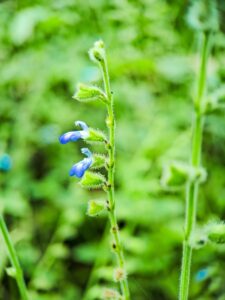
River sage [Shutterstock image]
Another sage that is more common globally is lyre-leaf sage (salvia lyrata). This lovely ground cover can be observed along roadsides, at wooded parks and on the grounds of the Appleton Museum of Art. Lyre-leaf sage maintains a basal rosette of leaves flat on the ground during the winter and during droughts. This name comes from the dark outline on the leaves in the shape of a lyre. These two members of the mint family are especially showy after a rain, with flowering stalks of lavender to blue blooms. The river sage stalks are 5 to 6 inches tall while the lyre-leaf sage can easily reach a foot. When they are thickly spread, a sea of blue color floats above them. The salvia lyrata plant is very common in yards throughout the world and its medicinal properties were recognized by the ancient Greeks and Romans.
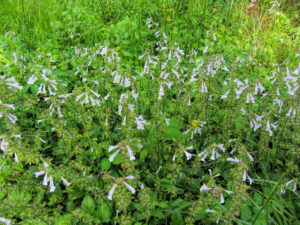
Lyre-leaf sage [Shutterstock image]
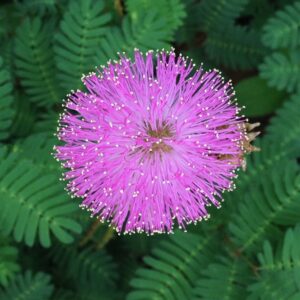
Sunshine mimosa [Photo by Lisa Roberts, flawildflowers.org]
Low areas in your yard that remain damp will benefit from having the Herb-of-Grace (bacopa monnieri) as a ground cover. It will stay low and green with a cute white to pink flower and fleshy leaves. Although it prefers the damp cooler weather of autumn, winter and spring, it will hold up to dry summer weather. Crones Cradle Conserve has a patch in front of the greenhouse if you are interested to see this tough little plant at its best. This patch goes under water during heavy hurricanes and as it dries and emerges the ground is held together in a mat by this bacopa. No muddy mess, which is a great advantage of having this hardy ground cover in a low area.
Visit fnps.org/plant/ to learn more about plants that are rewarding to grow, helpful to wildlife and adaptive to Florida’s unique habitats.
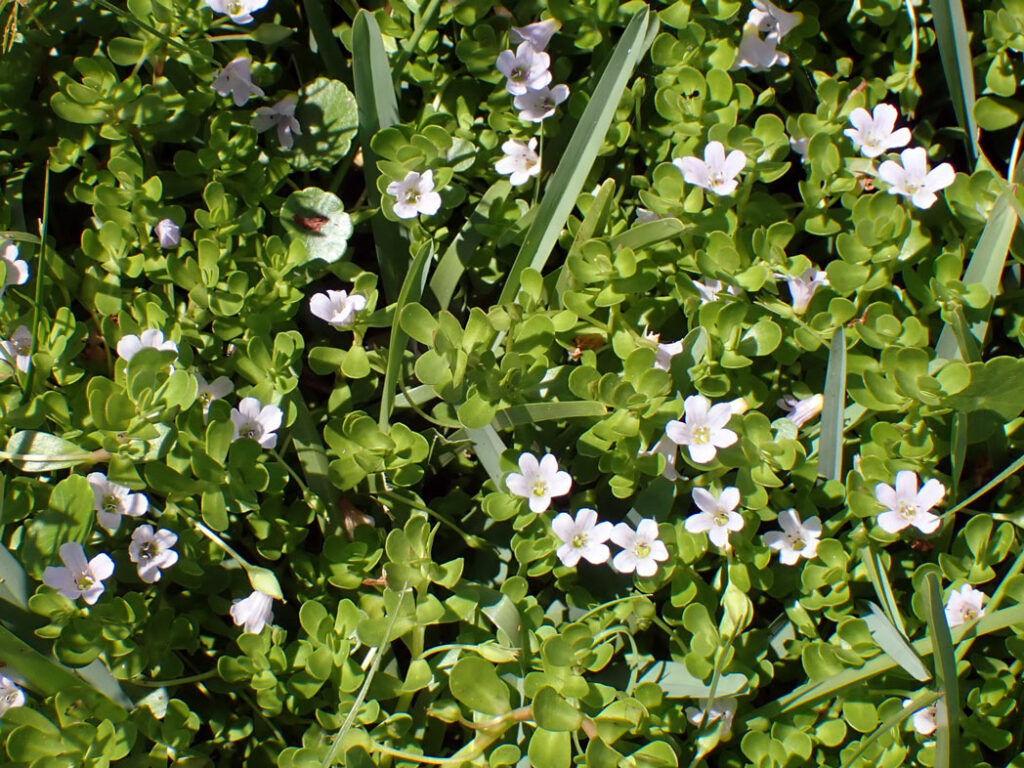
Herb-of-grace [Photo by Ali and Brice, flawildflowers.org]

Support community journalism
The first goal of the Ocala Gazette is to deliver trustworthy local journalism so corruption, misinformation and abuse are not hidden from the public or unchallenged.