
The everything garden
Potatoes, sweet potatoes and Seminole pumpkins offer high yields, a long shelf life and nutrient density.
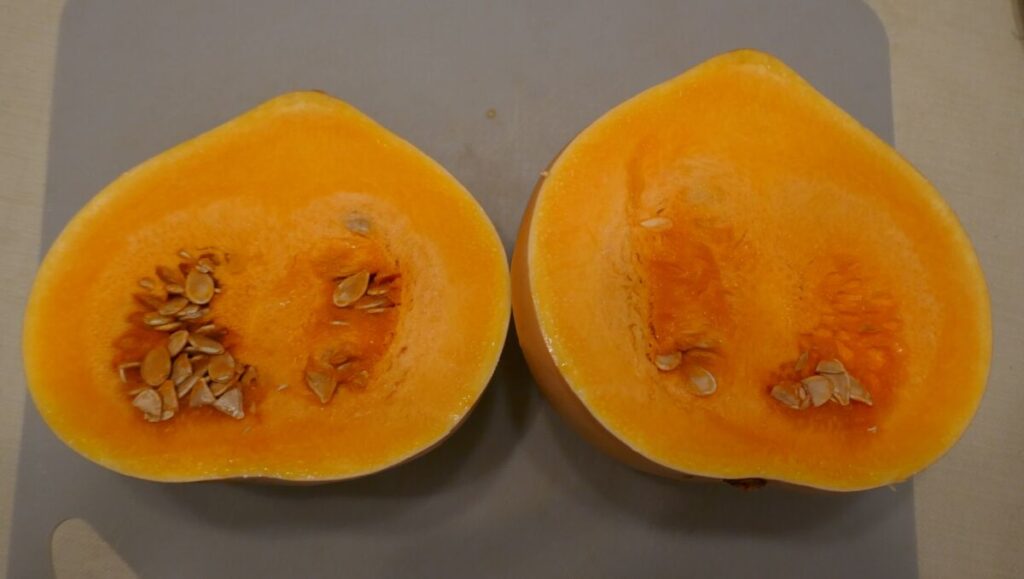
Seminole pumpkin cut in half. [Photo courtesy UF/IFAS Marion County]
Would you like a garden that produces high-yielding crops that require little effort, have a long shelf life and are nutrient-dense? Such a garden is entirely possible with a bit of planning and the right choice of crops.
To begin, we need to understand the fundamentals. Crops need consistent soil moisture, sufficient sunlight and nutrients. They also grow best if they are already well adapted to the local environment.
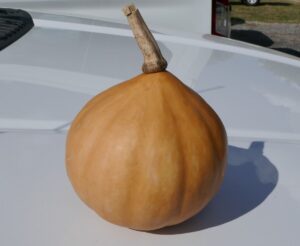
Seminole pumpkin [Photo courtesy UF/IFAS Marion County]
It is best to choose a garden location that receives full sun, especially during the spring, summer and fall. After all, it is the energy from sunlight that is converted into calories in our food.
Understanding the details of nutrients in the soil is essential for achieving a successful crop. The most important nutrients for plants are nitrogen, phosphorus, potassium and calcium. There are two extremely important factors in determining if plant roots can take up these nutrients. The first is the soil pH, which, for most garden plants, is ideally around 6 to 6.5. If the soil is too acidic or alkaline, plants can encounter nutrient deficiency because they are unable to absorb nutrients through their roots. The second factor is consistent soil moisture. These nutrients all must be in a solution before roots can uptake them. An increase in organic matter in the soil greatly helps maintain consistent soil moisture and retain nutrients that would otherwise leach out.
In North Central Florida, three crops stand out for their high yields, minimal effort, long shelf life and nutrient density: potatoes, sweet potatoes and Seminole pumpkins. Potatoes belong to the nightshade family, which also contains tomatoes. They are grown from seed potatoes or from segments of the tuber that contain an eye. Planting season begins in January through March in North Central Florida. You can plant the tubers in loose soil or mounded beds. Potatoes grow best when planted 8-12 inches apart and at a depth of 3-4 inches. You can add common fertilizers, such as 10-10-10, in modest quantities through the early and mid-growing season. Harvest typically occurs approximately 110 days after planting. Once harvested, store in a cool, well-ventilated and completely dark location. Milk crates are excellent options for storing potatoes. Once properly stored, potatoes can last for several months in good condition. Potatoes contain a high density of calories and a wide range of essential nutrients.
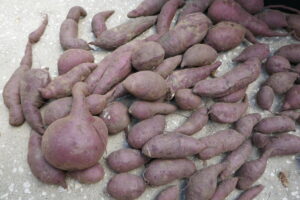
Purple sweet potatoes [Photo courtesy UF/IFAS Marion County]
Seminole pumpkins, a close relative of the butternut squash, can produce enormous quantities of fruit. They originated in Florida and are well adapted to our subtropical conditions. Their planting dates are from March to April, with a second option in August. They are grown from seeds and need at least three feet of space between plants due to the large size of the plants and expansive vines. Amending the soil with large quantities of compost helps produce a larger crop. They can be harvested about 120 days after planting. Seminole pumpkins have an exceptionally long shelf life, lasting at least six months after harvest. You can store them in a cool and dry location out of direct sunlight. Seminole pumpkins have modest calorie density, but good quantities of vitamins and minerals. They also make a great addition to a Thanksgiving meal.
While there are many other crops worth mentioning, the potato, sweet potato and Seminole pumpkin are at the top of the list.
For gardening questions or inquiries about upcoming classes, reach out to the UF/IFAS Marion County Extension office at (352) 671-8400 or email [email protected]
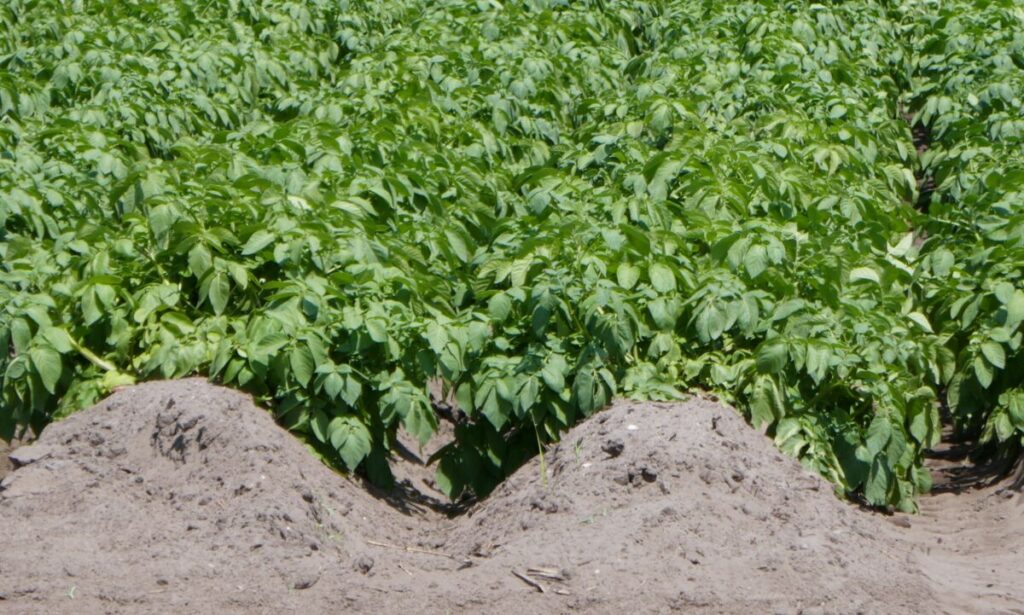
Potatoes growing in rows [Photo courtesy UF/IFAS Marion County]

Support community journalism
The first goal of the Ocala Gazette is to deliver trustworthy local journalism so corruption, misinformation and abuse are not hidden from the public or unchallenged.