
The basics of pool care
The three Bs and then some.
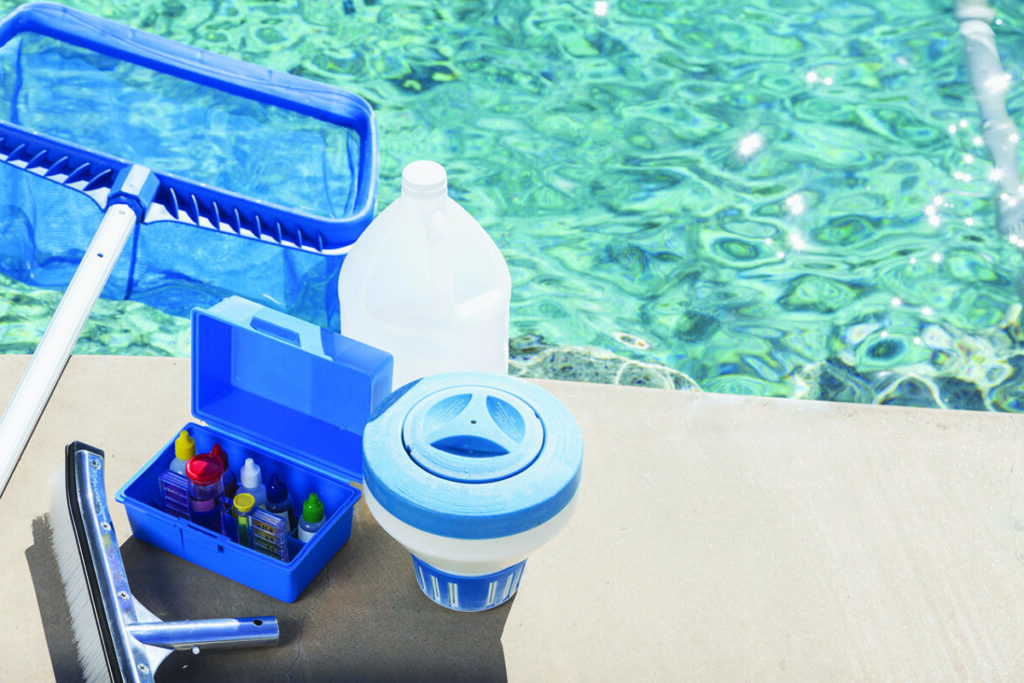
Equipment for testing the quality of the water and cleaning a pool. [Stock image]
Pool owners know that having a backyard swimming pool requires an investment of time and money, but the rewards can be well worth it. When temperatures climb like they do in Ocala/Marion County, even in September, floating on or diving into crystal blue water can be refreshing and energizing.
Maintaining a clean pool environment may seem like it is relatively straightforward, but there is some effort and expense that comes with achieving sparkling water. Pool owners can familiarize themselves with the three Bs of pool maintenance (which actually can be considered six Bs, but more on that below).
Water chemistry
Pool water has to meet certain criteria to be safe for swimming. The water should feature the correct pH, which is a scale ranging from zero to 14 that measures how acidic or basic a substance is. A pH of 7.0 is neutral, while lower numbers are acidic and higher numbers are alkaline. The Better Health Channel and pool maintenance resources recommend maintaining pool water pH between 7.2 and 7.8. This slightly alkaline level ensures chlorine can effectively kill germs and prevents irritation, cloudy water and scaling.
Sanitizers can be used to kill germs in the water and prevent algae and mildew growth, and chlorine and bromine are the most commonly used. APEC Water says chlorine should test at 1 to 3 parts per million (ppm) for pools and hot tubs to effectively disinfect them. Higher levels may be needed to treat algae blooms.
Finally, pool owners should be concerned with total alkalinity, which is the water’s ability to buffer against pH fluctuations. Maintaining the right TA means you will not have to adjust pH too often.
The three Bs
Many chemical products sold at pool stores are designed to maintain the right water balance, and they are highly effective at doing so. Cost-conscious pool owners, however, may be surprised to find they can use some common household items to adjust the water chemistry. This is where the three Bs come into play.
- Bleach: Sodium hypochlorite, better known as chlorine bleach, is an effective sanitizer. Unlike some other chlorine sources, bleach doesn’t add anything else to the water that can affect the chemistry or conditions, like calcium or stabilizer. Household bleach comes in different strengths. For those using it in pools, select non-scented, non-splash varieties.
- Baking soda: Sodium bicarbonate can be used to adjust the water to achieve the correct total alkalinity. Trouble Free Pool advises a TA of around 80 ppm.
- Borax: Also known as sodium borate, sodium tetraborate or disodium tetraborate. Borax is commonly used as a laundry booster and cleaning agent but is very effective at raising the pH of pool water to an acceptable level. It is the same chemical found in commercial pH products.
When adding these items, begin slowly and test frequently until the desired level is reached.
The other Bs
Brushing, balancing and backwashing are the other three Bs. According to Oasis Biosystem, a landscaping design company, and other pool experts, brushing the walls and floors of the pool can help remove algae and debris. Balancing the chemicals keeps the water clean and safe. Backwashing the pool filter as needed helps clean out accumulated particulates and makes it run more efficiently.
Pool maintenance is a multifaceted process that, once mastered, can ensure pool water is safe, clean and inviting.

Support community journalism
The first goal of the Ocala Gazette is to deliver trustworthy local journalism so corruption, misinformation and abuse are not hidden from the public or unchallenged.