
A series: Understanding the $1.2 billion school district budget
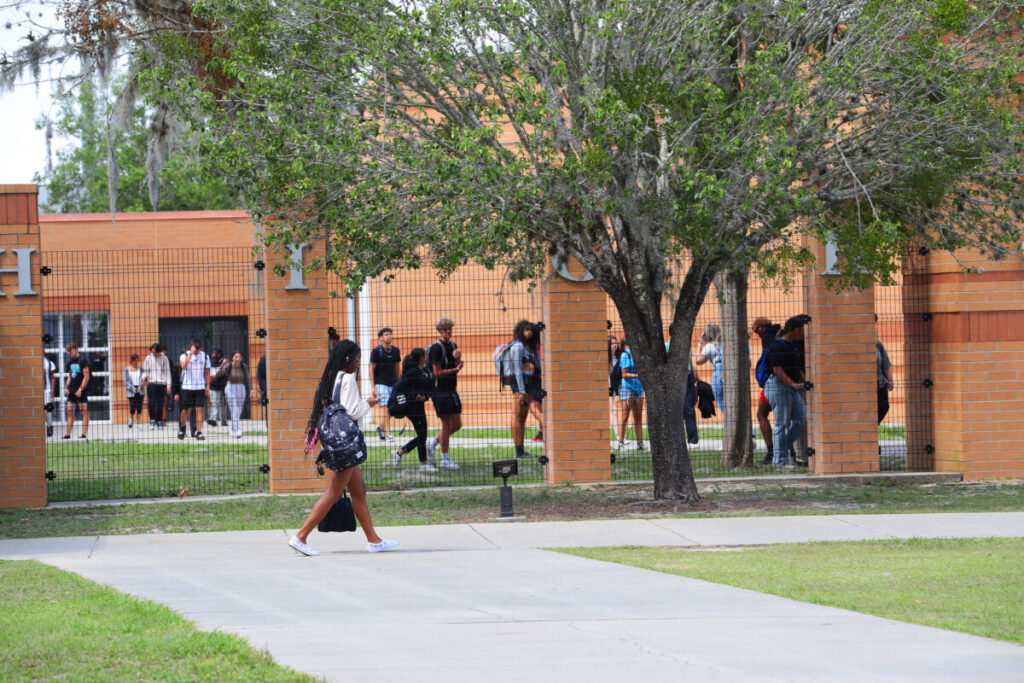
File photo: Students leave West Port High School in Ocala, Fla. after the last bell on Wednesday, May 10, 2023. [Bruce Ackerman/Ocala Gazette] 2023.
During the Aug. 7 budget work session, district board members lamented misinformation and a lack of understanding in the community surrounding the district’s $1.2 billion budget. Here are some basic questions and answers that might provide better context for taxpayers.
How much money is allocated to operating K-12 schools?
It’s less than half of the budget, or $584,044,085.
Where does the rest of the money go?
- $371,716,797 for capital projects such as new schools.
- $27,105,890 to cover debt services for those schools and new buses.
- $75,292,877 for free breakfasts and lunches in every school. It should be noted that it is a federally funded initiative that the district has had in place for five years.
- $98,571,868 in reserve to meet the district’s obligation for being self-insured.
- $59,763,581 goes to provide transportation for students.
- Additionally, some money flows through the district for charter schools.
How much of the Marion County Public Schools operating budget comes from local tax collection?
The answer is 29.5% or $172,283,451. The rest of the operating budget comes from state and federal sources.
| All Revenue Sources | FY 24-25
Budget |
FY 24-25
Actual |
FY 25-26
Tentative |
||
| Federal | $445,000 | $515,651 | $445,000 | ||
| Federal Through State | $2,190,000 | $2,456,388 | $2,190,000 | ||
| State | $296,693,504 | $263,921,589 | $313,863,782 | ||
| Local | $157,565,660 | $161,065,952 | $172,283,451 | ||
| Other Financing Sources | $8,659,932 | $8,883,479 | $8,589,819 | ||
| TOTAL BUDGETED – ALL SOURCES: | $465,554,096 | $436,843,059 | $497,372,052 |
The school district’s budget is heavily regulated by state legislation, including how much of the funds they need to collect from local taxpayers.
The required local contribution of tax revenue to the school district is updated each year by the state.
Even with rising property values, the school district doesn’t necessarily get the full benefit of the rising tax base unless the funds are deemed necessary to meet the Legislature’s direction for the local tax collection.
Local voters have approved an additional millage rate above the state mandate to give MCPS an extra boost. Real estate property owners pay this on their property tax bill.
Next in the series, we’ll explore:
How much does school safety cost MCPS, and where does that funding come from?
Also, let’s get to the bottom of the age-old complaint that not enough of the staffing budget gets to the classroom.

Support community journalism
The first goal of the Ocala Gazette is to deliver trustworthy local journalism so corruption, misinformation and abuse are not hidden from the public or unchallenged.